World 6 min read By Trevor Kendall
DHS Purchases Two California Detention Centers for $1.5 Billion to Expand ICE Deportation Capacity
The Department of Homeland Security has acquired two large migrant detention facilities in California for $1.5 billion, using funds from President Trump's spending bill to boost ICE's deportation infrastructure and reduce reliance on private prison companies amid state sanctuary laws.
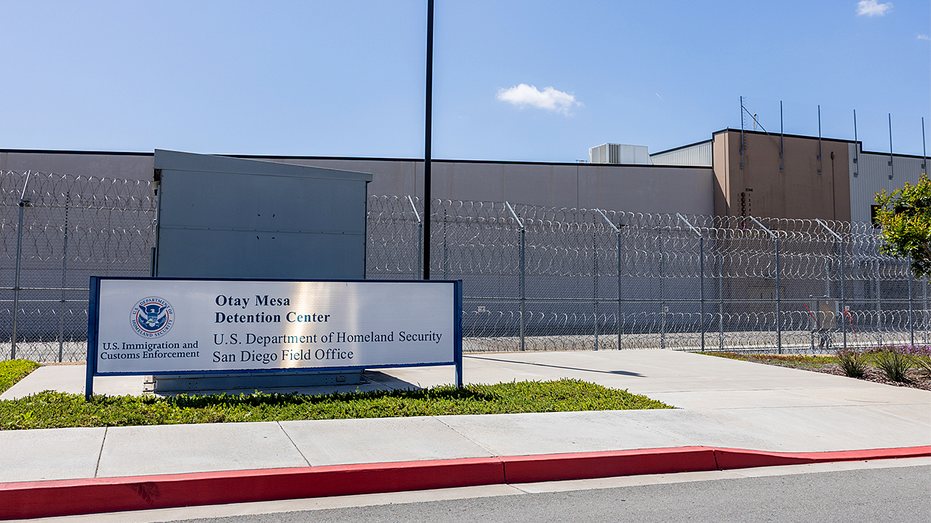
The Department of Homeland Security has completed the purchase of two major migrant detention centers in California for a combined $1.5 billion, a move aimed at strengthening Immigration and Customs Enforcement's capacity to carry out mass deportations under the Trump administration. The facilities, the California City Detention Facility and the Otay Mesa Detention Center, were acquired from the private prison company CoreCivic earlier this month, according to a company press release. DHS confirmed the transaction to Fox News Digital, stating that the funds came from President Donald Trump's spending bill signed last summer, which allocated resources for expanding detention space.
The California City facility, located in Kern County, has a capacity of 2,560 beds, while the Otay Mesa center near San Diego can hold 1,994 detainees. Together, they represent two of the largest immigrant detention centers in the state. A DHS spokesperson emphasized that the purchase was made possible by what the administration calls the «One Big Beautiful Bill,» which allowed ICE to expand detention infrastructure to fulfill the president's promise of mass deportations. The acquisition shifts ownership from a private contractor to the federal government, a change that DHS says is necessary to navigate California's sanctuary policies, which restrict cooperation with federal immigration authorities and limit the use of private prisons for detention.
«Unlike in states like Florida and Oklahoma, ICE cannot rely on local state and county partners for detention space in California,» the DHS spokesperson said. «The state's sanctuary politicians continue to push legislation to outlaw or make private prisons financially infeasible. Now, with federal ownership of these detention centers, which are crucial to ICE's detention network on the West Coast, ICE retains the detention capacity needed to arrest, detain and remove illegal aliens.» The purchase is part of a broader federal effort to secure detention assets in states where local governments resist immigration enforcement. California has enacted multiple laws limiting cooperation between local law enforcement and federal immigration agents, including the California Values Act, which restricts the use of state and local resources for federal immigration enforcement.
CoreCivic, the Tennessee-based company that sold the facilities, said it expects net proceeds of approximately $1.1 billion after income taxes and transaction expenses. Chief Executive Patrick Swindle described the sale as a demonstration of the value of the company's real estate portfolio and its role as a flexible partner for government. «The sale of these facilities at what we believe is a fair valuation provides the company with significant balance sheet flexibility and positions us well to grow the company's businesses and return value to its shareholders, while remaining a dependable partner for government,» Swindle said in a statement. CoreCivic will continue to manage both facilities under existing contracts with ICE, although the terms may be adjusted to reflect the change in ownership. The contract for the California City facility runs through August 2027, while the Otay Mesa contract expires in December 2029, with an option to extend for five additional years.
The acquisition comes amid ongoing legal challenges and scrutiny of detention conditions. Both facilities have faced lawsuits from detainees alleging mistreatment, though CoreCivic has denied those allegations. Currently, eight ICE detention facilities operate in California, holding nearly 9,000 people. The newly purchased centers add significant capacity to the federal detention network on the West Coast, where immigration enforcement has been a contentious issue. CoreCivic also indicated that it is in discussions with ICE about potentially selling additional detention facilities, though it cautioned that those talks are in various stages and no assurances can be given that further sales will occur.
The purchase reflects the administration's broader strategy to expand detention infrastructure as part of its immigration enforcement agenda. In a related development, the Trump administration has also announced plans to open a new holding facility near Alexandria International Airport in Louisiana, described as a staging area for deportations. That facility, with 528 beds, is intended to house migrants and unaccompanied children for a few days before deportation flights, according to DHS. The Louisiana facility is located next to the nation's largest hub for deportation flights, which has processed thousands of removals. Immigration advocates have raised concerns about the conditions and legal rights of detainees in such staging areas, but DHS maintains that the facilities are necessary for efficient enforcement of immigration laws.