World 6 min read By Trevor Kendall
Trump warns Iran of «last chance» as Tehran denies talks
President Trump says Iran has a final opportunity to strike a deal on the Strait of Hormuz and its nuclear program, while Tehran publicly denies any direct negotiations with Washington.
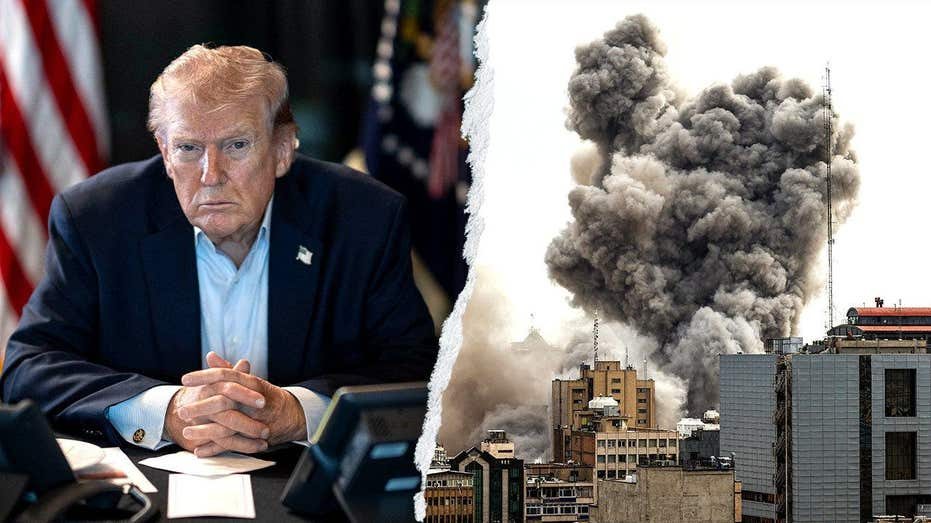
President Donald Trump has warned Iran that it faces a final chance to reach a deal, saying negotiations can still reopen the Strait of Hormuz and eventually address Tehran’s nuclear program, even as Iranian officials deny holding any direct talks with Washington. The contradictory statements have left the future of the diplomatic push unclear and deepened doubts about whether the latest pause in fighting can survive.
Trump said diplomacy convinced him to call off a planned American attack on Iran that he described as the biggest since World War II. Over the weekend, he said Iran and several Middle Eastern countries had asked for more time to finalize an agreement that would reopen the Strait of Hormuz and address Iran’s nuclear program. But the Iranian Foreign Ministry spokesman, Esmail Baghaei, said Tehran was neither holding talks with the United States nor expecting an American delegation. He described the discussions mediated by Oman as a bilateral effort to establish a temporary shipping corridor through the Strait.
Trump responded by accusing Iran’s leadership of being «unbelievably duplicitous.» In a Truth Social post, he wrote: «They ask for a meeting, some would say beg, talks begin, with more scheduled in the immediate future, and they say, openly and proudly, that they’re not having any discussions.» Later that afternoon, he called the talks Iran’s «last chance» to avoid an escalation in U.S. strikes.
Trump said negotiators would first seek to reopen the Strait of Hormuz and then turn to Iran’s nuclear program. «The first phase is the opening of the straits. The second phase will be the denuclearization,» he said in the Oval Office. «And that will take a little while.» He said reporters could learn more about the negotiations «today or tomorrow.» Iran has not publicly endorsed either phase of the plan.
Saudi Arabia and other Gulf allies have urged Trump to hold off on the planned attack, fearing more Iranian reprisals against their territory. That pushback has complicated the president’s next move, according to Jonathan Schanzer, executive director of the Foundation for Defense of Democracies. «He’d like to be able to walk away with a win. The Iranians are not allowing him to do that,» Schanzer said. «There is not a clear path ahead for him at this moment.»
The uncertainty is the latest chapter in a conflict that has repeatedly veered between deadly strikes and temporary ceasefires. A June memorandum opened with promises of a broader settlement. The United States and Iran signed it to halt fighting, lift the U.S. blockade and reopen the Strait. Shipping quickly became the first test of that agreement, exposing how far apart Washington and Tehran remained. Each side had its own plan for restoring commercial traffic through the Strait, and when U.S. officials accused Iran of firing on commercial vessels days later, American strikes followed. Tehran said Washington had tried to force through a new shipping arrangement without its consent.
Negotiators never bridged that divide. Trump declared the ceasefire over in early July and expanded the U.S. air campaign. Iran answered with missile and drone attacks on American positions and regional partners. That fighting set up another, shorter pause at the end of the month, after Trump said mediators had asked the United States to hold fire and Iran said it would match. Within days, Iranian missiles targeted U.S. forces in Jordan and the conflict spread again.
The pattern has become a defining feature of the war. Schanzer described it as a «ceasefire war»: «It is a war that is punctuated by short bouts of calm, only to see conflict return.»
Even if Oman succeeds in opening a temporary shipping route, it would settle only the immediate question of how ships move through the Strait. Trump wants that step to lead into broader negotiations over Iran’s nuclear program, a sequence Tehran has yet to publicly embrace. As long as Iran can still threaten traffic and Washington can maintain its blockade and prepare further strikes, each side may calculate that it can wait the other out rather than make the concessions needed to end the war.
Ali Vaez, deputy program director for the Middle East at the International Crisis Group, said the public back-and-forth includes a significant element of positioning. «There’s certainly an element of posturing involved,» he said. «While there are no talks in the sense of U.S. and Iranian officials sitting at the same venue exchanging proposals and counter-offers, engagement appears ongoing.» He added: «Fundamentally, both sides know that the status quo is a recipe for continued military and economic attrition without a clear endgame.»