Politics 5 min read By Morgan Griffin
DeSantis Moves to Designate Over 90 Groups as Terrorist Organizations Under New Florida Law
Florida Governor Ron DeSantis announced plans to use a new state law to designate over 90 groups, including CAIR, the Muslim Brotherhood, and Antifa, as terrorist organizations, pending Cabinet approval. The move has sparked legal challenges from civil rights groups who argue it violates First Amendment protections.
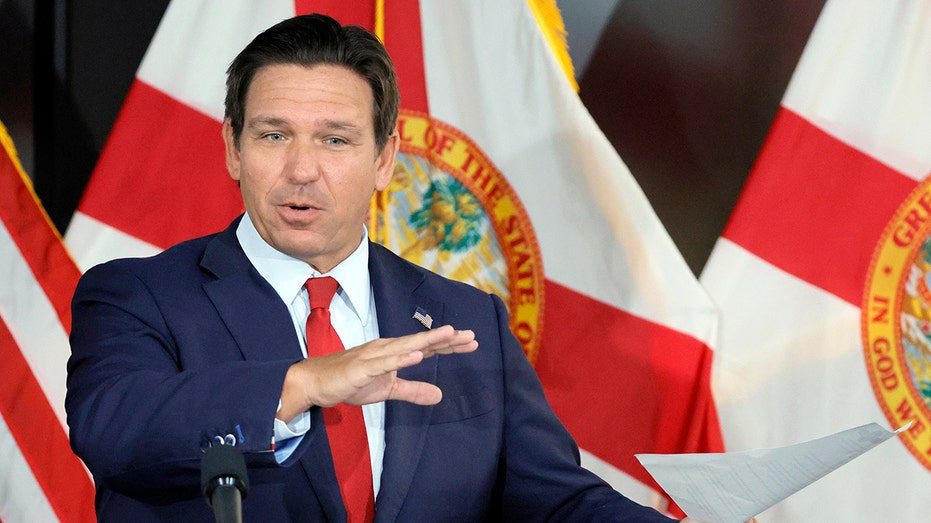
Florida Governor Ron DeSantis announced on Wednesday that the state intends to use a newly enacted law to designate more than 90 organizations as terrorist groups, a move that targets entities ranging from international cartels to domestic advocacy groups. The designations, which require approval from the Florida Cabinet, mark the first implementation of powers granted under House Bill 1471, signed into law earlier this year and effective immediately.
The proposed list includes the Council on American-Islamic Relations (CAIR), the Muslim Brotherhood, and Antifa, along with foreign organizations such as the Islamic Revolutionary Guard Corps and several drug cartels, including Cartel de Sinaloa, Tren de Aragua, Cartel del Noreste, and Cartel del Golfo. DeSantis framed the initiative as a necessary step to combat terrorism and protect state resources, stating that the law provides permanent statutory tools to address radical ideologies while upholding constitutional rights.
Under HB 1471, the Chief of Domestic Security within the Florida Department of Law Enforcement can initially designate qualifying organizations as domestic or foreign terrorist groups. However, these designations must be approved by a majority vote of the governor and Cabinet before they are published in the Florida Administrative Register. The law directs state agencies to deny public benefits, funding, and institutional support to designated groups, and establishes criminal penalties for knowingly providing material support or resources to such organizations.
Florida Department of Law Enforcement Commissioner Mark Glass emphasized the importance of identifying threats to public safety, noting that collaboration between state officers, federal partners, and the community strengthens security efforts. The law also includes provisions to prevent foreign or religious legal codes from overriding the U.S. or Florida Constitutions in state courts.
The announcement has drawn immediate legal objections, particularly from CAIR, a Muslim civil rights organization that condemned the designation as baseless and politically motivated. CAIR and its Florida chapter have previously sued over a December executive order by DeSantis that targeted the group and the Muslim Brotherhood. In a statement, CAIR asserted that it does not engage in terrorist activity and has never been charged or convicted of a crime, adding that its work focuses on protecting constitutional freedoms and pursuing justice for American Muslims affected by hate.
Civil liberties groups, including the American Civil Liberties Union, have also criticized the designations. Hina Shamsi, director of the ACLU’s National Security Project, argued that the move threatens First Amendment-protected speech and association. She stated that CAIR’s advocacy, including criticism of the governor, is constitutionally protected, and that the organization plans to challenge the designation in court.
DeSantis and state officials have defended the law as a measure to prevent taxpayer support for groups they allege promote or support terrorism. The governor’s office noted that the designations operate under Florida law and are distinct from federal foreign terrorist organization designations made by the U.S. State Department. Critics, however, contend that the broad scope of the list, which includes domestic groups like Antifa and CAIR, could chill legitimate political activity and dissent.
The proposed designations are expected to face further legal scrutiny as the Cabinet considers approval in the coming weeks. The controversy highlights ongoing tensions between state efforts to combat terrorism and concerns over civil liberties, with both sides preparing for a protracted legal battle over the constitutionality of the new law.