World 6 min read By Trevor Kendall
UN chief backs official who reposted anti-Israel activist's claims amid calls for investigation
United Nations Secretary-General António Guterres has defended a top official who reposted an anti-Israel activist's unverified claims about cluster munitions disguised as children's toys, sparking calls for an investigation and criticism over neutrality.
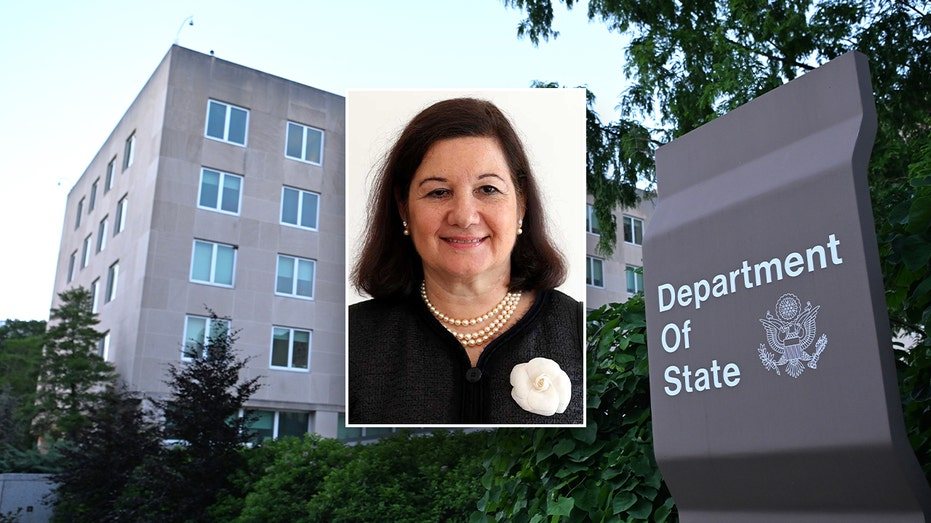
A top United Nations official is facing renewed scrutiny after reposting an unverified social media claim that Israel was using cluster munitions disguised as children's toys in Lebanon, a charge that Israel and independent experts have dismissed as baseless and antisemitic. U.N. Special Representative for Children and Armed Conflict Vanessa Frazier shared the post on June 18 from an account belonging to Sarah Wilkinson, a British activist who is currently facing trial on charges of encouraging terrorism and expressing support for Hamas. Frazier's post, which has since been deleted, stated: «If this is true it means that there is a deliberate, premeditated intent to kill children.»
In response to questions about whether Secretary-General António Guterres stood behind Frazier's action, his spokesperson Stéphane Dujarric told Fox News Digital that «the retweet was deleted a while ago and, as you know, [the] retweet in no way implies an endorsement of the person who posted the original tweet.» The defense has done little to quell criticism from Israel and watchdog groups, who argue that the episode reflects a troubling pattern of bias within the U.N. system.
Andrew Fox, a senior fellow at the Henry Jackson Society and a former British army officer who has studied Israel Defense Forces (IDF) tactics, called the incident «farcical.» He said: «It is deeply telling that a U.N. official should leap to share the ancient, antisemitic blood libel that Jews kill children. This is the toxic atmosphere that nearly three years of lies have created around Israel. Any allegation against the Jewish state, no matter how outlandish, is immediately given credence. This is another nail in the coffin of the U.N. special representative’s credibility and reputation.»
An IDF spokesman categorically rejected the allegation, telling Fox News Digital: «The allegation is baseless and unfounded. It is fake news, and we categorically reject it.» The original post by Wilkinson featured an image of three small objects that she claimed were cluster munitions «disguised as children’s toys» that Israelis had been «strategically dropping» over Lebanon. Wilkinson was arrested in the United Kingdom on terror charges in 2024 and is scheduled to face trial in January on two counts of encouragement of terrorism on social media, two counts of expressing support for a proscribed organization (Hamas), and one count of failing to comply with a police investigation, according to the BBC.
This is not the first time Frazier has faced controversy over her social media activity. In March, she posted that she was «deeply alarmed by reports of attacks on Iranian schools leaving a large number of casualties, mostly children,» accompanied by a photograph showing numerous black body bags. When it emerged that the photo depicted victims of the Iranian regime’s crackdown on protesters, Frazier removed the post and replaced it with a similar sentiment featuring an updated image.
On June 24, Israel’s Ambassador to the U.N., Danny Danon, sent a letter to the U.N. Security Council president raising Israel’s «grave concerns regarding conduct that appears inconsistent with the neutrality, professionalism, and impartiality expected of a senior United Nations official.» In his letter, Danon said Frazier’s social media behavior suggests «a troubling pattern of engagement with unverified, disputed, or misleading material, alongside content raising concerns about antisemitic framing and extremist rhetoric.» Danon also cited an incident in which Frazier «abruptly interrupted» his remarks during a U.N. side event, which Reuters described as «a furious shouting match.»
Frazier defended her actions, telling Fox News Digital that her «intervention was procedural, not political. Its purpose was to help ensure that the discussion remained consistent with the standards expected in a United Nations forum.» She added: «Regarding specific tweets, I understand why some of my social media activities have generated questions. Where concerns arose regarding posts, I took appropriate action. Nonetheless, the intended message is to emphasize the alarm of the Secretary-General in his Annual Report regarding the use of explosive weapons in populated areas in Lebanon.»
The controversy comes amid the release of the Secretary-General’s Annual Report on Children and Armed Conflict, which has itself drawn criticism from Israel and its allies for what they see as a disproportionate focus on Israeli actions. Anne Bayefsky, president of Human Rights Voices and director of the Touro Institute on Human Rights and the Holocaust, has been among those raising concerns about the report’s methodology and the broader credibility of the U.N. mechanism.
Critics argue that Frazier’s repeated reliance on unverified and misleading material undermines the U.N.’s role as an impartial arbiter in conflict zones. The episode has also reignited debate about the organization’s handling of antisemitism and bias against Israel, with some calling for a formal investigation into Frazier’s conduct. The U.N. has so far resisted such calls, maintaining that the matter has been addressed internally.