World 4 min read By Trevor Kendall
U.S.-Japan Alliance Strengthens as Tokyo Increases Defense Spending and Military Cooperation
Japan has deepened its military and economic partnership with the United States, with record defense budgets, expanded co-production of weapons, and a growing role in regional deterrence against China, according to defense data and policy analyses.
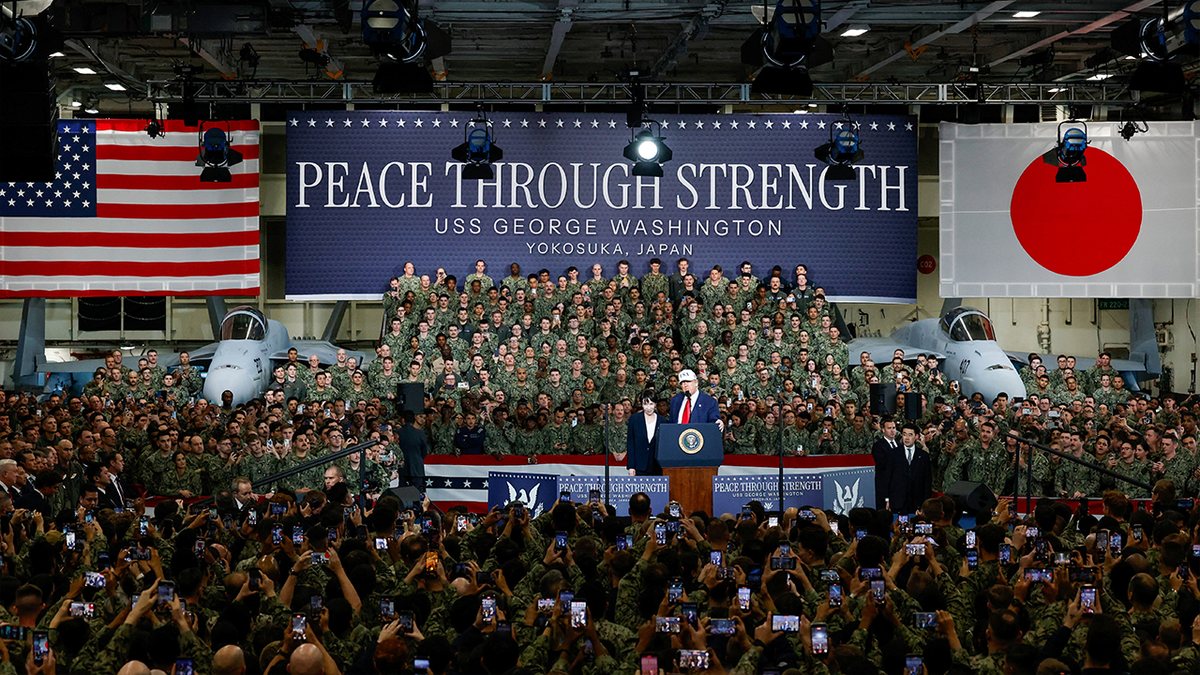
The U.S.-Japan alliance has reached an unprecedented level of military and economic integration, with Tokyo assuming a leading role in regional deterrence and defense industrial cooperation, according to recent defense spending figures and bilateral agreements. Japan now hosts approximately 60,000 U.S. service members and contractors, the largest American military presence outside the United States, and covers about 75 percent of the associated costs, averaging $1.5 billion per year under the current arrangement.
Japan’s defense budget has set new records for 12 consecutive years. Under the current government, military expenditure rose 9.7 percent to $62.2 billion in 2025, and defense spending reached 2 percent of gross domestic product in 2026, two years ahead of schedule. The five-year Defense Buildup Program through 2027 allocates roughly $275 billion. These increases have drawn praise in Washington as a concrete demonstration of burden-sharing commitments.
The alliance has also expanded co-production of advanced weapons systems. The two countries are jointly producing AIM-120 AMRAAM air-to-air missiles and have increased production of SM-3 Block IIA interceptor missiles in Japan by fourfold. Additionally, 400 U.S. Tomahawk cruise missiles are being integrated into the Japanese navy, and the Typhon missile system was deployed to mainland Japan in 2025, enhancing interoperability and providing Japan with new counterstrike capabilities.
Japan is also pursuing intelligence reforms aimed at developing a world-class intelligence community. Officials have discussed the possibility of Japan joining the Five Eyes intelligence-sharing alliance as a “Sixth Eye,” a historic shift for a country traditionally cautious about privacy and the legacy of wartime surveillance. The move is driven by concerns over Chinese and Russian influence operations and is expected to further tighten cooperation.
Beyond defense, Japan has stepped up its diplomatic and economic engagement. Following a summit between President Donald Trump and Prime Minister Sanae Takaichi in March, the two countries agreed to establish price floors for critical minerals, explore new mining ventures, and strengthen private-sector collaboration. Japan has also deepened ties with Southeast Asian nations and Pacific Island states, strategic arenas in the broader competition with China.
In Europe, Japan has been a major donor to Ukraine, pledging $6 billion in 2026 alone and providing $8.7 billion in budget support since 2022. In Africa, Japan has pledged $30 billion since 2022, shifting toward business-oriented partnerships that prioritize trade over aid, aligning with U.S. policy approaches.
Japan’s geographic position at the center of the first island chain makes it critical for constraining Chinese access to the Western Pacific and ensuring U.S. access to key markets. Chinese aircraft incursions near Japan have prompted 366 scrambles by Japanese jets in the past year, underscoring the immediate security challenges. The U.S. 2026 National Defense Strategy identifies defense of the first island chain as a core priority, and Japan is the only ally besides Taiwan that regularly intercepts Chinese military aircraft.
In response to the deepening bilateral ties, China has increased naval activity near Japan, including repeated sailing through waters claimed by Tokyo. Analysts view the evolving alliance as a central pillar of Indo-Pacific stability amid rising geopolitical tensions.