World 6 min read By Morgan Griffin
Trump Pushes F-35 Sale to Turkey Despite State Department Warning on Legal Hurdles
President Trump has signaled willingness to sell F-35 jets to Turkey and lift sanctions, but a State Department letter to Congress states that Turkey has not met legal requirements, particularly regarding the Russian S-400 system. The dispute tests NATO relations and Trump's personal diplomacy with Erdogan.
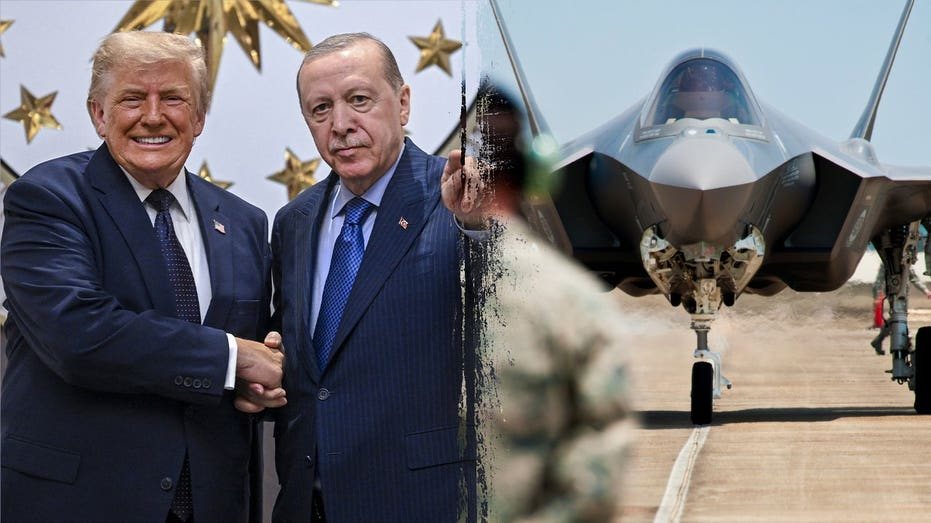
President Donald Trump has opened the door to selling Turkey the prized F-35 stealth fighter, praising Turkish President Recep Tayyip Erdogan and promising to remove sanctions imposed over Ankara’s purchase of a Russian missile defense system. But a State Department letter to Congress makes clear that Turkey has not taken the steps legally required to receive the advanced aircraft.
“Turkey has not yet met these conditions,” the department said in a July 22 letter first obtained by the Greek newspaper Kathimerini. The letter stated that U.S. law prohibits the transfer of F-35 aircraft to Turkey until Ankara no longer possesses the Russian-made S-400 system or associated equipment, pledges not to acquire it again, and satisfies remaining certification requirements established by Congress.
The finding came weeks after Trump stood alongside Erdogan at the NATO summit in Ankara and said his administration would lift sanctions on Turkey and consider selling it the aircraft. Asked about Turkey’s continued possession of the S-400, Trump said, “I have no concerns about anything having to do with Turkey.” Trump described relations with Ankara as “better probably than it’s ever been,” said Turkey had been “much more loyal” than some other countries, and called a potential F-35 sale “certainly something we will consider.” Erdogan said Turkey previously has been promised five aircraft and expressed confidence in Trump. “I know that Mr. Trump always keeps his promises,” Erdogan said, according to Reuters.
The dispute matters far beyond a single weapons sale. Turkey is a pivotal NATO ally controlling access between Europe and the Middle East, but its ties to Russia and Hamas have fueled doubts in Washington about whether Ankara can be trusted with America’s most sensitive military technology. The outcome will test whether Trump’s personal relationship with Erdogan can bring Turkey back into the Western defense fold — or whether Congress and national security concerns will block the deal.
A State Department spokesperson told Fox News Digital on background that Trump “recognizes the strategic importance of Türkiye” and that his administration is encouraging Ankara “to resolve pending issues.” “Türkiye is a valued NATO ally, and we continue to engage on all aspects of our important and multi-faceted relationship,” the spokesperson said.
James Jeffrey, a former U.S. ambassador to Turkey and former special representative for Syria engagement, said Trump’s position reflects both his trust in Erdogan and their cooperation on regional security issues. “Trump is very much for this as he works well with Erdogan and trusts him and has succeeded together on a host of security issues from Libya to Syria to Caucasus to Ukraine and PKK ceasefire with Ankara,” Jeffrey, now a distinguished fellow at The Washington Institute, told Fox News Digital. “He knows how important this is to Erdogan and all Turks and doesn’t want Ankara to turn to Russia or China for weapons.”
Turkey was removed from the F-35 development program in 2019 after purchasing the S-400 from Russia. The United States imposed sanctions the following year under the Countering America’s Adversaries Through Sanctions Act. U.S. officials have argued that operating the Russian system alongside the F-35 could allow Moscow to collect sensitive information about the stealth aircraft.
Jeffrey said Turkey would have to genuinely relinquish the S-400 but noted that the law does not specify exactly how. “Certainly transferring to another country would meet the legal and technical requirement,” he said. Reports have suggested the United Arab Emirates as a possible destination for the S-400, though there is no confirmation Abu Dhabi would accept it. The UAE would have to consider whether acquiring the Russian system could trigger U.S. penalties or jeopardize access to other American weapons. Russia could also object to Turkey transferring the system without Moscow’s approval.
Sinan Ciddi, director of the Turkey Program at the Foundation for Defense of Democracies, argued that resolving the S-400 dispute should not automatically clear the way for a sale. “The S-400 issue that led to Turkey’s removal from the F-35 program is the floor, not the ceiling,” Ciddi said, pointing to Ankara’s relationship with Hamas, continued ties with Russia, use of Chinese telecommunications technology, and tensions with U.S. partners including Greece, Cyprus, and Israel as additional obstacles.
The State Department letter reflected the administration’s competing views of Ankara. While reiterating that Turkey remains legally ineligible for the F-35, the department credited it with supporting U.S. diplomatic efforts involving Russia and Ukraine, Azerbaijan and Armenia, Gaza, and counter-ISIS operations. The letter said Turkey used its relationship with Hamas’ political leadership to help secure acceptance of Trump’s Gaza peace plan and advance the first phase of a ceasefire.
Jeffrey said Erdogan is likely prepared to resist Russian pressure because the F-35 is both a prestige issue and an important military need for Turkey, whose air force relies heavily on F-16 aircraft. As the debate continues, the fate of the F-35 sale remains a key test of U.S.-Turkey relations and the limits of presidential diplomacy in the face of legal and congressional constraints.