World 6 min read By Morgan Griffin
Trump administration says NATO burden-sharing pressure is paying off
The Trump administration believes years of pressure on NATO allies to increase defense spending is yielding results, with Ambassador Matthew Whitaker citing nearly $150 billion in additional spending and a new 5% GDP target by 2035, while keeping a close watch on Spain, France, Italy, and the UK.
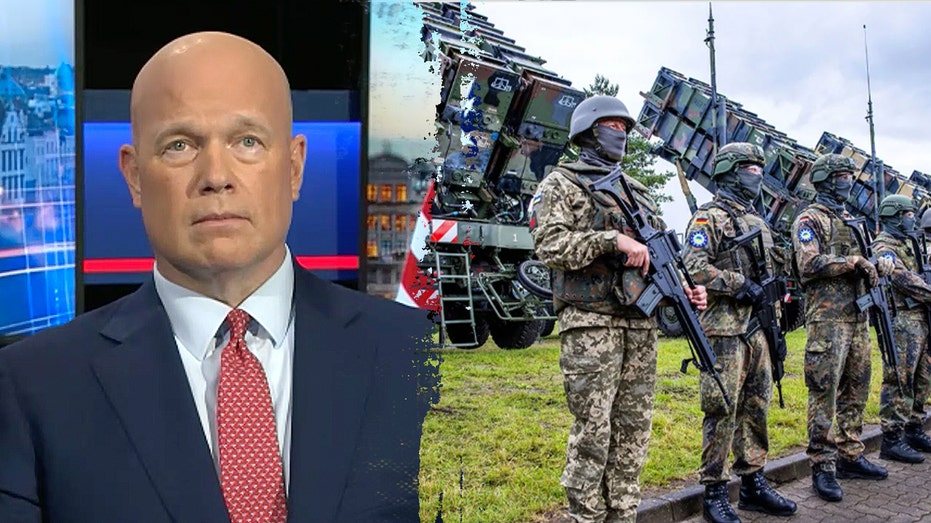
The Trump administration is declaring a strategic victory in its long-running campaign to push NATO allies to shoulder more of the alliance's defense burden, with U.S. Ambassador to NATO Matthew Whitaker telling Fox News Digital that the 2025 summit in The Hague was a «huge success.» Whitaker said President Donald Trump's pressure over several years has produced an alliance that is «more capable and increasingly stronger» and is moving toward equalizing defense responsibilities with the United States.
At the summit, NATO allies agreed to boost defense spending to 5% of GDP by 2035, a significant increase from the long-standing 2% benchmark that had been a source of friction for years. Whitaker said the administration is now monitoring each ally's progress through a monthly dashboard, and he identified Spain, France, Italy, and the United Kingdom as countries he continues to watch closely. «I know exactly where every ally is,» Whitaker said. «I make phone calls and make visits depending on where allies are falling out.»
Spain emerged as the most public point of friction during the summit. Trump called the country a «terrible partner» and a «wasted cause,» threatened to cut off trade, and criticized Madrid both for initially resisting the new 5% defense spending target and for refusing to allow the U.S. to use Spanish bases and airspace during operations against Iran. Despite the tension, Whitaker expressed optimism: «I think ultimately Spain is going to live up to their commitments. They can be a capable ally. They have a very dynamic and growing economy that could support more defense spending.»
Whitaker pointed to nearly $150 billion in additional allied defense spending over the past year and a growing push to expand European defense production as evidence that the alliance is moving in the direction the Trump administration has long demanded. He praised Poland, Latvia, Lithuania, Estonia, Greece, and Turkey for aggressively increasing defense spending. The administration argues that years of pressure from Trump are beginning to produce the alliance the president has long envisioned: one in which Europe assumes far greater responsibility for its own defense while allowing the U.S. to focus more heavily on other global priorities.
«We're going to address our priorities,» Whitaker said. «And that's first the homeland and our Western Hemisphere. The Pacific is an area that we are going to be more capable and ready, and Europe is fourth on the list.» He added: «That doesn't mean that we're leaving Europe, it doesn't mean that we're abandoning our allies. It just means we're expecting them to take over the conventional defense of the continent.»
Even as allies celebrated new spending commitments, European officials acknowledge that rearming the continent will require years of sustained political support, expanded industrial capacity, and difficult budget decisions before the alliance reaches the capabilities envisioned in the new target. NATO Secretary-General Mark Rutte has repeatedly emphasized that governments must now present «clear, concrete and credible plans» for reaching the target rather than simply making political commitments.
The summit also came as the administration reviews U.S. force posture in Europe, prompting questions among allies—particularly those on NATO's eastern flank—about what greater burden-sharing could mean for the future U.S. military presence. The administration argues the force posture review is directly tied to burden-sharing: if Europe assumes more responsibility for defending the continent, Washington can reassess where and how U.S. forces are deployed. In recent weeks, the Trump administration has sent mixed signals on troop deployments, including a halted rotation to Poland, a subsequent announcement of additional forces, and the launch of a broader review of U.S. force posture on the continent.
Allies like Poland have argued that its heavy investment in defense and frontline position should be reflected in a stronger U.S. military presence. Whitaker said allies that spend more should expect deeper engagement with Washington but stressed that decisions on U.S. force posture are driven by broader global security considerations rather than any one country's spending. «It is an ongoing evaluation of where we need to deploy, where we can project power from, and how we deter and defend,» Whitaker said. «It's a complicated conversation, but it's one that we're currently having right now within the government and with our allies.»
For Whitaker, the debate over burden-sharing is no longer simply about how much allies spend. The larger question, he said, is whether those investments translate into the military capabilities Europe will need to assume a greater share of its own defense. Those commitments extended beyond spending targets and into the kinds of military capabilities NATO allies are expected to field over the coming decade. Germany announced plans to acquire U.S.-made Tomahawk cruise missiles, giving Europe's largest economy a long-range conventional strike capability that Chancellor Friedrich Merz said would close a key gap in Germany's defenses. The purchase is part of a broader effort by European allies to rebuild military capabilities that have atrophied since the end of the Cold War.