
News 5 min read By Lauren Baxter
Adams’ Warning on Debt Resonates as U.S. Fiscal Path Nears $40 Trillion
More than two centuries after John Adams warned that democracies eventually destroy themselves, the United States is testing that prediction as the national debt approaches $40 trillion and annual deficits continue to climb. Experts and fiscal watchdogs say Washington’s inaction is pushing the country toward an avoidable but potentially catastrophic financial crisis.
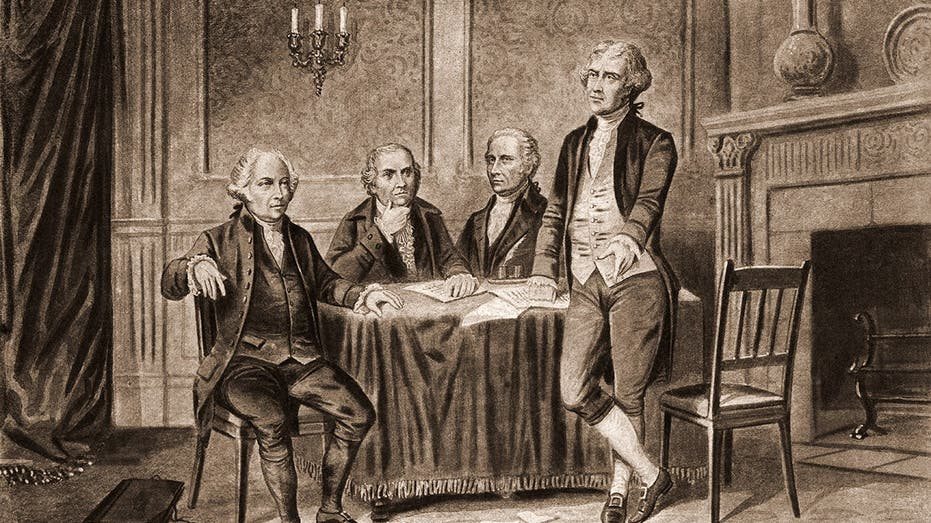
More than two centuries ago, John Adams, the nation’s second president, warned that democracies eventually bring about their own downfall. «Democracy never lasts long. It soon wastes, exhausts, and murders itself. There was never a democracy yet that did not commit suicide,» he wrote. Today, many economists and fiscal experts argue that Adams’ prediction is being put to the test by the United States’ rapidly expanding national debt.
The warning has fresh relevance as the national debt approaches $40 trillion, with annual deficits adding another $2 trillion to $3 trillion each year. Adams understood that free societies are not only vulnerable to foreign enemies, but can also be weakened from within through complacency and a gradual abandonment of the principles that made them successful, according to analysts who study the country’s fiscal trajectory.
The threat is not always visible in everyday economic conditions. Jobs remain plentiful, financial markets have reached impressive highs, and millions of Americans have accumulated substantial wealth. Despite inflation and high interest rates straining many families, the United States remains the dominant force in the global economy. Yet behind that surface strength, the federal government’s own financial reports repeatedly acknowledge that the country’s fiscal path is unsustainable.
That acknowledgment is not new. In 2010, Admiral Mike Mullen, then chairman of the Joint Chiefs of Staff, warned that the most significant threat to national security was the national debt, not an external adversary. More than a decade later, the numbers have only grown more stark. The debt now exceeds 125 percent of Gross Domestic Product, a level economists have long considered dangerous.
Each year, the federal government must refinance trillions of dollars in maturing debt while simultaneously borrowing trillions more to cover ongoing deficits. In 2025 alone, roughly $10 trillion in borrowing is expected to be required to roll over maturing debt and finance current deficits, pushing the debt ratio even higher. The entire strategy depends on lenders continuing to purchase U.S. debt at affordable interest rates.
History suggests that no great nation remains strong after abandoning fiscal discipline. Empires have risen and fallen throughout history, with financial collapse frequently serving as a key reason for their decline. More recently, Greece ignored similar warnings until its debt crisis spiraled into economic disaster. Greece was saved because the European Union had both the capacity and the willingness to provide assistance.
The United States would not have that safety net, according to fiscal observers. Because the American economy represents such a large share of the world’s financial system, a collapse in confidence in U.S. debt would leave no outside institution capable of mounting a rescue. The consequences would extend far beyond American borders and could be worse than the devastation of the Great Depression.
The danger is well documented. Economists, fiscal experts, scholars, and government officials have discussed it for years, but it barely registers with most voters. The slow accumulation of obligations eventually becomes impossible to honor. Each year of borrowing can seem manageable, but the cumulative effect, described by some as death by a thousand cuts, becomes fatal.
Advocates for fiscal reform insist the outcome is not inevitable. They argue that the crisis can still be avoided if Americans understand the magnitude of the threat and insist that Washington act before the problem becomes irreversible. When the next crisis arrives, they say, it will be too late for meaningful intervention.
Adams’ warning about democracies committing suicide was grounded in his study of political history and his belief that free societies depend on responsible citizens and responsible leadership. Whether his prediction becomes America’s future depends not on politicians alone, but on every citizen willing to listen, think, and act before the thousand cuts become one too many, according to those who study the country’s fiscal path.