Business 6 min read By Mason Emerson
Trump Family Investment in Kazakhstan Tungsten Deal Raises Questions About Conflicts of Interest
The Trump Organization, led by Donald Trump's sons, invested in a construction company that now stands to profit from a $1.6 billion U.S.-backed rare earth minerals deal in Kazakhstan. A securities attorney says critics face a «proof problem» in proving wrongdoing.
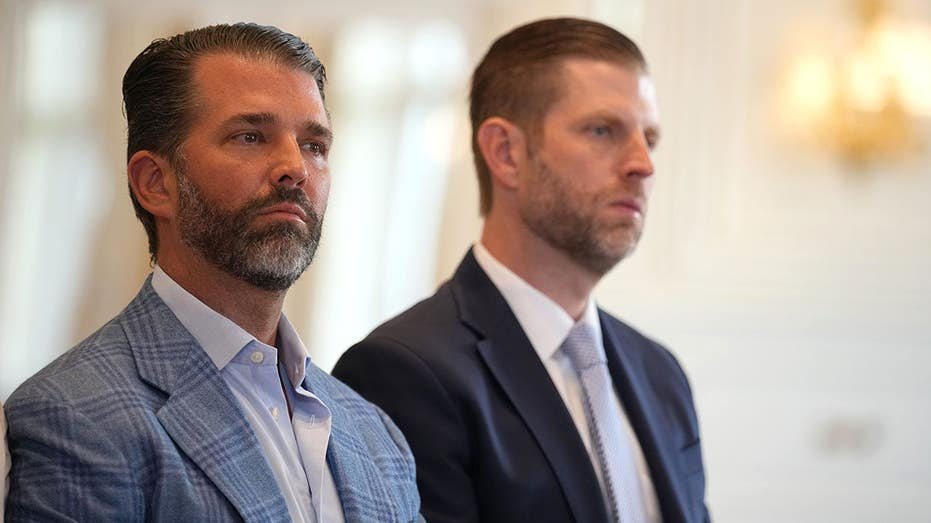
The Trump Organization, run by President Donald Trump's sons Donald Trump Jr. and Eric Trump, has come under scrutiny over an investment that could yield significant returns from a major rare earth minerals deal in Central Asia funded by the U.S. government. The deal, involving tungsten mining in Kazakhstan, has drawn criticism from ethics watchdogs, but a securities attorney says finding evidence of actual misconduct is nearly impossible, leaving critics with what he called a «proof problem.»
The controversy centers on a planned tungsten mining operation in Kazakhstan, a resource-rich nation that holds strategic reserves of the mineral essential for producing military equipment such as missiles and fighter jets. The United States has made securing a long-term supply of tungsten a national security priority, as China and Russia currently control the majority of the world's supply. In August 2025, the Trump brothers purchased a minority interest in Skyline Builders, a construction company then publicly traded on the NASDAQ under the ticker SKBL, through an investment vehicle created by Dominari Securities, a firm based in Trump Tower in New York.
Skyline Builders was a wholly owned subsidiary of ASP Isotopes, a company controlled by businessman Paul Mann. In June 2025, Cantor Fitzgerald, the investment bank founded by Commerce Secretary Howard Lutnick, underwrote a $46.8 million loan to ASP Isotopes. Lutnick's sons, Brandon and Kyle Lutnick, took over the firm after their father joined the Trump administration. Around the same time, the Trump brothers invested in Skyline Builders, which later acquired voting control of itself through ASP Isotopes. Earlier this year, Skyline Builders completed a reverse merger with Cove Kaz Capital Group, the mining affiliate of U.S.-based investment company Cove Capital, creating a new entity called Kaz Resources, now listed on the NASDAQ as KAZR. Skyline Builders owns 20% of Kaz Resources after a $20 million investment.
The chain of events began earlier when Cove Capital negotiated with the Kazakh government to take a 70% share in the country's state-owned tungsten mining deposits. On Nov. 6, 2025, Kazakh President Kassym-Jomart Tokayev met with President Trump and announced that the Central Asian nation had awarded a tungsten mining contract to the United States. The Export-Import Bank of the United States and the U.S. International Development Finance Corporation subsequently issued letters of interest totaling up to $1.6 billion in financing for the project. Cove Kaz Capital was selected as the primary mining firm. The deal has not yet been finalized and is under standard Securities and Exchange Commission review.
Critics have suggested — though without providing evidence — that the Trump brothers invested in Skyline Builders with advance knowledge that Kazakhstan would award the lucrative contract to the United States, and that Kaz Resources would ultimately secure the mining work. The Trump Organization has vehemently denied any such scheme, stating that the investment was passive, made before the tungsten deal was concluded, and without knowledge that Kazakhstan would choose the U.S. over other nations. «The $64,000 question is pretty much what Trump knew and when he knew it — and, look, the optics are bad,» said Andrew Stoltmann, a Chicago-based securities and investment fraud attorney. «You have the president's sons investing in a company that is eventually awarded a very large contract, and so it certainly raises eyebrows, it raises suspicions.»
Stoltmann acknowledged that proving any wrongdoing would be extremely difficult. He pointed out that President Trump, as a private individual not involved in day-to-day business operations, would have no duty to disclose his sons' investments unless he was directly informed. «It's fun to have conjecture, it's fun to theorize, and it's fun to discuss this, but I don't think there's any duty of disclosure when you are a passive investor in a company, and that's where President Trump would most certainly say, 'I don't know all the things my sons do,'» Stoltmann said. He added that the public outcry is understandable but may ultimately amount to «a tempest in a teapot.»
The involvement of the Lutnick family has also drawn attention. Cantor Fitzgerald, now run by Howard Lutnick's sons, stood to benefit from underwriting and advisory fees related to the ASP Isotopes loan. Stoltmann noted that Wall Street firms are typically needed to finance such large-scale projects, but the overlap of business and government ties creates an appearance of impropriety. The situation highlights the challenges regulators face in policing conflicts of interest when private investments intersect with government contracts. As the SEC continues its review, the issue is likely to remain a topic of debate in Washington and beyond, with questions about transparency and the boundaries between personal business and public service.