Business 4 min read By Mason Emerson
Rome's MIA Market closes 12th edition amid Netflix layoffs and Italian production slump
The 12th edition of Rome's MIA Market ended Friday with a expanded programme across Via Veneto, as European producers faced tighter financing, Netflix job cuts and a decline in Italian production spending.
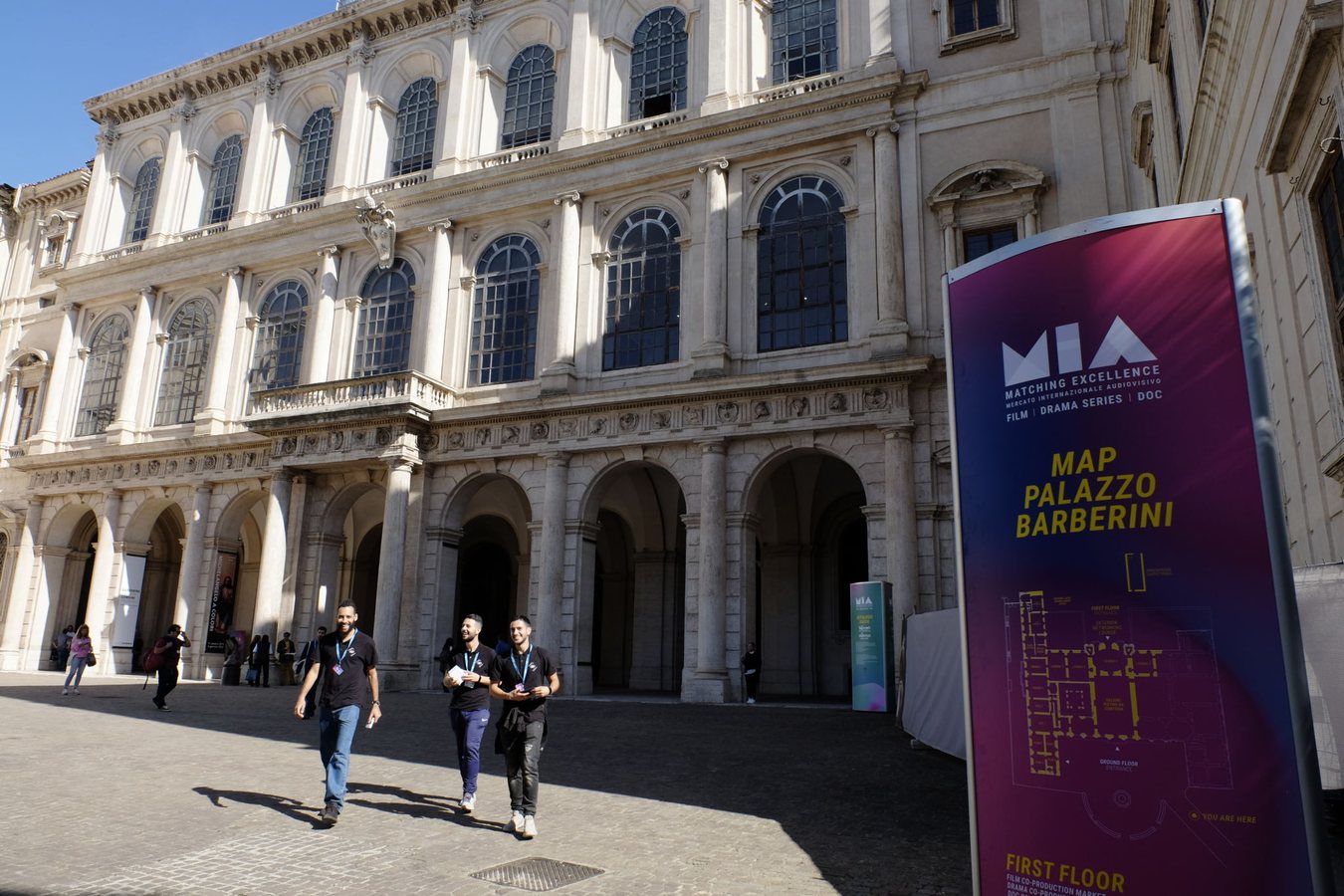
The 12th edition of Rome's MIA Market closed on Friday, with market head Gaia Tridente describing it as a stronger, renewed edition with a more ambitious and expanded programme. The event drew a high-profile group of European and global guests, including Banijay Entertainment CEO Marco Bassetti, Studiocanal CEO Anna Marsh, Bad Wolf CEO Jane Tranter, and filmmakers Edward Berger and Asif Kapadia. Attendance reached 2,800 professionals from 64 countries, a figure on a par with last year.
The week arrived under a cloud of uncertainty for the industry. The market was the first major industry gathering since Netflix cut roughly 1,000 employees, around 6 percent of its workforce, including chief content officer Bela Bajaria and head of film Dan Lin, whose firing was announced on Monday, just hours before attendees gathered for an opening reception at Palazzo Barberini. Producers attending the event described a tough financing climate. Among the comments reported, one executive said distribution advances had gone down, gaps were harder to finance, buyers in film and TV had become very specific with their mandates, and production costs were rising.
Tridente said the organisers had reshaped the market's geography. Rather than remaining in its traditional home at Palazzo Barberini and the adjacent Cinema Barberini, the event spread across several new venues along Via Veneto and into Piazza Barberini, seven venues in total. Tridente called the change probably one of the biggest transformations of MIA and certainly one of the most challenging from an organisational perspective. The organisers also linked the timing to a broader strategy of strengthening Rome's role as an international hub for the audiovisual industry by placing the market and two festivals closer together in the calendar.
Several new initiatives debuted this year. The inaugural European Investment Hub aims to bring private investors and institutions together with producers, helping industry professionals navigate the range of financial tools available to them. The market also introduced an Animation Series Gap Financing Market and a new focus on microdrama and emerging forms of serial storytelling. More than 100 projects from 43 countries were presented during the Co-Production Market and Pitching Forum, along with showcases for animation, documentaries, TV formats and series.
On the awards front, the Belgian series The Inheritance, about the death of a wealthy widow that sets off a battle over her estate, won the Sony Pictures Television Award for best drama project. The GEDI Visual Award went to The Decoy Artist, a documentary directed by Gigi Roccati and produced by Verdiana, about Mario Moselli and Saddam Hussein's Phantom Army. The MIA Awards ceremony was held on Thursday, October 22, at the Hotel Westin Excelsior, and the market runs as an event organised by ANICA and APA.
Italy's production picture also featured prominently in discussions. A report from the Italian TV producers' association APA showed the first decline in spend since 2018, and APA's eighth Report on National Audiovisual Production was scheduled for presentation during the event. Tridente said the changes reflected an audiovisual industry undergoing profound transformations in content development, production, financing and distribution. Despite the slowdown, some investors pointed to a broader pool of capital, with one agency executive saying there was more money in the marketplace than ever before.
5