Business 5 min read By Morgan Griffin
Paramount-Warner Bros. Discovery Merger Clears FCC Foreign Ownership Review
The FCC has approved Paramount's petition to allow 49.5% foreign ownership of the combined company after its merger with Warner Bros. Discovery, clearing a key regulatory hurdle even as a coalition of state attorneys general sues to block the deal.
The Federal Communications Commission has approved Paramount's petition to allow foreign entities to hold up to 49.5% of its equity once its proposed merger with Warner Bros. Discovery is completed, clearing a significant regulatory hurdle for the deal.
Paramount disclosed that total foreign ownership of the combined company would reach 49.5%, including 38.5% from investment funds based in Saudi Arabia, Qatar and Abu Dhabi. Because Paramount owns 28 television stations, it must obtain FCC approval for foreign ownership exceeding 25%. The commission's sign-off removes one of the remaining regulatory obstacles standing between the two media giants and the completion of their merger.
The approval comes as the transaction faces mounting legal opposition. A coalition of 12 state attorneys general has sued to block the merger, arguing that federal antitrust review was insufficient to protect consumers. California Attorney General Rob Bonta said the states felt compelled to act after concluding that the U.S. Department of Justice did not conduct an adequate review of the deal's competitive effects.
«We, respectfully, didn't think that the United States DOJ did an adequate review, and we thought we needed to step in to make sure we were protecting consumers,» Bonta said, according to remarks reported after the lawsuit was filed. The legal challenge has shaken Hollywood, where the merger is being closely watched by studios, talent agencies, exhibitors and streaming platforms whose business models could shift depending on the outcome.
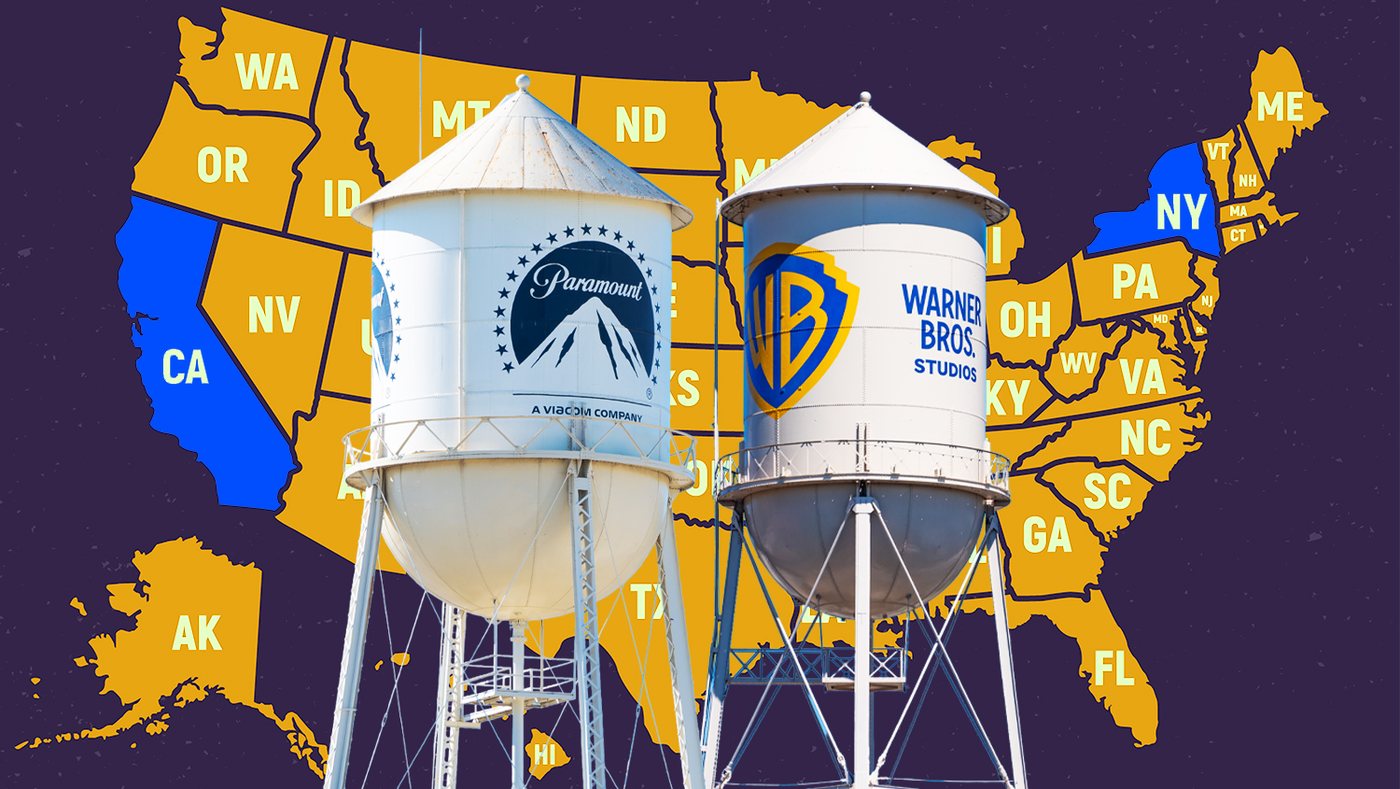
Bonta also addressed Paramount's decision to exit California, placing responsibility for the move on the company's leadership. He said the choice «lies at their feet,» framing the departure as a decision made by Paramount's management rather than one forced by the state. The comment adds a political dimension to a merger that already touches on questions of foreign investment, media consolidation and state versus federal oversight.
The FCC review focused narrowly on foreign ownership limits that apply to broadcast license holders. Paramount's petition sought permission for foreign investment levels well above the standard 25% cap, a threshold that exists to ensure domestic control of licensed television stations. The commission's approval means the combined company can proceed with a cap table that includes substantial Gulf sovereign and institutional investment.
Paramount's acquisition of Warner Bros. Discovery is backed by three Gulf investment funds, which account for the bulk of the foreign equity. The structure would give foreign investors a minority but significant stake in one of the largest media portfolios in the United States, encompassing broadcast stations, cable networks and a deep film and television library.
The state attorneys general lawsuit now becomes the central battleground for the merger's future. The case raises questions about how much weight state authorities can give to consumer protection concerns when federal agencies have already reviewed a transaction. It also tests whether a coalition of states can successfully delay or derail a merger that has cleared a key federal communications regulator.
For Paramount and Warner Bros. Discovery, the FCC decision is a procedural win but not a final green light. The companies still face litigation from the states, and the outcome of that case could determine whether the merger closes on its current timeline or is delayed, restructured or abandoned. Investors and industry observers are watching both tracks — the regulatory approvals and the courtroom fight — as signals of how far the deal can advance.
The merger would reshape the entertainment landscape by combining two storied Hollywood operations with extensive television and streaming assets. Its completion would affect everything from film production slates to the licensing of programming to rival platforms, making the remaining legal challenge a matter of broad consequence for the industry.