World 5 min read By Lauren Baxter
U.S. Urges Egypt to Protect Religious Freedom After Attacks on Christians
The State Department calls on Egypt to uphold religious liberty following violent attacks on Coptic Christians and the imprisonment of a Muslim convert, amid broader concerns over the treatment of the Christian minority.
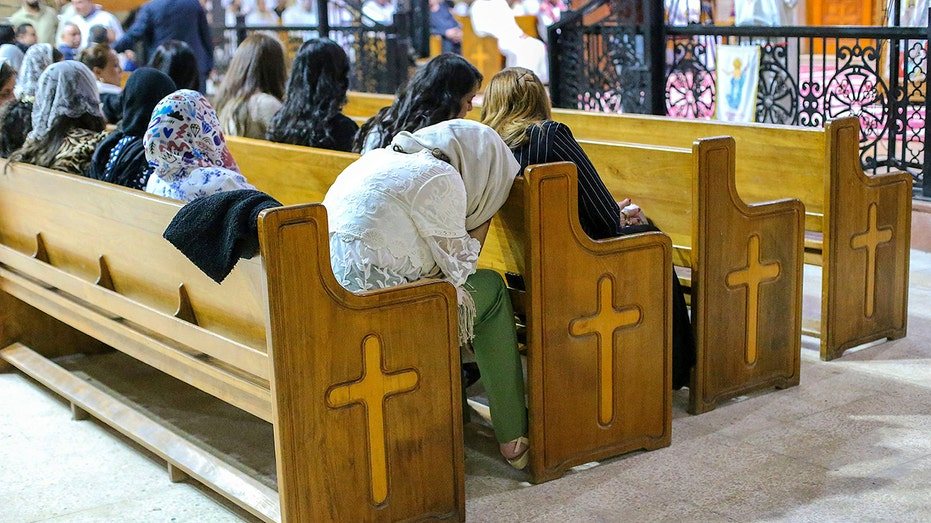
The U.S. State Department has urged Egypt to respect religious freedom after a series of violent attacks on Coptic Christians and the continued imprisonment of a Muslim convert to Christianity, underscoring ongoing challenges for the country's Christian minority. A department spokesperson told Fox News Digital that President Donald Trump has stated that America will always defend the right of every person to live out their faith openly, freely, and without fear. The spokesperson added that religious freedom is a fundamental American value and that the United States aspires for all others to enjoy the same freedom, protection, and benefits.
Among the recent incidents, a mob of Muslims pelted a church in Upper Egypt with stones on July 8, injuring Christians and damaging the building and a priest's car, according to the Egyptian Initiative for Personal Rights. Days later, a group of men attacked the Rev. Matta Roushdy, a 49-year-old priest at the Virgin Mary and St. Abanoub Coptic Orthodox Church in Dahab, South Sinai Governorate. The attacks come alongside the high-profile case of Said Mansour Rezk Abdelrazek, a Muslim convert to Christianity who has been imprisoned since 2016. According to expert Raymond Ibrahim, writing for the Gatestone Institute, Abdelrazek endured years of harassment, detention, and abuse after embracing Christianity. On April 13, prosecutors referred him to a terrorism court, and his lawyers were denied access to the case file. Advocates report torture, physical abuse, denial of adequate medical care, and repeated trial postponements.
Despite the bleak situation, there have been signs of progress in combating discrimination against Coptic Christians. Coptic Solidarity noted last week that Egypt's Ministry of Youth and Sports conducted an investigation and found sufficient evidence of misconduct by a coach at Alexandria's Al-Ittihad Club who allegedly excluded a junior football player, Makari Younan, because of his Christian name. The organization described the decision as unprecedented and deserving recognition, whether motivated by public pressure or a genuine policy shift. It appeared to be the first official acknowledgment that discrimination against Copts in Egyptian sport is a matter requiring government intervention, not merely allegations from disappointed families or human rights groups.
Open Doors, a global organization aiding persecuted Christians, stated that the attacks on the priest were likely carried out by members of radical Islamist groups such as the Muslim Brotherhood. The group said these actions reflect broader anti-Christian sentiment, especially in rural and village societies where weak law enforcement leaves Christians vulnerable. Although violent cases have decreased in the last decade, Open Doors warned that attacks will continue until the state takes anti-Christian fanaticism as seriously as it deserves. Egyptian Middle East scholar Dalia Ziada told Fox News Digital that these cases represent only a small fraction of what Coptic Christians endure daily. She noted that Coptic Christians, who make up an estimated 10 percent of Egypt's 120 million people, are at the essence of Egyptian identity as preservers of the country's history and cultural memory, yet they remain vulnerable.
The U.S. State Department's 2025 report on Christians paints a troubling picture. Despite some efforts for greater representation, Christians remain underrepresented in senior positions across the public sector. Only two Christians — the minister of local development and the minister of parliamentary affairs — serve in Egypt's 31-member cabinet. Of 27 appointed governors, only one is Christian. In the senate, 24 Christians hold seats out of 300, with one serving as deputy speaker. A Coptic Christian heads the constitutional court, but no Christian serves as president of any of the country's 27 public universities. Ziada added that women and Coptic Christians constitute President Abdel Fattah el-Sisi's most important political base, having strongly supported him after the Arab Spring because they felt threatened by the Muslim Brotherhood. While el-Sisi visits their church on Christmas each year, Ziada argued that little else is done to reduce their vulnerability.
Egypt receives $1.3 billion in annual U.S. funding, making the State Department's call for religious freedom a significant factor in the bilateral relationship. The repeated incidents and official reports underscore the persistent challenges facing the Christian minority in Egypt, even as some steps toward accountability and inclusion are being taken.