World 5 min read By Lauren Baxter
Sudan's Civil War Creates World's Largest Humanitarian Crisis as Millions Face Starvation
Over 14 million people have been displaced and nearly 34 million need urgent aid in Sudan, where a forgotten civil war between the Sudanese Armed Forces and the Rapid Support Forces has created the world's largest humanitarian disaster, yet global attention remains focused elsewhere.
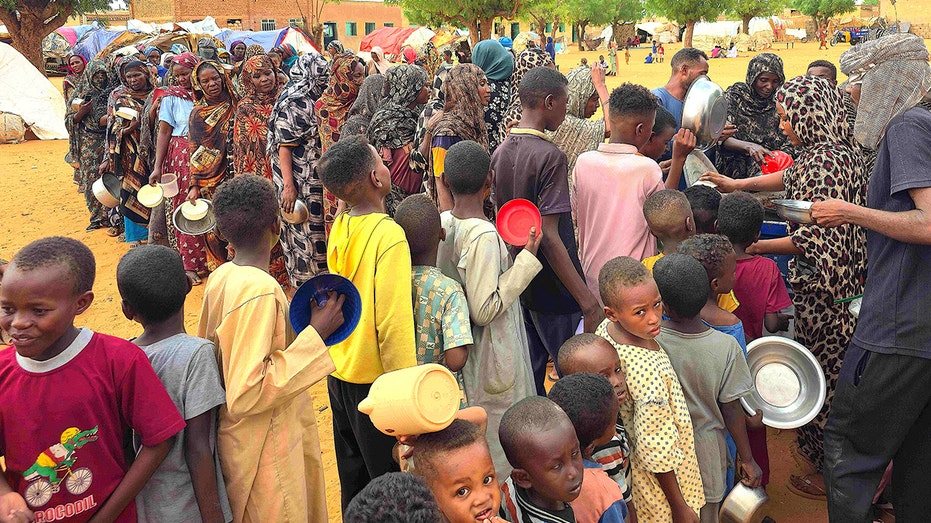
The civil war in Sudan has quietly become the world's largest humanitarian and displacement crisis, with more than 14 million people forced from their homes and nearly 34 million in desperate need of assistance, according to the International Rescue Committee. The conflict, which erupted in April 2023 between the Sudanese Armed Forces (SAF) and the paramilitary Rapid Support Forces (RSF), has generated a level of suffering that accounts for 10 percent of global humanitarian needs. Yet international attention remains focused on crises in Ukraine, Gaza, and Iran, leaving Sudan largely overlooked.
«The war in Sudan has caused the world's largest humanitarian crisis and has escalated into a regional war involving all of its neighbors as well as numerous Middle Eastern powers,» Alan Boswell, Project Director for the Horn of Africa at International Crisis Group, told Fox News Digital. «Despite this, world leaders continue to ignore the conflict, leaving it to subordinates. That approach continues to fail.» The United Nations reports that some 19.5 million people are experiencing acute hunger, and 4.5 million have fled the country entirely.
The fighting began when long-time ruler Omar al-Bashir was overthrown in 2019. After a brief period of civilian rule, the country's two top generals — Abdel Fattah al-Burhan of the SAF and Mohamed Hamdan Dagalo, known as «Hemedti,» of the RSF — staged a coup in 2021, toppling the interim government. Their uneasy alliance collapsed in April 2023, plunging the nation into all-out war. Both sides have been accused of committing atrocities, but recent reports have highlighted the brutality of the RSF, including ethnically targeted attacks.
A major focus of the deteriorating situation is in El-Obeid in North Kordofan state, where a hunger crisis is overwhelming more than 100,000 displaced people living in camps. Abdallah Alwardat, the World Food Programme's Sudan Country Director, said the response must be scaled up far beyond those already being reached. Another flashpoint is El Fasher in the Darfur region, where the RSF seized control in October 2025 and killed more than 6,000 people during the initial siege.
The United Nations High Commissioner for Human Rights released a report in July 2025 documenting widespread sexual violence against women and girls, some as young as 12. Victims described mass and gang rapes committed by RSF fighters, as well as abductions in which women and girls were beaten, bound, and driven away in vehicles. The U.N. and human rights groups have concluded that at least three components of genocide have been met, including deliberately inflicting conditions of life intended to destroy a group in whole or in part.
A separate U.N. report from September 2025 found that the Sudanese Armed Forces have also committed war crimes, targeting civilians and civilian infrastructure. Both sides have executed, tortured, and raped victims perceived as affiliated with the enemy. «For three years, we have warned that Sudan was on the brink of catastrophe, and those warnings have gone unanswered,» said Richard Data, International Rescue Committee Country Director for Sudan.
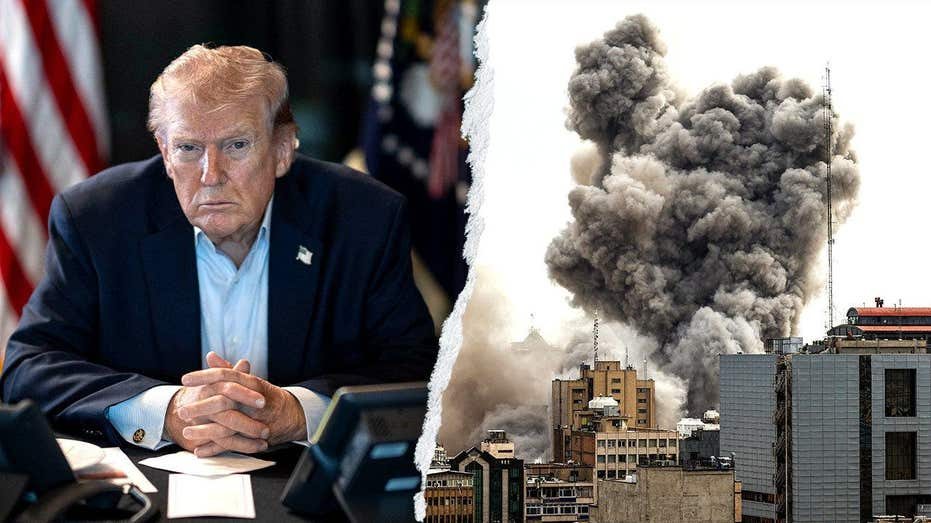
The United States imposed additional sanctions on the Sudanese Armed Forces in late 2025 for allegedly using chemical weapons in 2024, in violation of the Chemical Weapons Convention. The Sudanese government denied the allegations. The Trump administration has made significant efforts to mediate in Ukraine, Gaza, and Iran, but has not given Sudan the same high-level attention. With multiple global crises competing for resources, Sudan's war — which has already drawn in all of its neighbors and various Middle Eastern powers — remains a forgotten catastrophe that continues to deepen, leaving millions hungry and without hope.