World 6 min read By Mason Emerson
Sen. Lindsey Graham, Trump’s Fiercest GOP Critic Turned Key Foreign Policy Adviser, Dies at 70
Sen. Lindsey Graham, who evolved from a fierce critic of Donald Trump to one of his most influential voices on war and peace, died Saturday after returning from Ukraine. He was 70.
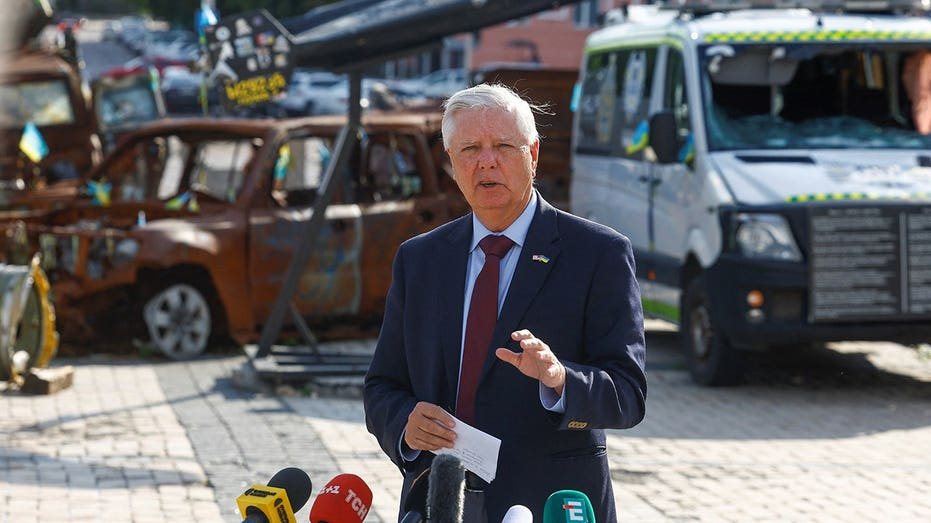
Sen. Lindsey Graham, the South Carolina Republican who transformed from one of Donald Trump’s harshest critics into one of his most consequential foreign policy advisers, died Saturday at the age of 70. His death, which came just hours after he returned from his 10th trip to Ukraine, marked the end of a three-decade career in public service during which he became a pivotal figure in shaping U.S. policy on Iran, Ukraine, Israel, and NATO.
Graham’s relationship with Trump began in 2015 with open hostility. The senator called Trump a «jackass» and warned that nominating him would be a disaster for the Republican Party. Trump responded by reading Graham’s personal cellphone number aloud at a campaign rally, encouraging supporters to call him. Yet over the next decade, Graham became one of the few lawmakers with regular access to the president on national security matters, emerging as a key voice in the administration’s foreign policy decisions.
«He would call me all the time,» Trump told Fox News on Monday. «I’d say, ‘Stop calling me, Lindsey.’ It was amazing. He just never stopped. He was a worker — a total workaholic politician.» Trump described Graham as «like a member of the family» and said he was among the final people to speak with the senator after his return from Ukraine.
Graham’s influence on foreign policy was rooted in his extensive network of global contacts. He maintained close relationships with Ukrainian President Volodymyr Zelenskyy, Israeli Prime Minister Benjamin Netanyahu, NATO Secretary-General Mark Rutte, and Gulf leaders. Colleagues said Graham lived and breathed Senate work, often traveling overseas while other lawmakers spent weekends at home. He visited war zones, met with presidents, and acted as an informal envoy between the U.S. and allies.
«He wasn’t interested in writing op-ed pieces or making speeches, he wanted firsthand contact with leaders of the world,» said retired Army Gen. Jack Keane, chairman of the Institute for the Study of War and a Fox News senior strategic analyst. «He was interested in getting the results.»
Graham’s worldview was shaped alongside the late Sens. John McCain, R-Ariz., and Joe Lieberman, D-Conn., with whom he traveled extensively. The trio, known as the «Three Amigos,» championed an interventionist Republican foreign policy rooted in American military leadership, support for democratic allies, and confrontation with authoritarian adversaries. This placed Graham at odds with Trump’s «America First» agenda, which sought to end «endless wars» and question long-standing alliances.
Despite these differences, Graham made a conscious decision to work with Trump after losing the 2016 primary. «He understood the American people better than we did, and shame on us for not doing it as effectively as him,» Graham said at the time, according to Keane. Graham then focused on making himself useful to the president, offering advice and counsel that grew into both a personal and professional relationship.
Graham’s influence was particularly evident on Iran and Ukraine. He publicly disagreed with Trump over Iran negotiations, preferring strikes and regime change, and repeatedly pushed for a tougher line against Russia in the war on Ukraine. Whenever Trump appeared to move toward a negotiated settlement with Iran, Graham followed a familiar playbook: remind the White House that Congress would have to review any lasting agreement. After Trump announced a memorandum of understanding with Iran in June, Graham quickly argued that any lasting deal would require congressional scrutiny.
In the hours before his death, Graham told a confidant he wasn’t feeling well but joked he couldn’t die because he still had work to do. He was preparing to push a long-stalled bipartisan Russia sanctions bill through the Senate, remained focused on advancing Saudi-Israel normalization, and believed the Trump administration had not yet finished confronting Iran. His sudden death leaves a void in the Senate’s foreign policy leadership and raises questions about who will fill his role as a bridge between the administration and global allies.
Graham’s legacy is likely to be defined by whether he simply reinforced Trump’s instincts or helped shape them. What is clear is that he became one of the few congressional voices with regular access to the president on questions of war and peace, giving him unusual influence as the administration navigated conflicts from Ukraine and Iran to Israel and NATO. His death marks the end of an era in which a fierce critic became an indispensable adviser, reshaping the Republican Party’s approach to foreign policy in the process.