World 6 min read By Lauren Baxter
Rethinking Patriotism as a Path to Healing America's Divisions
As the U.S. approaches its 250th birthday, a growing argument suggests that traditional patriotism, rooted in exceptionalism, may hinder rather than help the nation address deep-seated issues like racism and militarism. Drawing on historical and contemporary critiques, the article explores how reimagining patriotism could offer a more honest path forward.
As the United States prepares to celebrate its 250th birthday, a contentious debate is emerging over the role of patriotism in healing the nation's deep political and social divisions. While some argue that a renewed sense of patriotic pride can counter the nationalism of the Trump era, a growing chorus of historians and thinkers warns that conventional patriotism, particularly when tied to American exceptionalism, may actually perpetuate the very problems it seeks to solve.
James Madison designed a system of checks and balances intended to prevent any single branch from dominating. Yet critics contend that under President Donald Trump, those safeguards have eroded, with one man's whims shaping tariffs and military engagements. In response, some have advocated for a return to patriotism as a unifying force, a strategy that formed the core of Joe Biden's 2020 presidential campaign. However, this approach, while well-intentioned, may be fundamentally flawed, according to a recent analysis.
The central critique is that patriotism, as commonly understood, tends to inhibit bold solutions to enduring issues like racism and militarism by convincing Americans they already inhabit the greatest and freest nation on earth. This mindset, the argument goes, leads to the belief that Trump is an anomaly and that a healthy voter turnout will restore order, ignoring deeper structural problems. It was patriotism, packaged as national security, that led to the suspension of constitutional safeguards after the 9/11 attacks. And during the civil rights movement, calls for caution were invariably framed as patriotic duty.
The Rev. Dr. Martin Luther King Jr. famously challenged this notion, calling the belief that Americans are fundamentally good and that the nation is the healthiest on earth «the illusion of the damned.» In a 1965 interview, King argued that those who had given up on America were often doing more to improve it than its professional patriots. This tension between blind loyalty and critical engagement has deep roots in American history.
The idea that patriotism can cure nationalism traces back to a classic essay by George Orwell, who characterized nationalism as a disease that grows on the ruins of religious faith. Orwell saw nationalism as egoism and a desire for power, where the nationalist not only tolerates crimes committed by his own people but fails to notice them. He proposed patriotism as an inoculation against nationalism. But critics argue that if patriotism contains the belief that America is exceptional and uniquely positioned to lead the world, it is already nationalist at its core.
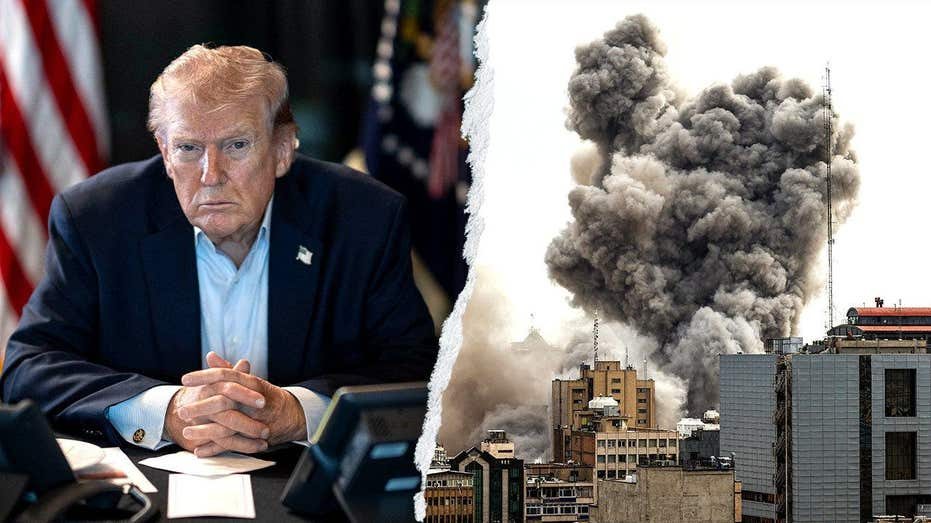
President Biden's response to a question about sustaining conflicts in Ukraine and Gaza in October 2023 illustrated this point. When asked whether the U.S. could handle both simultaneously, Biden replied, «We're the United States of America, for God's sake! The most powerful nation in the history of the world.» Similarly, Trump, when asked about his promises not to start new wars, denied facts and boasted about building the strongest military. Both responses, critics say, reflect a nationalist mindset that prioritizes power and prestige over dialogue and restraint.
The moral dimension is equally troubling. For the nationalist, the ethics of war are as straightforward as the logistics. This is not an alternative to an America First policy, but another version of it. Watching the United States support repeated strikes on Gaza, some newly minted citizens have questioned whether they can ever feel at home in a nation so unapologetically wedded to war, and whether there are ways to be patriotic that do not bow before the idol of exceptionalism.
Historical figures offer a different vision. In the early days of the republic, abolitionists like Frederick Douglass and William Lloyd Garrison exposed the intimate relationship between the narrative of America as a chosen nation and the original sin of slavery. They argued that patriotism was more than a glaze on a flawed structure; it was the mortar binding democracy to the rotten timber of a slave empire. The Declaration of Independence declared all humans created equal, but the Constitution, with its three-fifths and fugitive slave clauses, declared the opposite. Patriotism, they contended, was the force holding the nation back from its creed.
For Garrison, the flag was a symbol of failure. Every speech on American greatness and the indivisibility of the Union, he raged, was a blank check to the slave power. Douglass agreed, arguing that the orthodox view of America as the last hope of a fallen world was more than narcissism; it was a rivet on the chains of four million enslaved people. These critiques suggest that true patriotism may require a willingness to confront uncomfortable truths about the nation's past and present.
As the U.S. approaches its semiquincentennial, the question remains: Can patriotism be reimagined in a way that fosters genuine healing? Some thinkers propose a patriotism rooted not in exceptionalism but in a commitment to the nation's ideals, even when those ideals are imperfectly realized. This would mean acknowledging failures, from slavery to militarism, while striving to build a more just society. Whether such a vision can gain traction in a deeply polarized country remains to be seen, but the debate itself reflects a nation grappling with its identity.