World 6 min read By Lauren Baxter
Critics Accuse Turkish Leaders of Crossing Into Antisemitism With Anti-Israel Rhetoric
Turkish officials have escalated verbal attacks on Israel, with critics and Israeli leaders condemning the language as antisemitic and reminiscent of historical genocide rhetoric. The U.S. has responded cautiously, citing Turkey's NATO ally status.
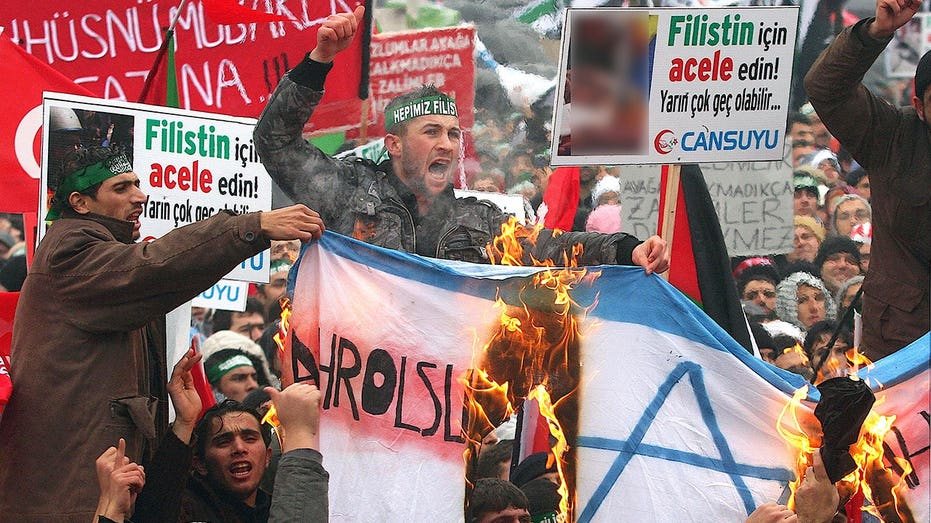
Turkish leaders have intensified their verbal attacks on Israel in recent months, drawing sharp criticism from Israeli officials and watchdog groups who argue that the rhetoric has crossed into outright antisemitism. The escalating war of words comes as relations between the two nations continue to deteriorate, with Turkish Foreign Minister Hakan Fidan making headlines in early July for describing Israel as «a burden that humanity can no longer bear» during an interview with CNN Türk. Fidan also characterized Israel as representative of «humanity’s common problems» and called on other countries to pressure the Jewish state, according to reports from The Jerusalem Post and Israel National News.
Israeli Foreign Minister Gideon Sa’ar responded forcefully, calling Fidan’s statement «a clear call for genocide.» In a press statement, Sa’ar warned that «the Jewish people know very well what happens when such words are allowed to go unchallenged. The first step on the road to genocide is dehumanization.» He added that the language «sounds very familiar to sentences from about 100 years ago,» drawing a direct parallel to rhetoric that preceded the Holocaust. Sa’ar asked pointedly, «To speak about a people as a ‘problem for humanity.’ What do you do with a ‘burden that you can no longer bear?’»
Sinan Ciddi, a senior fellow at the Foundation for Defense of Democracies and director of its Turkey program, described Fidan’s statement as «some of the vilest rhetoric to come out of any statesman since the Holocaust.» Ciddi told Fox News Digital that the escalation of anti-Israel sentiment in Turkey «goes all the way back to 2008,» when President Recep Tayyip Erdoğan began dismantling the bilateral relationship between Turkey and Israel. However, after the Hamas-led attacks on Israel on October 7, 2023, the rhetoric «just went into overdrive,» Ciddi said. He noted that he has «never heard any Arab leader utter the words that Foreign Minister Fidan has said.»
Despite Erdoğan’s public condemnation of antisemitism — he told Turkish religious minority representatives in March that «just as Islamophobia is a crime against humanity, antisemitism is also a crime, an evil that cannot be considered reasonable or legitimate» — he and other ministers have continued their inflammatory language. In June, Turkish Interior Minister Mustafa Çiftçi said the world would «witness the liberation of Jerusalem,» according to the Times of Israel. In May 2021, Erdoğan called Israelis «murderers,» claiming they were «only satisfied by sucking their [victims’] blood.» At the time, the U.S. State Department spokesperson issued a strong condemnation, calling the remarks «reprehensible.» In May 2025, Erdoğan again invoked similar language, accusing Israel of being «a terror state that feeds on the blood, lives and tears of the innocent,» as reported by Israel National News.
The anti-Israel sentiment in Turkey extends well beyond the government. A Pew Research poll conducted in June found that Turkey had the highest level of anti-Israel sentiment of any country surveyed, with 91% of the population holding «very unfavorable» views of Israel, 6% holding an «unfavorable» view, and only 1% expressing any favorability. The poll underscores the deep-seated hostility that has taken root in Turkish society, fueled in part by years of government rhetoric.
When asked about the State Department’s response to antisemitic statements from Turkish leadership, a spokesperson told Fox News Digital that «Turkey is a longstanding and valued NATO ally, and we continue to engage on all aspects of our important and multi-faceted relationship.» The response has drawn criticism from some analysts who argue that the U.S. should take a stronger stance. Ciddi said there are «numerous channels» for the State Department and the Trump administration to reprimand Turkey, including pulling aside a Turkish counterpart to demand an apology, issuing a formal State Department statement, or placing Turkey on a watchlist for antisemitic behavior.
The issue has remained largely out of the media spotlight as the NATO summit in Ankara focused on Iran, Russia’s war with Ukraine, and defense spending. Ciddi warned that Turkey «is going to try and overshadow anything else» and «promote itself as the sort of premiere NATO ally,» while whitewashing its human rights record. He argued that «we cannot safeguard our allies’ democratic norms, rights and practices if we don’t hold member states like Turkey accountable for the threats that it presents.» The Turkish Embassy in Washington, D.C., did not respond to a request for comment.