Technology 4 min read By Mason Emerson
The “Billionaire Apocalypse Ark” Is Real — Just Not the Way the Meme Says
Wamani really has domes, an airstrip and a plan for offline AI. But the owners spent almost $10 million, not more, and the place is already marketing tourist stays.
The internet has found a nearly perfect story for the age of AI anxiety: rich tech people are building an ark in Argentina, downloading artificial intelligence and preparing to disappear when civilization crashes. The best part is that the core story is real. The catch is that the meme version has already added a few upgrades of its own.
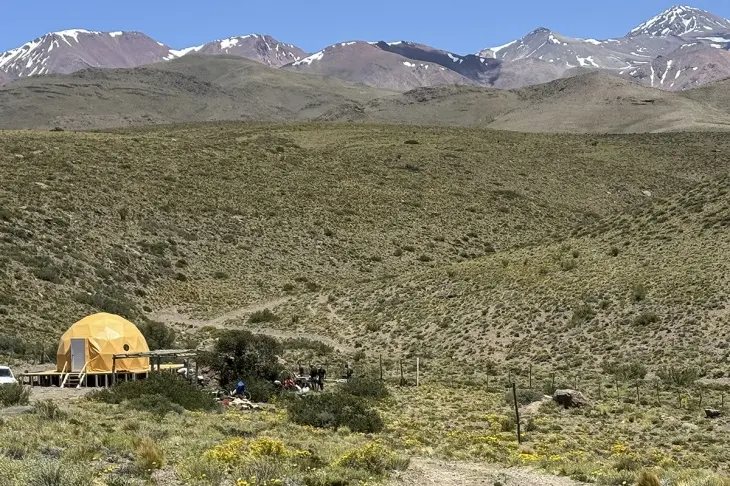
The place is called Wamani. It covers 32,000 hectares in Mendoza, close to the Andes. Over the past two years, the property has gained small prefabricated homes, geodesic domes, solar power and an airstrip, according to the Financial Times. Wamani’s own website shows the ranch operating as a remote mountain destination and says it currently has basic Starlink connectivity.
There are six owners. Martín Varsavsky, an Argentine-Spanish tech entrepreneur, has half the project. Five friends share the rest, including OLX co-founder Alec Oxenford and Kind founder Dan Lubetzky.
Now for meme correction number one: they are not all confirmed billionaires. Lubetzky is one. The Financial Times estimates Varsavsky’s fortune at around $700 million. “Extremely wealthy tech entrepreneurs” does not fit as neatly into a viral headline, but it is closer to the evidence.
Correction number two: the reported spending is almost $10 million. Varsavsky gave that figure to the Financial Times. Posts saying the group has already spent more than $10 million have nudged the number past what the source actually says. The ranch is still being built, so the eventual total may get there anyway.
The offline-AI part, meanwhile, is not invented. Varsavsky says the owners are studying whether they can download large language models to computers powered by solar energy. The dream is to keep a limited digital knowledge system running if global servers go down. He calls it a kind of private limited “internet,” but think of it less like rebuilding the web and more like keeping an enormous smart offline library. It could work with what you saved beforehand; it could not tell you what is happening on the other side of a disconnected planet.
The owners are also thinking about the analog basics. Cattle are planned. More land could be bought for crops. Springs and streams exist on the property. The airstrip gives them a transport option that does not depend on driving the long final stretch from the nearest settlement. None of this makes the location risk-free: Mendoza is dry, and the region gets powerful winds from the Andes.
And here comes the funniest correction to the “you need the right friends” punch line. Wamani is publicly selling the idea of visiting. Its official site has an availability inquiry and offers accommodation, meals, trekking, mountain biking, horseback riding and private-flight coordination. The Financial Times says the owners are considering Airbnb. So, no, friendship with a tech mogul is no longer the only advertised path through the gate.
That does not make Wamani ordinary. It is still a massive private property whose owners openly think about world-war scenarios and global server failure. Varsavsky has even floated a “tranquility visa” concept that would make Argentina a fallback destination for wealthy foreigners, while the Milei government separately works on citizenship by investment.
The most revealing part is not the apocalypse branding. It is how quickly AI has joined the same survival checklist as food, energy and transportation. The people who spent the last two decades putting everything in the cloud are now imagining what they would want if the cloud vanished. Wamani’s answer: keep the land, keep the solar panels, keep a runway — and download the brain before the Wi-Fi dies.
78