Society 6 min read By Morgan Griffin
Netflix and Toho Reboot «The Human Vapor» With a Modern Anti-Authority Twist
The new Netflix series «Human Vapor», a collaboration with Toho and directed by Shinzo Katayama, reboots the 1960 tokusatsu classic with graphic body-horror and a contemporary anti-authority edge, following a journalist and a detective as they pursue a killer who can transform into gas.
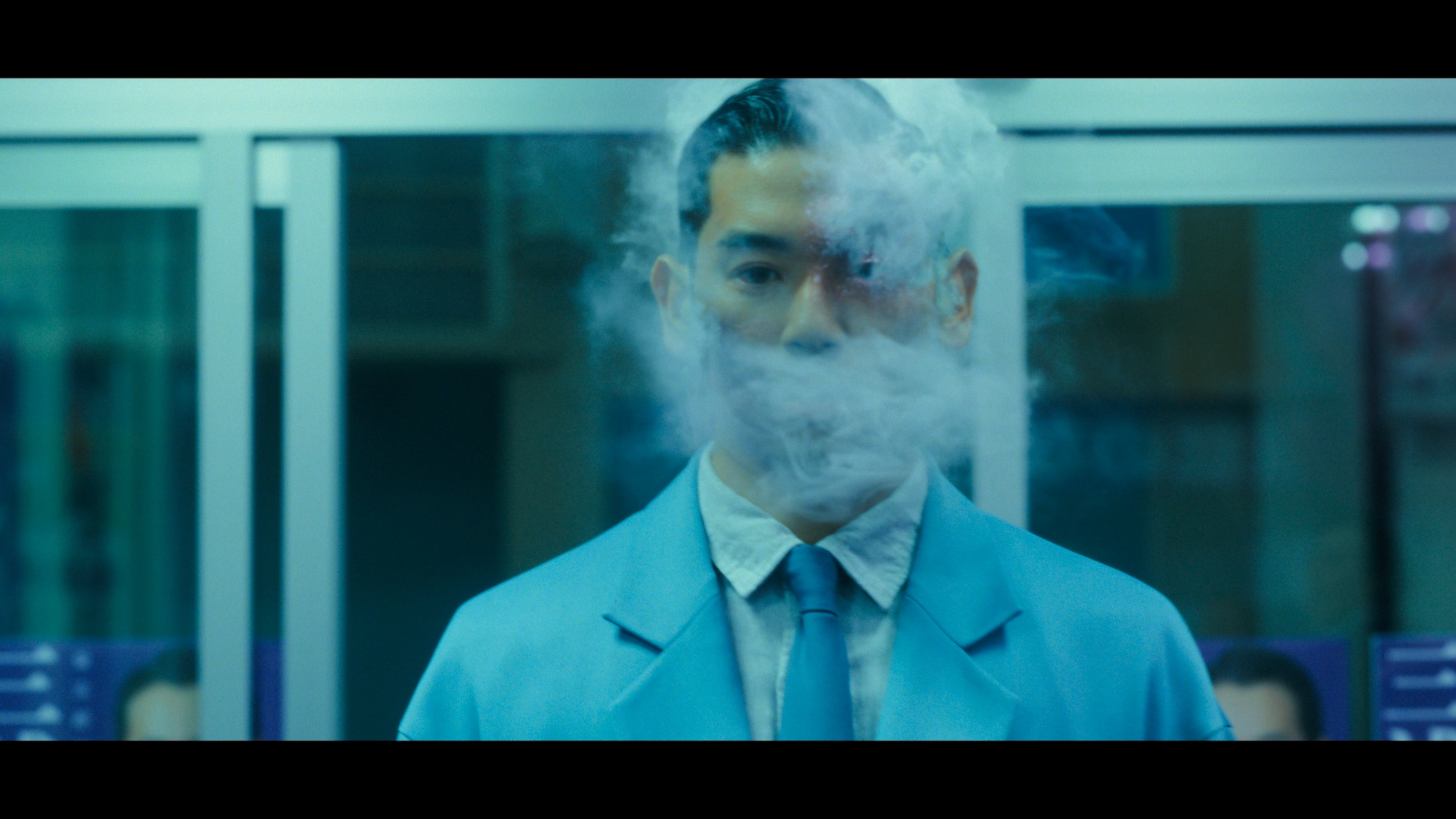
Netflix has released «Human Vapor», an eight-episode series that marks the streaming giant's first collaboration with the historic Japanese studio Toho, rebooting Ishirō Honda's 1960 tokusatsu classic with a modern, anti-authority sensibility. The show, directed by Shinzo Katayama and developed by Korean showrunner Yeon Sang-ho, opens with a visceral scene of body-horror: a scientist demonstrating a new biomass power method on live television is attacked by a self-directing vapor that forces its way into his airways, suspends him in the air, and causes him to explode in a shower of blood and viscera. This explicit sequence immediately signals that the reboot is not bound by the restraint of the original monster movie era, and it also serves as a commentary on the extreme content that now airs on television.
The series follows Kyoko Kono, a harried but dedicated reporter played by Yû Aoi, who is investigating a mysterious killing spree linked to a sinister suited man known as the Human Vapor. This villain, who can shift between physical and gaseous form, is a direct descendant of the character from Honda's film, but the show expands the story into a contemporary thriller. The original 1960 film, part of Toho's «Transforming Human Series», featured a librarian named Mizuno who gains the ability to turn into vapor after a failed astronautical experiment. He uses his powers to commit bank robberies to fund performances for his beloved dancer, Fujichiyo, and his actions reflect a crisis in post-war Japan, where the atomic origins of his powers give him a new morality that places him above human law.
In the Netflix version, the bank robbery plot is entirely replaced by an original narrative that focuses on the anti-authority edge of the character. The Human Vapor's ideology, expressed in the original film with the line «I am no longer a human being. Therefore I am no longer subject to human law,» is amplified in the series to critique modern institutions. The show's creators have drawn on the socio-political context of the original, which was released during a year of mass protests and strikes in Japan, and updated it to reflect contemporary anxieties about authority, technology, and media sensationalism. The incompetent police in the original are mirrored in the series by a detective, Okamoto, who works alongside Kyoko to solve the case, creating a dynamic that echoes the doomed devotion of the original's central couple.
The original «The Human Vapor» was a tokusatsu film, a genre that relies on practical special effects like monster suits and miniature sets, and it was directed by Honda, best known for «Godzilla», with special effects by Eiji Tsuburaya, often called the father of tokusatsu. The 1960 film used techniques such as dry ice, optical compositing, and wire work to depict the vapor transformation, and it was praised by Japanese critics for its human edge and anti-authority themes. The Netflix series, however, uses modern CG effects to render the vapor's attacks in vivid, pulsating detail, making the body-horror explicit and attention-grabbing. This shift from practical to digital effects reflects how science-fiction filmmaking has scaled up since the 1960s, but the show retains the core moral ambiguity of the villain, who is both a product of scientific hubris and a critique of societal norms.
The series also explores the relationship between Kyoko and the detective, mirroring the original's romance between a reporter and a gruff policeman, but with a modern twist. The original film's doomed romance between Mizuno and Fujichiyo, a bankrupted upper-class dancer, highlighted class tensions in post-war Japan. In the reboot, the focus is on the pursuit of justice in a world where the media and authorities are often ineffective, and the Human Vapor's ability to evade capture becomes a metaphor for the power of individuals to challenge systems. The show's eight-episode format allows for deeper character development and a more complex narrative than the original film, which was a tight 87-minute feature.
Fans of the original will recognize the core concept of a man who can turn into vapor and uses his powers for criminal purposes, but the Netflix series is a complete reimagining that expands the scope of the story. The show's anti-authority edge is sharpened by the modern setting, where live broadcasts of violence and the failure of institutions to protect citizens are central themes. The Human Vapor's calm, arrogant ambition, conveyed in the original by actor Yoshio Tsuchiya, is updated for a contemporary audience, making him a chilling figure who embodies the dangers of unchecked power and scientific experimentation. The series is a bold reboot that honors the legacy of Honda and Tsuburaya while pushing the boundaries of the tokusatsu genre into the 21st century.