Society 5 min read By Morgan Griffin
Medical School Deans Avoid Answering Whether Men Can Have Babies at Congressional Hearing
During a House hearing on DEI in medical schools, Rep. Mary Miller pressed UCSF and UCLA deans on whether non-biological women can have babies, receiving no direct answers, which she called 'ridiculous.'
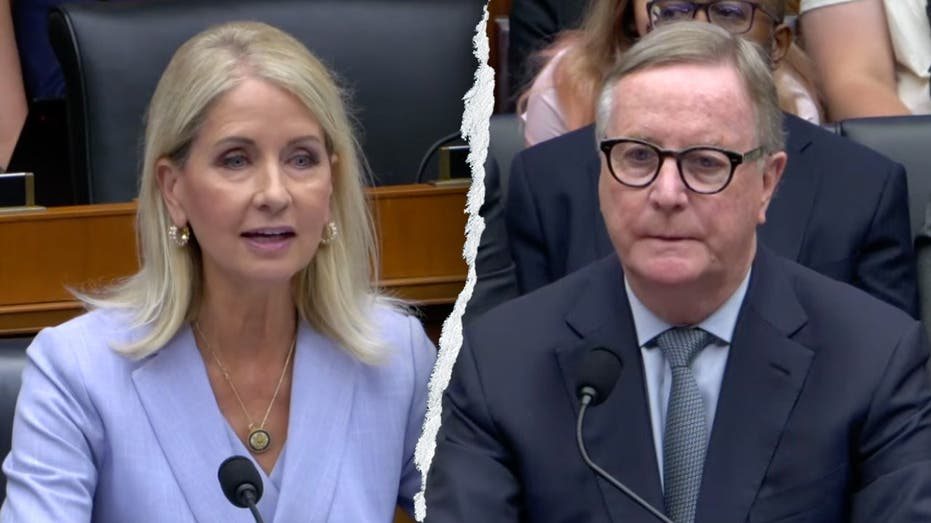
During a tense House Education and Workforce Committee hearing on Tuesday, Rep. Mary Miller, R-Ill., pressed two prominent medical school deans on whether non-biological women can have babies, but received no direct answers, prompting her to call the responses «ridiculous.» The hearing, titled «Training Activists, Not Physicians: The Impact of DEI on Medical Schools,» examined how diversity, equity, and inclusion initiatives at institutions like the University of California, San Francisco, and the University of California, Los Angeles, may be shaping curricula and admissions policies.
Miller directed her first questions to Dr. Sam Hawgood, chancellor of UCSF, referencing the school’s classroom guide titled «Framework for Gender and Sex Concepts in Teaching,» which advises against using the term «pregnant women» in favor of «pregnant people.» She asked Hawgood to clarify who «pregnant people» are compared to pregnant women. Hawgood responded that the terminology is part of a curriculum designed to help students address a diverse patient population, adding that «the vast majority of pregnancies are in women» and that he has «absolutely no problem with the term pregnant women.»
Miller then asked directly, «Has a non-biological woman ever had a baby?» Hawgood replied that a «transgender person can.» Miller shot back, «That's not a biological woman. Has a non-biological woman ever had a baby?» Hawgood began to say, «I would reiterate,» but Miller interrupted, stating, «It's ridiculous.» The exchange highlighted the broader debate over gender-inclusive language in medical education, with Miller arguing that such terminology undermines scientific clarity.
Miller then turned to Dr. Steve Dubinett, dean of the UCLA School of Medicine, citing a required course for ob-gyn students that advises against assuming gender identity. She also referenced a May 2026 class disclaimer that, while using the terms «she» and «women,» stated it did not intend to exclude «those who have a uterus but do not identify with these terms.» Miller asked Dubinett, «What does that even mean?» Dubinett responded that he was not familiar with the specific announcement and would need to read it in full.
Pressing further, Miller asked, «Can someone have a uterus but not be a woman? Because it seems like your school is promoting that ridiculous idea?» Dubinett did not directly answer but said the school is «treating transgender people» in compliance with state and federal law. When Miller asked if UCLA teaches biology, Dubinett affirmed that it does. She then demanded a yes-or-no answer: «Can someone have a uterus and not be a woman?» Dubinett began, «Again, I would,» before the committee chair interrupted as Miller’s time expired. Miller concluded, «That's what your medical school is promoting. Chairman, it's clear these medical schools are hiding DEI curriculum under the guise of medical access.»
In a statement to Fox News Digital after the hearing, Miller said, «It shouldn't take a medical degree to answer a basic biology question. This hearing exposed that our medical schools have become consumed by political ideology that they're losing sight of reality. Patients just want doctors grounded in common sense. Medical schools that abandon scientific truth should lose their accreditation.» The hearing also addressed concerns that DEI initiatives may contribute to antisemitism and affect admissions policies at medical schools, including the University of Illinois.
Fox News Digital reached out to Hawgood and Dubinett for comment but did not receive immediate responses. The hearing reflects ongoing tensions in U.S. medical education over how to balance inclusive language with traditional biological terminology, as well as broader political debates over the role of DEI programs in higher education. Critics argue that such initiatives prioritize ideology over scientific rigor, while supporters contend they are necessary to address health disparities and provide culturally competent care to diverse patient populations.