Society 5 min read By Trevor Kendall
Legal battle over St. Michael statue outside Massachusetts public safety building may reach Supreme Court
A dispute over two bronze statues of Catholic saints outside a Massachusetts public safety building could escalate to the U.S. Supreme Court, with the city of Quincy arguing the statues honor first responders and the ACLU claiming they violate religious neutrality.
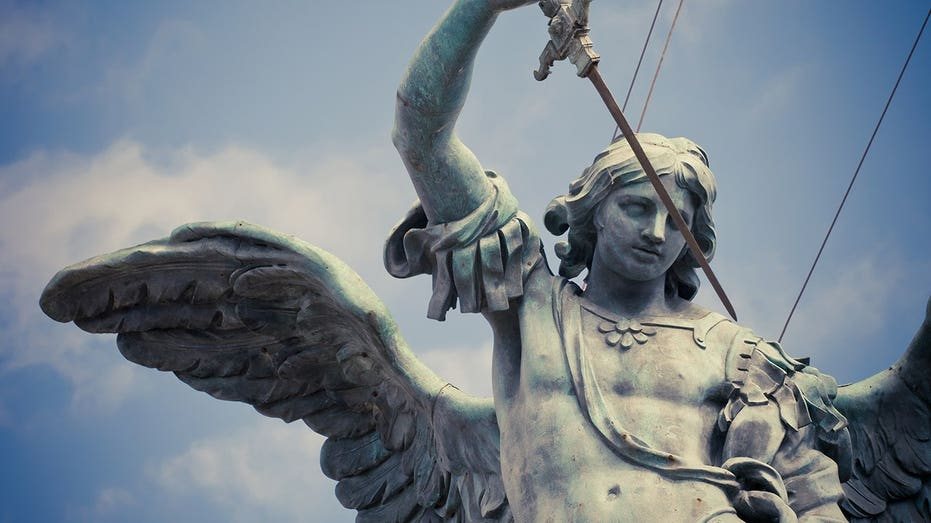
A legal dispute over whether the city of Quincy, Massachusetts, can install two bronze statues of Catholic saints outside its new public safety headquarters may ultimately reach the U.S. Supreme Court, with attorneys on both sides saying the case could set a precedent for religious displays on government property.
The Becket Fund for Religious Liberty, representing the city, told Fox News Digital they expect a decision soon from the Massachusetts Supreme Judicial Court. The statues depict St. Michael the Archangel, the patron saint of police officers, and St. Florian, the patron saint of firefighters. Both were crafted by a sculptor in Italy and chosen by Quincy Mayor Thomas Koch.
“The ACLU’s position is anti-art and anti-history, and we’re confident the justices will reject it,” said Joseph Davis, senior counsel at Becket and lead attorney for Quincy. “We don’t hide away beautiful civic art just because it might make someone think of religion, and nothing in Massachusetts law says otherwise. Quincy has every right to honor its first responders with symbols that have inspired courage and sacrifice for generations.”
The controversy began after local media reported that Quincy planned to install the two 10-foot statues outside the public safety building. Mayor Koch, according to court documents, said he did not choose the statues to promote religion but to “honor, inspire, and encourage our First Responders,” boost morale, and ensure their lifesaving work remained effective. Critics argued the plan had not been publicly disclosed during the building approval process and raised constitutional concerns.
The legal battle started in May 2025, when a group of Quincy residents and taxpayers, represented by the ACLU of Massachusetts, the national ACLU, Americans United for Separation of Church and State, the Freedom From Religion Foundation, and Cloherty & Steinberg LLP, sued the city and Mayor Koch in Norfolk Superior Court. The plaintiffs argued that installing the statues violated the Massachusetts Constitution’s protections on religious neutrality.
In its brief, the ACLU of Massachusetts stated: “The statues, whose imagery is drawn directly from Catholic iconography, lack a predominantly secular purpose. The primary effect of permanently installing two new, oversized, overtly religious statues as the sole adornments on the City’s public safety building is to advance religion.”
However, a brief filed by the National Fraternal Order of Police and Massachusetts Fraternal Order of Police argued that St. Michael is revered by people of various faiths, not just Christians. “First responders of all stripes, religious creeds, and political affiliations — and not just Catholics or Christians — cherish both saints for their symbolic importance to the profession,” the brief stated.
Jessie Rossman, legal director at the ACLU of Massachusetts, told Fox News Digital: “The Massachusetts Declaration of Rights demands that our government remain neutral in matters of religion. This neutrality is precisely what allows the richly varied beliefs of our clients and others — including deeply held Christian beliefs — to flourish in cities like Quincy and across the Commonwealth.” Rossman added that the Massachusetts Supreme Judicial Court established the legal test for analyzing such claims nearly 50 years ago, and under that test, installing these statues as the sole adornment on a government building violates the state constitution.
Mayor Koch’s office said it has no comment at this time while awaiting the court’s decision. The case has drawn attention from legal experts and religious liberty advocates, who say it could influence how courts across the country handle similar disputes over religious symbols on public property. The Becket Fund has indicated it is prepared to appeal to the U.S. Supreme Court if the state court rules against Quincy, potentially setting up a landmark First Amendment case.