Society 6 min read By Trevor Kendall
Human Rights Groups Urge FIFA to Prioritize Rights for Future World Cups
As the 2026 World Cup concludes, human rights advocates call on FIFA to ensure future tournaments uphold labor and migrant worker protections, citing concerns over sportswashing and the involvement of political figures.
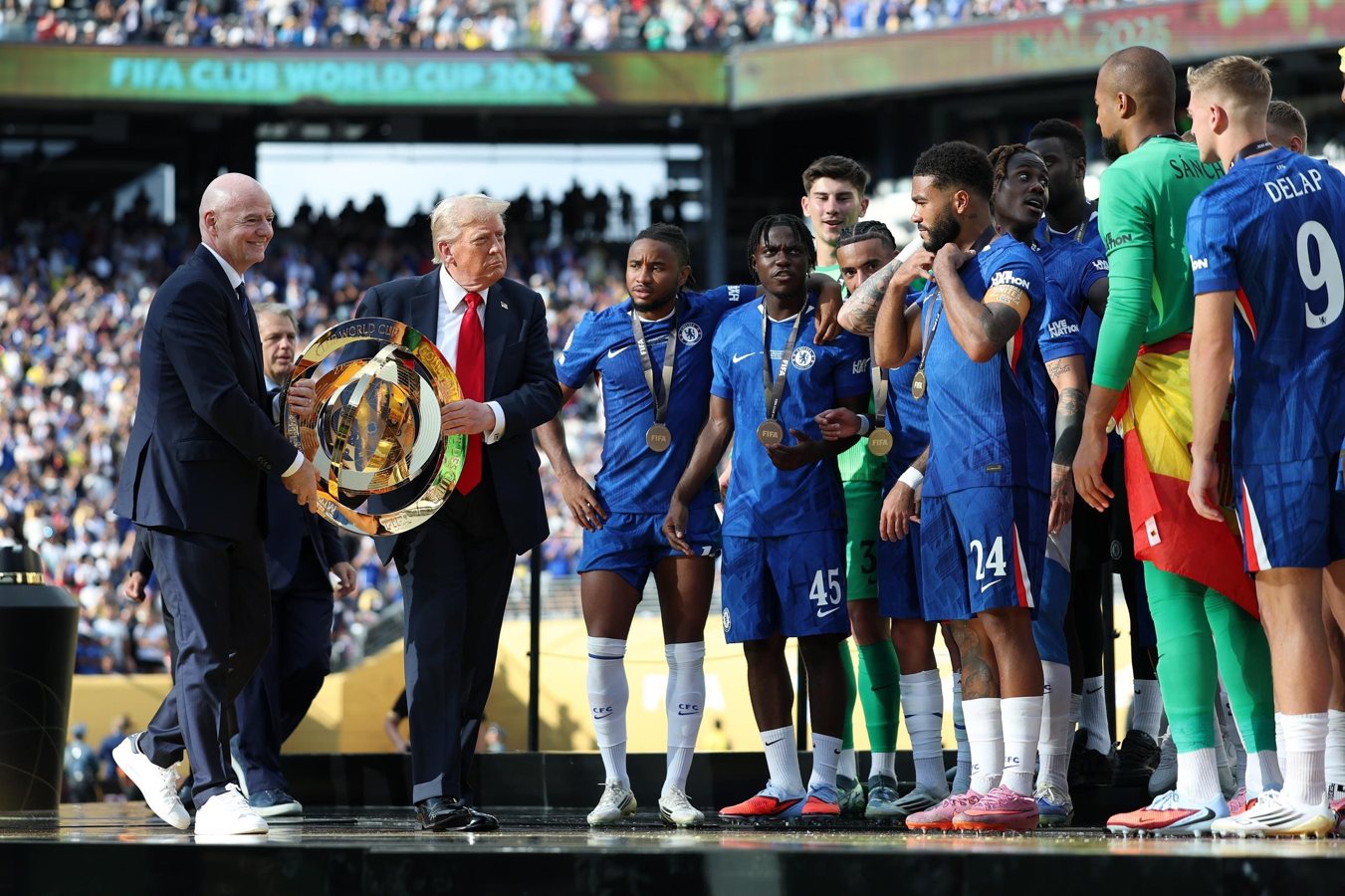
As the 2026 FIFA World Cup wraps up this weekend, human rights organizations are pressing the global football governing body to make human rights a central pillar of future tournaments, warning that the current event has been marred by allegations of sportswashing and inadequate protections for workers. The call comes as U.S. President Donald Trump is set to join FIFA President Gianni Infantino on stage at MetLife Stadium to present the trophy to the winner of Sunday's final between Argentina and Spain, a moment critics say underscores the politicization of the sport.
The 2026 World Cup, co-hosted by the United States, Canada, and Mexico, has drawn record crowds of over 7 million fans and generated billions in television viewership, according to FIFA. Infantino has hailed the tournament as «the greatest human, social and cultural event that mankind has ever witnessed.» Trump echoed the sentiment, calling it «the most successful sporting event maybe in the history of the world.» However, advocacy groups argue that the celebration masks serious human rights concerns, particularly regarding the treatment of migrant workers involved in stadium construction and event logistics.
«The 2026 World Cup has been a showcase for sportswashing, where political leaders use the event to distract from domestic and international human rights abuses,» said Minky Worden, a human rights expert and contributor to Forbes. «FIFA must learn from this experience and embed binding human rights commitments into its bidding process for future tournaments.» The term «sportswashing» refers to the practice of using sports events to improve a country's reputation or divert attention from controversial policies.
FIFA has faced scrutiny over labor conditions in previous World Cups, including the 2022 tournament in Qatar, where thousands of migrant workers died or suffered abuses, according to reports from human rights groups and international labor organizations. While FIFA introduced reforms in 2023 requiring host nations to adhere to labor and human rights standards, critics say enforcement remains weak. For the 2026 event, the United States, Canada, and Mexico were not subject to the same level of oversight, as the tournament was awarded before the reforms took effect.
«The lack of a robust monitoring mechanism means that workers in the U.S. and other host countries have been vulnerable to wage theft, unsafe conditions, and limited legal protections,» said a spokesperson for the Human Rights Watch, which has documented cases of exploitation in the lead-up to the tournament. The group has called on FIFA to establish an independent grievance mechanism for workers and to require all future host nations to ratify core International Labour Organization conventions.
The involvement of President Trump has also drawn criticism. Trump, who has a history of controversial policies on immigration and labor rights, has used the World Cup to promote his administration's achievements. During a press conference this week, he stated, «America is stronger, wealthier, and hotter than ever before, and you're a big part of it.» Human rights advocates argue that such statements gloss over ongoing issues, including the treatment of undocumented workers and the rollback of workplace safety regulations.
FIFA President Infantino has defended the tournament's legacy, emphasizing its unifying power. «We united the world in America,» he said. «Everyone that came here enjoyed it, and everyone that stayed home enjoyed it as well. We are providing joy and happiness.» Yet, critics contend that FIFA must move beyond rhetoric and adopt concrete measures to ensure that future World Cups do not repeat the mistakes of the past.
The call for reform extends beyond labor rights. Advocacy groups are urging FIFA to address environmental sustainability, community displacement, and the impact of mega-events on local populations. In the U.S., several host cities faced protests over the use of public funds for stadium upgrades and concerns about gentrification. «A World Cup should leave a positive legacy for host communities, not just for corporations and politicians,» said a representative from the nonprofit organization Amnesty International.
As the 2026 tournament concludes, the debate over its human rights impact is likely to shape discussions about future bids. FIFA is already accepting expressions of interest for the 2034 World Cup, with Saudi Arabia emerging as a leading candidate. Human rights groups have warned that awarding the tournament to Saudi Arabia, which has a poor record on labor rights and political freedoms, would repeat the mistakes of Qatar. «FIFA has a choice: it can continue to prioritize profit and political expediency, or it can truly make human rights the goal,» Worden said.
For now, the focus remains on Sunday's final, which will see Argentina attempt to become the first back-to-back champion since Brazil in 1962. Spain, seeking its second title after winning in 2010, stands in their way. But for many observers, the real test for FIFA will come after the confetti is swept away, when the organization must decide whether to transform its promises into lasting change.