
Society 7 min read By Morgan Griffin
German sex crime figures fuel migration debate as Nuremberg exploitation probe widens
New German crime figures show 751 group rape cases in 2025, with non-German suspects disproportionately represented, reigniting the migration debate as a Nuremberg investigation into the sexual exploitation of teenage girls expands.
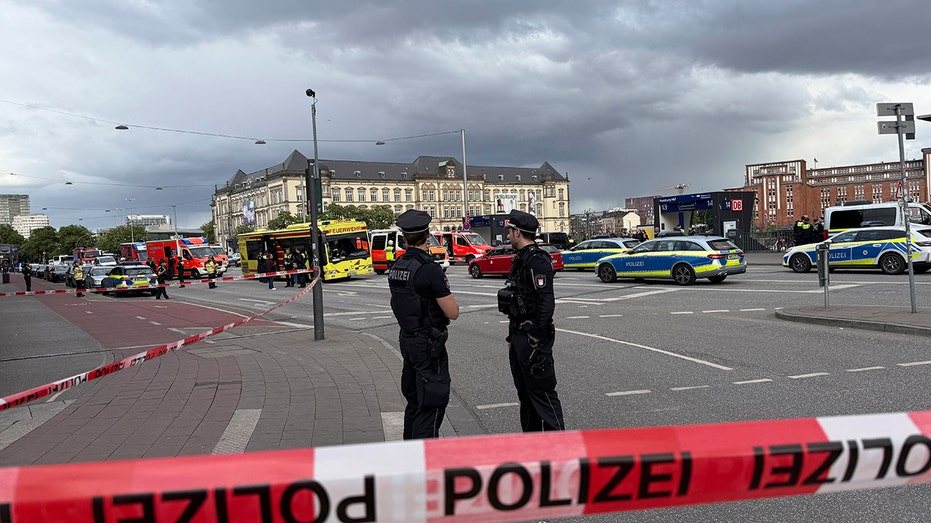
New German crime figures and an expanding investigation into the alleged sexual exploitation of teenage girls near Nuremberg's central railway station are intensifying a broader European debate over migration, integration, and whether authorities have been too hesitant to confront patterns of organized sexual abuse.
Germany recorded 751 cases categorized as group rapes in 2025, according to the federal government's response to a parliamentary inquiry submitted by the opposition Alternative für Deutschland party. All parties represented in the Bundestag may submit formal questions requiring government responses, a key tool through which opposition lawmakers scrutinize federal policy.
Police identified 1,087 suspects in these cases, including 509 German citizens and 578 non-German nationals. Syrians formed the largest foreign-national group, with 110 suspects, followed by Afghans with 64, Iraqis with 46, and Turks with 44. The government cautioned that «group rape» is not a separate criminal offense or standardized police category. Officials generated the figures by filtering recorded rape cases in which suspects were listed as not acting alone. The numbers represent suspects identified during police investigations, not people convicted in court.
The figures emerged as investigators in Nuremberg pursued allegations that vulnerable girls were deliberately drawn into a network involving affection, gifts, narcotics, and sexual exploitation. Bavarian police said in May that men operating around the city's main railway station allegedly approached girls from unstable or vulnerable backgrounds, initially offering them attention, clothing, or cosmetics. Investigators said some were later given hard drugs, including crystal meth, and that their resulting dependency was allegedly exploited to obtain sexual acts or other services.
The investigation, known as EKO Kajal, has continued to expand. Police said Tuesday that 10 suspects were being held in pretrial detention in cases involving alleged sexual offenses against girls and young women and the distribution of drugs or medication to minors. In the latest arrests, police alleged that a 21-year-old Syrian man raped two girls, ages 15 and 18, in a Nuremberg apartment after they were given narcotics by a 40-year-old Syrian man. Both men were detained, but the accusations remain allegations and have not been adjudicated.
Emma Schubart, a research fellow at the London-based Henry Jackson Society, told Fox News Digital that the Nuremberg allegations bear similarities to grooming-gang cases uncovered in Britain, where girls were plied with drugs and alcohol before being repeatedly abused by groups of men. «It's a severe failure in both countries,» Schubart said, arguing that the problem begins with insufficient screening and continues with inadequate integration after migrants arrive. «The first step that both authorities in the U.K. and in Germany really are not doing is screening migrants effectively. But then, once the migrants are already here, the integration policy is completely lacking.»
Schubart said the isolation of some immigrant communities can contribute to «ghettoization» and create environments in which criminal networks operate with limited scrutiny or cooperation with authorities. She also challenged the argument that disparities in some sexual-offense statistics can be explained primarily by poverty. «Socioeconomic factors matter, but they absolutely do not fully explain the disparities,» Schubart said. «Native Germans from similar socioeconomic backgrounds absolutely do not show equivalent rates in group sexual offending.»
Schubart said she viewed the apparent intersection between drugs and sexual exploitation as an especially important parallel with Britain. «In the U.K. and in Germany, it's a very similar pattern where it's basically drug trafficking that also involves sex trafficking,» she said. «These drug-trafficking networks and cells operate across the country, not just in those cities where we see the crimes playing out.»
Britain has spent years reckoning with grooming scandals in places such as Rotherham, Rochdale, Telford, and Oxford, where official reviews found that police, social workers, and local authorities repeatedly missed or ignored evidence that vulnerable children were being systematically abused. Baroness Louise Casey's national audit, published by the British government in June 2025, concluded that inconsistent definitions, incomplete records, and failures to collect ethnicity data made it impossible to establish the full national scale of group-based child sexual exploitation. It nevertheless found evidence of the disproportionate representation of Pakistani-heritage suspects in some local datasets and cases, while warning against extrapolating those findings to the entire country. The British government later backed an independent inquiry intended to examine failures or obstruction by police, councils, and other public bodies in relevant local areas.
Schubart argued that officials in both countries have sometimes avoided discussing offenders' backgrounds out of concern that doing so could damage relations with minority communities. «In the U.K., it's usually the phrase 'community relations,'» she said. «There's a huge effort to not threaten community relations.»
Germany's ifo Institute reported in February 2025 that its analysis of district-level data found a correlation between higher shares of certain migrant groups and higher crime rates, though it cautioned that socioeconomic factors also play a significant role. The institute's findings have further fueled the political debate, with some parties calling for stricter immigration controls and better integration policies.
The Nuremberg investigation and the national crime figures are likely to remain a flashpoint in German politics, as the country prepares for federal elections later this year. Critics argue that the government has not done enough to address the root causes of such crimes, while supporters of current policies warn against stigmatizing entire communities based on the actions of a few.