Society 6 min read By Trevor Kendall
EPA Chief Zeldin Rejects Labeling Climate Skeptics as 'Science Deniers'
EPA Administrator Lee Zeldin argues that climate projections are uncertain and that those who disagree with them should not be automatically labeled 'science deniers,' as the Trump administration revisits climate regulations.
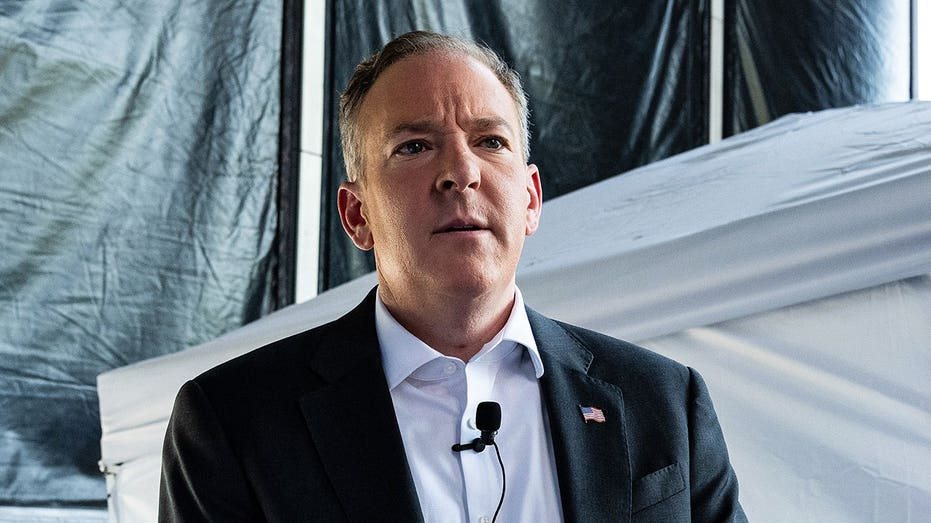
Environmental Protection Agency Administrator Lee Zeldin has pushed back against the practice of labeling individuals who question climate change projections as “science deniers,” arguing that long-term climate forecasts are inherently uncertain and should be treated as evolving estimates rather than definitive predictions.
In comments made Thursday at the Great American State Fair, Zeldin told Fox News Digital that climate projections for decades into the future, such as those for 2050 or 2100, represent a range of possible outcomes rather than certainties. “When someone looks at 2050 or 2100, and they say, ‘This is exactly what the sea level is going to be. This is what the temperature is going to be,’ it doesn't acknowledge correctly that there really is a range from the optimistic to the pessimistic,” he said.
Zeldin was asked whether any climate predictions made during the Biden administration had been disproven by new evidence. Instead of singling out a specific forecast, he argued that climate projections, especially those extending decades into the future, should be regularly updated as new data emerges. “Relying on present day facts rather than bad assumptions from the past is incredibly important,” Zeldin said. “Every day that goes by we learn what the reality is at that point in the future, and we're able to compare it to what the predictions are.”
The EPA chief emphasized the importance of hearing out newer perspectives on climate change, suggesting that combining long-term forecasts with real-world data can provide a more accurate understanding of current climate impacts. He warned against automatically dismissing those who disagree with certain projections as “science deniers.” “I don't think it's a good idea that if someone disagrees with someone else's prediction of exactly what the temperature's gonna be in the year 2100, that all of a sudden that person is just automatically some science denier,” Zeldin said. “Hear them out. Maybe they have an opinion on some other study that they looked on or other studies they looked on because there really is a range of predictions, especially when you look further in the future.”
Zeldin’s remarks come as the Trump administration moves to revisit several climate-related regulations. Since taking over the EPA, Zeldin has spearheaded efforts to reevaluate the agency’s 2009 Endangerment Finding, which serves as the legal basis for many federal greenhouse gas regulations. The administration is also revisiting a number of climate-related rules adopted under previous Democratic administrations, including those from the Biden era. Critics have accused some of these regulations of placing undue burdens on industries such as trucking, with one Biden-era environmental rule being described as “strangling truckers” and “squeezing Americans.”
The debate over climate projections and the labeling of skeptics reflects a broader divide in U.S. environmental policy. Supporters of aggressive climate action argue that the overwhelming scientific consensus supports the need for immediate and substantial reductions in greenhouse gas emissions. They contend that questioning established climate science undermines efforts to address global warming. On the other hand, Zeldin and other administration officials maintain that a more measured approach is warranted, one that considers a range of scientific viewpoints and updates predictions as new data becomes available.
The EPA’s 2009 Endangerment Finding, which concluded that greenhouse gases threaten public health and welfare, has been a cornerstone of federal climate regulation. Revisiting this finding could have significant implications for future environmental rules, potentially limiting the agency’s ability to regulate emissions from power plants, vehicles, and other sources. The Trump administration has signaled its intent to roll back many of the climate policies enacted under President Joe Biden, arguing that they impose excessive costs on businesses and consumers without delivering commensurate environmental benefits.
Zeldin’s comments also highlight a broader tension within the scientific community regarding how to communicate climate uncertainty. While climate scientists generally agree that human activities are driving global warming, there is ongoing debate about the precise timing and magnitude of future impacts. Some researchers argue that focusing on worst-case scenarios can lead to policy overreach, while others warn that underestimating risks could result in inadequate preparation for climate-related disasters.
As the Trump administration continues to reshape environmental policy, Zeldin’s stance on climate skepticism is likely to remain a point of contention. His call for a more inclusive dialogue on climate projections may resonate with those who feel that dissenting views have been unfairly marginalized. However, critics argue that such an approach could slow progress on reducing emissions and addressing the urgent challenges posed by climate change.