Politics 6 min read By Morgan Griffin
Trump’s voter ID bill gains unexpected boost as McConnell remains absent from Senate
Senator Mitch McConnell’s prolonged absence due to health issues has temporarily reduced Republican opposition to President Trump’s SAVE America Act, but the bill still faces a steep path to passage amid Democratic unity and filibuster hurdles.
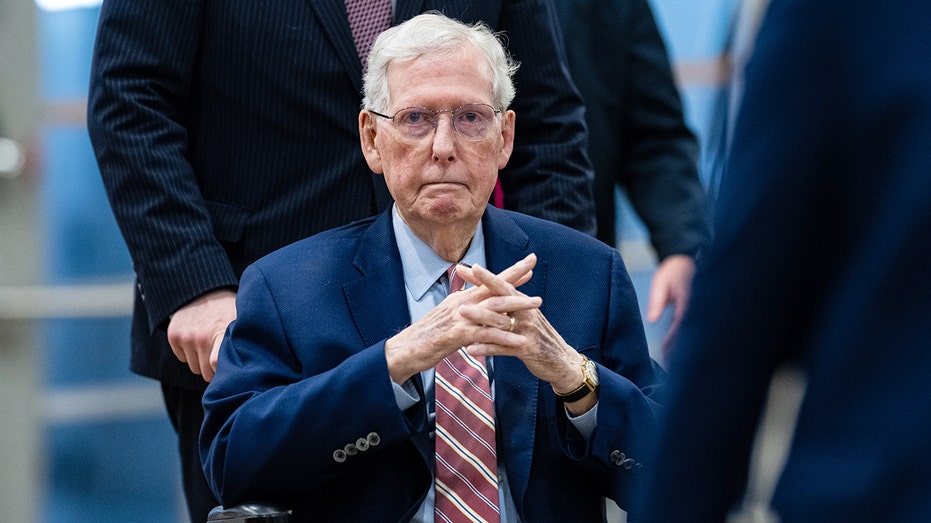
President Donald Trump’s flagship election priority, the Safeguarding American Voter Eligibility (SAVE) America Act, has received an unexpected but temporary boost in the Senate as Senator Mitch McConnell remains sidelined by health problems. The Kentucky Republican, who has routinely voted against the bill in its various forms, has been absent from the chamber for nearly three weeks, removing one key “no” vote from the equation. However, the broader math problem that has repeatedly stalled the legislation remains largely unchanged.
Trump has made the voter ID bill a central demand of his second term, pushing Republicans to pass it by any means necessary. The legislation would require proof of citizenship to register to vote and impose stricter rules on mail-in balloting, among other provisions. Despite passing the House three times, the bill has hit repeated roadblocks in the Senate, where it has only twice mustered 50 votes—short of the 60 needed to overcome a filibuster. Senate Democrats remain unified in opposition, leaving Republicans unable to break the deadlock.
McConnell’s absence has drawn attention to his strained relationship with Trump, who publicly criticized the former Senate Republican leader last month, calling him “very disloyal” and suggesting his opposition was driven by personal grievances. McConnell’s health issues, which have kept him away from the Senate during a recess period, have left his return date unclear. While his absence reduces internal Republican resistance, it does not solve the fundamental challenge of Democratic unity against the bill.
Senate Majority Leader John Thune, R-S.D., has acknowledged the difficulty, stating last month that the only way to advance the legislation would be to eliminate the legislative filibuster—a step that lacks sufficient support within the Republican conference. “There aren’t even close to the votes here in the United States Senate in order to achieve that,” Thune said. Some Republicans have floated alternative strategies, including a “talking filibuster” proposed by Senator Mike Lee, R-Utah, which would require opponents to hold the floor continuously. However, concerns over floor time and fractured unity have prevented the party from pursuing that option.
Trump has also pushed for using the budget reconciliation process, which would allow the bill to pass with a simple majority in the Senate. House Speaker Mike Johnson, R-La., has expressed support for this approach, telling Fox News that the House would move ahead with a reconciliation plan. “We passed it three times in the House. We’re going to try one more time on a budget reconciliation bill, and I think that will be the way to get it through the Senate, and finally, to the president’s desk,” Johnson said.
However, the reconciliation route faces significant obstacles. The version of the SAVE America Act that Trump desires includes additional measures such as a ban on transgender athletes in women’s sports and a ban on transgender surgical procedures for minors—provisions that House Republicans have not yet passed. Even the bill’s strongest backers have expressed skepticism about reconciliation’s viability. Lee told Fox News Digital last month that the SAVE America Act is “policy, it’s non-budgetary” and therefore ineligible for consideration under reconciliation rules. He suggested that alterations, such as tying federal funding for enhanced REAL IDs with citizenship verification to a separate voter ID bill, might be possible, but he saw “no evidence that there is a viable path to a third reconciliation bill.”
Meanwhile, Trump has also turned his attention to the Supreme Court, announcing plans to ask for a rehearing of the court’s recent decision upholding birthright citizenship. In a post on Truth Social, Trump called the 6-3 ruling “absolutely insane” and claimed it was already being exploited, citing advertisements for “birth packages” along the southern border. The court allows petitions for rehearing within 25 days of a ruling, but a majority of justices would need to agree to reconsider the case. The birthright citizenship decision, written by Chief Justice John Roberts, affirmed that all children born on U.S. soil are citizens regardless of their parents’ immigration status.
For now, the SAVE America Act remains in legislative limbo. McConnell’s absence offers a temporary reprieve from internal Republican opposition, but the path forward remains uncertain. With Democrats united against the bill and Republican divisions over strategy persisting, the legislation’s prospects hinge on whether the party can find a procedural workaround—or whether Trump’s pressure will force a change in approach. As the Senate recess continues, the clock is ticking for Republicans to deliver on the president’s top election priority before the midterm elections reshape the political landscape.