Politics 4 min read By Morgan Griffin
Trump Says He Knows Where Iran’s New Leaders Are but Won’t Discuss Operations
President Donald Trump told Fox News contributor Hugh Hewitt that he knows the location of Iran’s new military leaders but declined to discuss potential operations, as the U.S. and Israel continue their campaign against the Islamic Revolutionary Guard Corps.
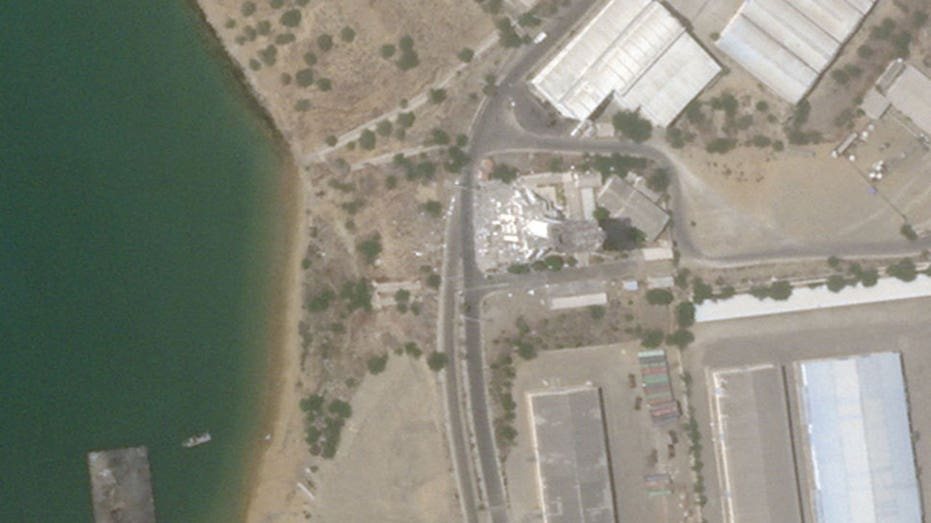
President Donald Trump indicated on Monday that he is aware of the whereabouts of Iran’s new military leaders but declined to elaborate on any potential operations against them. In an interview with Fox News contributor Hugh Hewitt, Trump was asked whether the U.S. or Israeli military could target what remains of Iran’s leadership after a series of devastating strikes. «Yeah, I do, but we don’t want to talk about that,» Trump replied, adding, «But we certainly are watching, yeah. I know a lot about that subject, but I don’t think it’s appropriate to talk about it right now.»
The exchange comes amid a broader U.S.-Israeli campaign against Iran that began on Feb. 28, which Hewitt described as having «devastated the first and second tiers of leadership» in Iran. According to Hewitt, the strikes wiped out senior figures in the Islamic Revolutionary Guard Corps (IRGC), leaving a power vacuum filled by Ahmad Vahidi, a 68-year-old commander who emerged from retirement to take control of the IRGC. Hewitt characterized Vahidi as a «benched and passed-over killer» holding grudges against those who sidelined him.
Hewitt noted that the public faces of Iran’s rump regime—President Masoud Pezeshkian and Foreign Minister Abbas Araghchi—hold no real authority over the IRGC, which controls the country’s military and security apparatus. Trump has previously claimed that the Iranian regime massacred 52,000 people over two days in January, underscoring the ruthlessness of those in charge. The IRGC’s grip on power remains tight, but Hewitt suggested that internal splits could lead to a regime change.
National security reporter Eli Lake, cited by Hewitt, argued that it is unrealistic to expect the Iranian people to rise up so soon after a traumatic mass murder. Instead, Lake pointed to historical patterns of regime collapses, where lower-level security forces or military cadres become unwilling to participate in further violence. «They see the end game and they don’t want to be around or on the wrong side when everything falls apart,» Hewitt wrote, summarizing Lake’s analysis. «Sometimes they flee. Sometimes they turn the weapons on the top men. When that begins, it can accelerate quickly.»
The U.S. had previously signed a Memorandum of Understanding (MOU) with Iran that provided a temporary halt to hostilities, which Hewitt likened to a «halftime» in the conflict. However, the IRGC tore up the MOU and resumed attacks on commercial ships transiting the Strait of Hormuz. In response, the U.S. reinstated a naval blockade and intensified bombing campaigns. Hewitt argued that the renewed pressure will further strain Iran’s already tattered economy, though he noted that IRGC leaders like Vahidi can «loot the country» and secure imports for themselves, much like Hamas did in Gaza.
Hewitt speculated that a handful of Iranian colonels or junior officers could decide to act, overthrowing the IRGC leadership and establishing a junta-style rule without the burden of «Twelver» theology. «It only takes a few people to crack the whole of the IRGC tyranny,» he wrote. Trump, however, has publicly stated that he will not rush such a takeover, though Hewitt suggested that the president and Israeli intelligence may have more information than they disclose. «The allies certainly had all the information they needed on Feb. 28,» Hewitt concluded. «Don’t doubt that they have more and add to their collection every day.»