Politics 4 min read By Morgan Griffin
Trump Backs House GOP Budget Push as SAVE America Act Faces Fiscal Hawk Revolt
President Donald Trump has publicly urged House Republicans to support the budget resolution advancing the SAVE America Act, a voter ID and election integrity bill, amid a revolt by fiscal conservatives concerned about $95 billion in new spending without offsets.
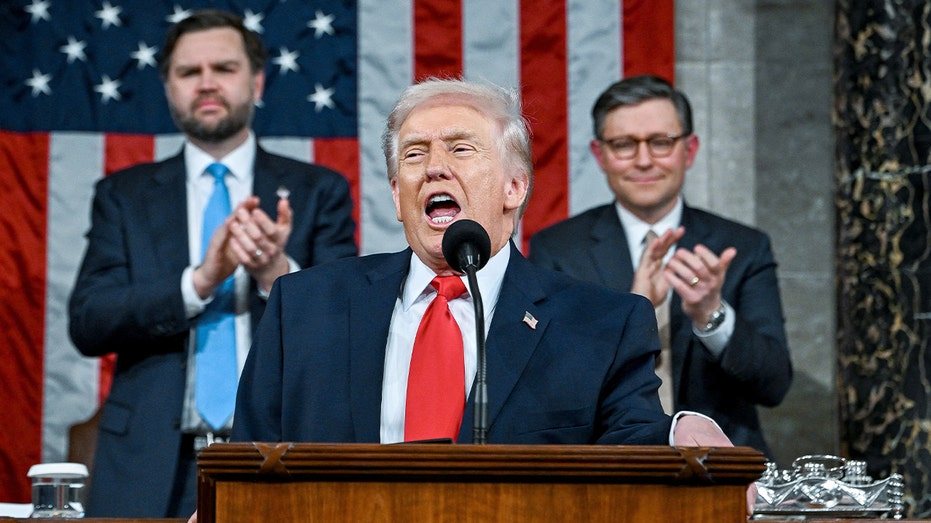
President Donald Trump has intervened in a growing Republican revolt over federal spending, urging House Republicans to unite behind a budget resolution that would advance the SAVE America Act, an election integrity bill, while adding billions to the national debt. In a post on Truth Social, Trump thanked Speaker Mike Johnson and House Budget Committee members for their work on the reconciliation bill and called on all House Republicans to vote yes this week, arguing the legislation would secure as much of the SAVE America Act as possible along with aid to farmers and military funding.
The SAVE America Act, which would establish a federal voter ID standard and mandate proof of citizenship for voter registration, passed the House but has stalled in the Senate, where Democratic support would be needed to overcome a filibuster. House GOP leaders are now using the budget reconciliation process to bypass that hurdle, as reconciliation bills require only a simple majority in the Senate. However, the move has sparked fierce opposition from fiscal hawks who warn that the current budget framework includes no spending cuts to offset the new expenditures.
The budget resolution, rolled out last week, sets a framework for congressional committees to allocate funds, with details to be finalized in the coming weeks. It includes $95 billion in new government spending through 2036, with $73 billion designated for national security amid ongoing tensions with Iran. The national debt has ballooned to $39.5 trillion, intensifying concerns among conservatives who demand payfors — spending cuts to offset new outlays.
Representative Eric Burlison of Missouri told Fox News Digital that the lack of payfors and the absence of language defunding Planned Parenthood were enough for him to vote no. He said he remained open to dialogue with the administration on ensuring the SAVE language is solid and addressing abortion by mail. Representatives Andy Ogles and Tim Burchett, both of Tennessee, expressed concern about the lack of payfors before Trump’s post but left the door open on whether they would ultimately support the bill. Burchett predicted the legislation would be sent to the Senate, where SAVE America Act elements would be stripped before it returns to the House, adding that he would probably vote no in that scenario.
A source familiar with thinking by the conservative House Freedom Caucus indicated the group could back the budget framework if the full SAVE America Act is included in the final legislation. The source called the SAVE America Act the top priority and said mandatory voter ID and proof of citizenship through reconciliation would be a game-changer, but warned that any watered-down version making SAVE policies optional would create issues. A senior House GOP aide criticized the abandonment of payfors, saying Americans are tired of the all-hat, no-cattle approach to fiscal responsibility.
Some House Freedom Caucus members support the chosen path. Budget Committee member Representative Marlin Stutzman of Indiana said that as a fiscal hawk he understands the apprehension about lacking a clear payfor, but as an American he knows it is even more irresponsible to have business-as-usual elections without the security the SAVE America Act would create. Democrats have argued the bill amounts to voter suppression.
The budget reconciliation process comes with strict rules on what is permissible, traditionally left to the discretion of the Senate parliamentarian, a nonpartisan staffer who interprets chamber rules. The outcome of the House vote remains uncertain as leaders work to unify their conference amid deep divisions over fiscal discipline and election policy.