Politics 5 min read By Trevor Kendall
New York Mayor Mamdani Admits City Cannot Arrest Netanyahu, Reverses Campaign Pledge
New York City Mayor Zohran Mamdani acknowledged Wednesday that the city lacks authority to execute an International Criminal Court arrest warrant against Israeli Prime Minister Benjamin Netanyahu, reversing a key campaign promise and prompting calls for federal action and protests.
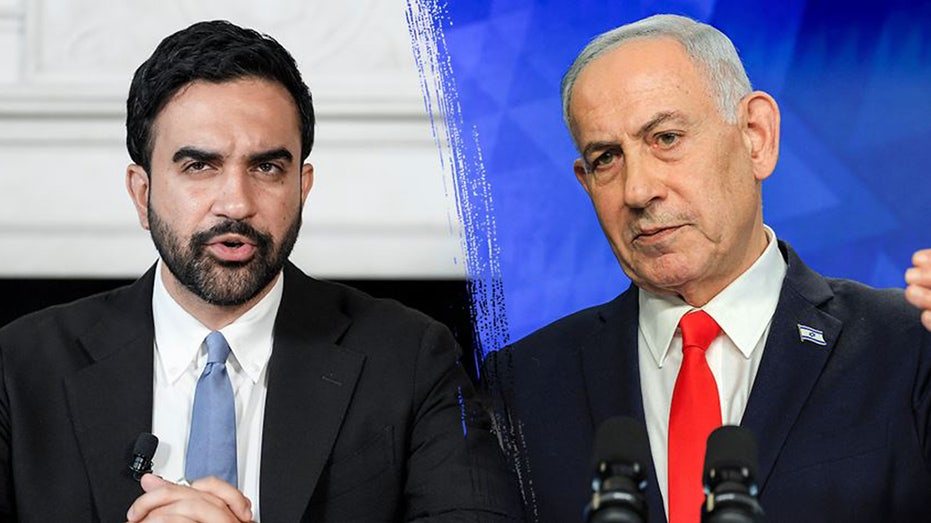
New York City Mayor Zohran Mamdani acknowledged Wednesday that the city has no legal authority to arrest Israeli Prime Minister Benjamin Netanyahu, effectively reversing a central campaign pledge that had drawn national attention. During a news conference at City Hall, Mamdani said his administration reviewed applicable laws and concluded that only the federal government can execute an International Criminal Court warrant, even as the United States is not a member of the ICC and does not recognize its jurisdiction over Israel.
“It’s clear that the city does not have the authority to execute this warrant,” Mamdani told reporters, adding that he still believes the warrant should be carried out. He urged the federal government to act on the ICC’s charges against Netanyahu, whom Mamdani repeatedly described as a “war criminal” accused of orchestrating “genocide” in Gaza. Israel has consistently rejected such allegations and condemned the ICC case as illegitimate.
When pressed on whether his earlier arrest threat amounted to “political theater,” Mamdani declined to specify when his administration informed him that the city lacked the power to detain the Israeli leader. “That’s a review that I asked them to do,” he said. “They made it clear that this is not possible through applicable law.” Critics noted that legal experts had challenged the feasibility of his pledge during the campaign, raising questions about why the issue was not resolved before he took office.
Mamdani, a Democratic socialist who won office on a progressive platform, had campaigned vigorously on a promise to arrest Netanyahu if the Israeli prime minister visited New York. The pledge resonated with pro-Palestinian activists but drew sharp criticism from supporters of Israel and some members of his own party. Representative Josh Gottheimer, a New Jersey Democrat, said Wednesday that he does not consider Mamdani a Democrat, accusing socialists of attempting to “hijack” the party. “He’s not a Democrat, he’s a socialist, and we know that the whole socialist movement is attempting to hijack the Democratic Party and many of their values are not our values,” Gottheimer said on “America’s Newsroom.”
Mamdani acknowledged that Palestinian New Yorkers who supported his arrest promise may feel frustrated, but he declared that Netanyahu would no longer receive a warm welcome from City Hall. “I want to make it very clear that that welcome ends with me,” Mamdani said. “I will not be welcoming Benjamin Netanyahu or any other war criminals when they come to this city.” He also suggested that New Yorkers who oppose Netanyahu’s visit could express their views through protests, particularly when the Israeli leader is expected to attend the United Nations General Assembly in September. “This is a city where, if anyone feels a level of frustration or opposition, protest is something that we will always respect,” he said.
During the news conference, Mamdani faced questions about his characterization of the Israel-Hamas war. When asked directly whether he considered Hamas’s October 7, 2023, attack to be genocide, Mamdani declined to use that term, calling it instead a “horrific war crime” that should be “deeply opposed with every single fiber of our being.” He said his approach was rooted in the “universality of humanity” and argued that officials should not “pick and choose which crimes against humanity we oppose.” Mamdani added that he would support ICC warrants against Hamas leaders as well as Netanyahu, saying his interest was not specific to the Israeli prime minister but to anyone charged with war crimes.
The mayor also reiterated his commitment to protecting Jewish New Yorkers, including those who disagree with his positions. “My responsibility to them is to ensure that they are cherished, they are celebrated and they are safe in their city,” he said, “and that never are they made to feel as if their opinions on any one issue is the precondition for that safety.” The reversal on the arrest pledge has intensified debate over the role of local officials in international matters and the limits of municipal authority in foreign policy.