Politics 5 min read By Morgan Griffin
Michigan Democrat Accuses Abdul El-Sayed of Sexist Attacks Against Female Rivals
Rep. Hillary Scholten accuses progressive Senate candidate Abdul El-Sayed of making sexist remarks against female opponents, including Rep. Haley Stevens and Gov. Gretchen Whitmer, as the Michigan primary approaches.
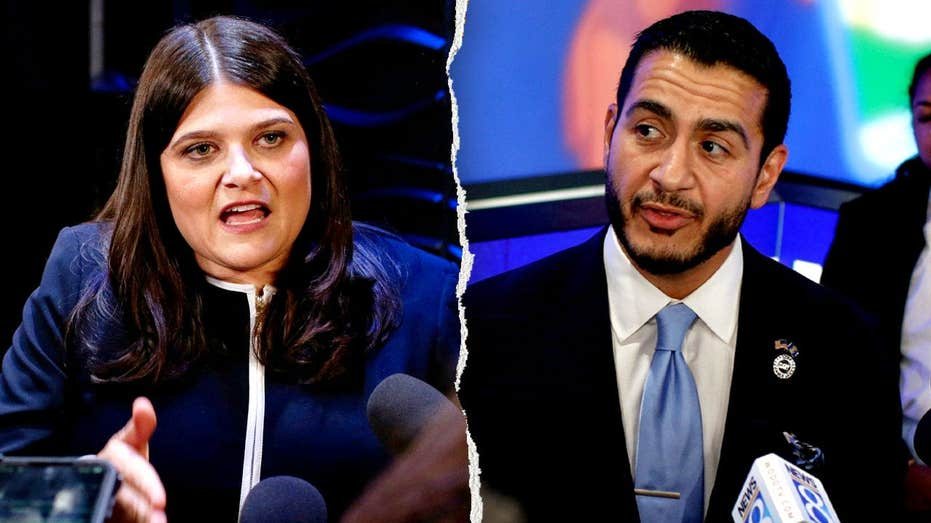
Rep. Hillary Scholten, a Michigan Democrat, has accused progressive Senate candidate Abdul El-Sayed of engaging in what she describes as “deeply sexist attacks” against his female political rivals. In a Wednesday interview on CNN’s “The Lead,” Scholten criticized El-Sayed for his comments about fellow Democrat Rep. Haley Stevens and Michigan Governor Gretchen Whitmer, arguing that his rhetoric goes beyond legitimate policy disagreements.
Scholten, who has endorsed Stevens in the race to replace retiring Senator Gary Peters, pointed to specific instances where El-Sayed disparaged Stevens’ intelligence. “He said that Congresswoman Stevens couldn’t string two sentences together, that she was sort of an empty vessel,” Scholten told anchor Jake Tapper. She contrasted this with acceptable political criticism, stating, “It’s one thing to attack your opponent because of the substance of their issues. It’s another thing to engage in what are deeply sexist attacks.”
The controversy stems from El-Sayed’s earlier remarks to Semafor, where he described Stevens as “a suit with a large AIPAC account” and suggested the pro-Israel group might teach her “how to string together two coherent sentences.” Scholten also referenced El-Sayed’s 2018 gubernatorial campaign against Whitmer, during which he accused her of being “bought and sold for by her dad’s company,” implying she had no independent ideas. Whitmer’s father previously served as president and CEO of Blue Cross Blue Shield of Michigan.
El-Sayed’s campaign has pushed back against the accusations. Spokesperson Roxie Richner told Semafor, “Unless the congresswoman has specific accusations she would like to make, perhaps it’s better to avoid repeating throwaway talking points to push an unfounded narrative.” When confronted by Tapper on CNN’s “State of the Union” about the “two coherent sentences” comment, El-Sayed acknowledged, “I don’t think it’s kind to make fun of somebody for how they talk or how they show up,” but added that it is also unkind to make insinuations about someone’s character, as he claims is being done against him.
Scholten expressed additional concern over El-Sayed’s decision to campaign with left-wing streamer Hasan Piker, who in 2019 said that “America deserved 9/11.” While El-Sayed has distanced himself from that remark, Scholten argued that the association alone is problematic. “I give him credit for disavowing it after the fact, but the reality is he also didn’t have to choose to campaign with Hasan Piker,” she said. “To me, that’s a nonstarter.” When asked if she would support El-Sayed if he defeats Stevens, Scholten declined to answer directly, stating, “I cannot, I will not even come close to being associated with comments like America deserved September 11.”
The congresswoman warned that embracing candidates associated with such rhetoric could damage the Democratic Party. “I think that condoning behavior like this from candidates like Abdul El-Sayed is taking us in a direction that we don’t want to go as a party,” she said. El-Sayed has urged his supporters to stop making personal attacks against Stevens, saying in a statement, “It’s become impossible to ignore the way that people online make fun of my opponent for things that have nothing to do with her policies or politics. It’s unkind and unhelpful. If you support me, please stop.”
The Michigan primary is scheduled for August 4, and the race between Stevens and El-Sayed has become a focal point of internal Democratic tensions. Stevens, a moderate, has drawn support from establishment figures like Scholten, while El-Sayed, a progressive and former Detroit health director, has garnered backing from left-wing groups. The outcome could signal the direction of the party in a key battleground state.
Fox News Digital reached out to Stevens and El-Sayed for comment but did not immediately receive a response. The controversy highlights broader debates within the Democratic Party over tone, gender dynamics, and the influence of progressive versus moderate wings as the primary season heats up.