Politics 4 min read By Trevor Kendall
Justices Barrett and Kagan warn of rising threats as Supreme Court seeks security funding
Supreme Court Justices Amy Coney Barrett and Elena Kagan testified before Congress about a sharp increase in threats, including a 38% rise this year, as the Court requests $14.6 million for enhanced security. The testimony highlights ongoing political tensions and attacks on the judiciary.
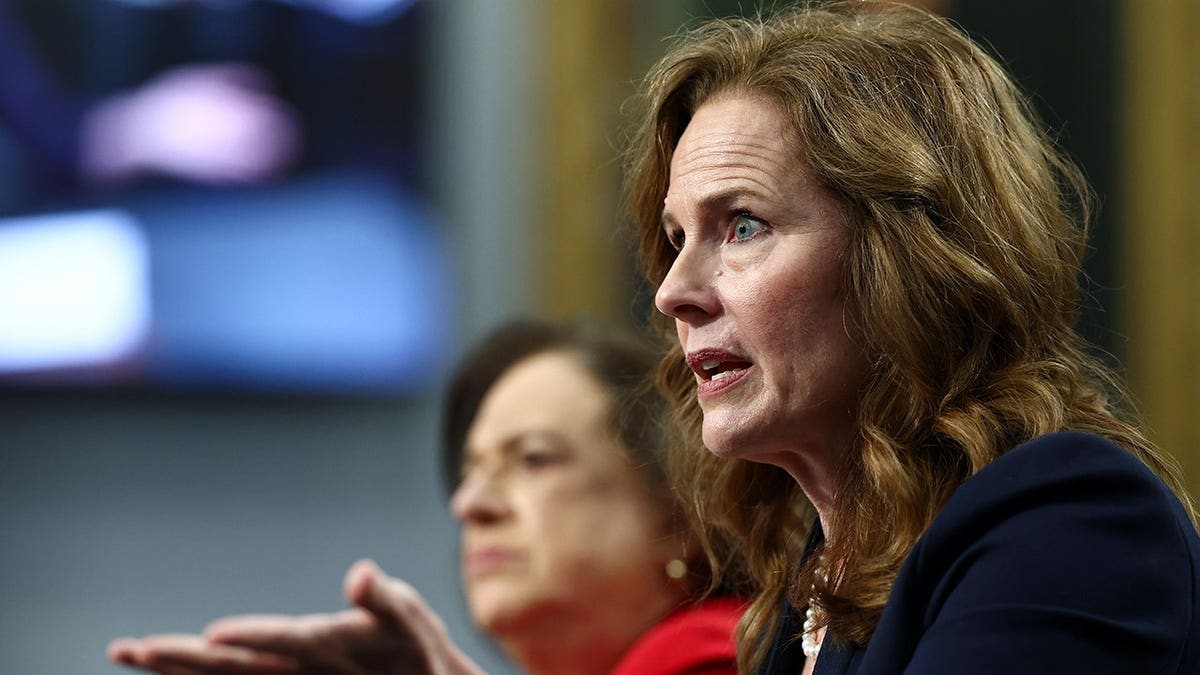
Supreme Court Justices Amy Coney Barrett and Elena Kagan appeared before Congress on Monday to request additional security funding, revealing a dramatic escalation in threats against the nation's highest court. Barrett told lawmakers that she never expected her service would require explaining to her children what a bulletproof vest is and why she had to wear one. The justices are seeking $14.6 million as part of the Court's $228 million budget request for enhanced security measures.
Kagan noted that threats against the Supreme Court have risen 38% this year. Barrett herself was the target of a "swatting" attack earlier this year, in which someone falsely reported an armed shooter at her home. More alarmingly, an assassin attempted to kill Justice Brett Kavanaugh after the 2022 leak of the Court's Dobbs opinion, which overturned Roe v. Wade and the constitutional right to abortion.
The testimony comes amid ongoing political battles over the Court's composition and decisions. Democratic leaders have increasingly criticized the conservative majority, with Senate Minority Leader Chuck Schumer warning Justices Kavanaugh and Neil Gorsuch that they would "pay the price" for overruling Roe. Senator Sheldon Whitehouse has raised ethical questions about gifts from wealthy benefactors, while former Vice President Kamala Harris suggested expanding the Court with liberal justices.
House Minority Leader Hakeem Jeffries has decried what he calls the "corrupt conservative majority" appointed by Donald Trump. These attacks, critics argue, stem from a broader progressive campaign against the Court as an agent of the Trump administration. The left's rhetoric, including calls for court-packing and abolishing the Senate filibuster, threatens the independence of the judiciary, according to legal scholars.
The Supreme Court term that just ended demonstrates that the Court does not decide cases with partisan winners and losers in mind. President Trump lost on several key policies: the Court struck down universal tariffs, affirmed birthright citizenship, and blocked Trump's removal of a Federal Reserve governor. Trump only prevailed when his positions aligned with the Court's long-term agenda, such as expanding presidential removal power and treating campaign funding as speech.
The Court's divisions are not between Republicans and Democrats but over deeper differences in constitutional interpretation. Conservative justices generally adhere to the original understanding of the Constitution's ratifiers, while liberal justices allow contemporary ideals to govern. These disputes are appropriate for the Supreme Court, and the Framers gave federal judges lifetime tenure with undiminished pay to protect them from political influence.
However, to make short-term political gains, the left would sacrifice the independence of the courts. Manipulating the size of the Court in response to its decisions is an attempt to dictate desired outcomes. Threats against justices are merely another political tool to pressure the Court to change its ways. These threats, encouraged by heated rhetoric from Democratic leaders, along with court-packing, are part of a broader progressive attack on constitutional structure.
Democrats also want to abolish the Senate filibuster, add the District of Columbia and Puerto Rico as states, and enact nationwide voting legislation, thereby undermining federalism. Progressives believe they hold the keys to an enlightened socialist utopia and will not allow structural limits on mob democracy, imposed by the Framers, to stand in their way.