Politics 5 min read By Morgan Griffin
Fauci invokes Fifth Amendment at Senate hearing as diary entries surface
Dr. Anthony Fauci invoked the Fifth Amendment more than 100 times at a Senate hearing Wednesday, refusing to answer questions about his handling of the COVID-19 pandemic. The hearing came days after the release of his personal diary, which reportedly reveals private doubts about the origin of the virus and the effectiveness of lockdown measures.
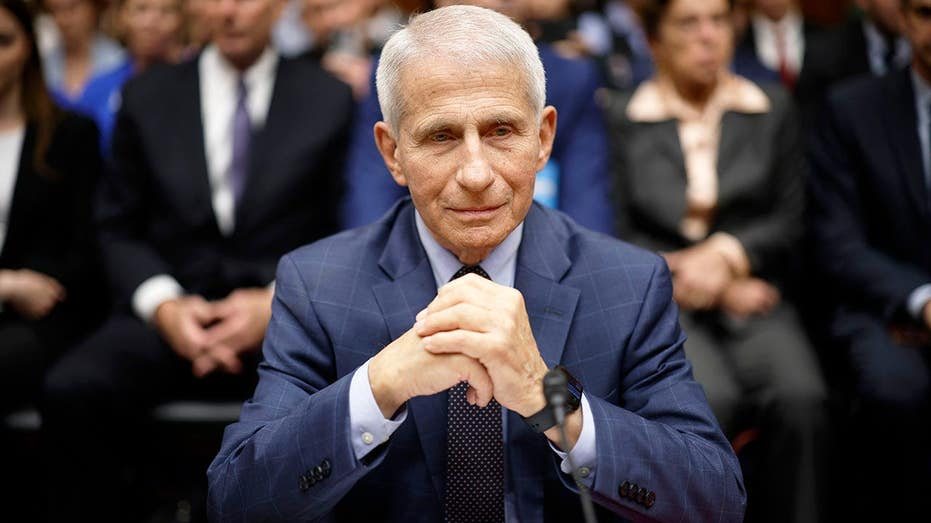
Dr. Anthony Fauci declined to answer questions from lawmakers at a Senate Homeland Security and Government Affairs Committee hearing on Wednesday, invoking the Fifth Amendment more than 100 times. The appearance came shortly after the release of personal diary entries from Fauci’s government computer that offer a detailed look at his private thoughts during the COVID-19 pandemic.
The diary entries, which span early 2020 and beyond, reportedly show Fauci expressing considerable ego and private skepticism about key pandemic policies. In one entry from May 2020, he described his «national and international fame» as «explosive and really unimaginable,» adding that he might be «the most famous and talked about person in the country and one of the most recognizable persons in the world.» Other entries document interactions with celebrities, including actress Julia Roberts and CNN anchor Jake Tapper, who arranged high-profile Zoom calls and offered praise.
More critically, the diaries suggest that Fauci privately doubted the official narrative regarding the origin of the coronavirus. An entry from January 26, 2020, states that the wet market was «not the source, it was the amplifier,» yet the following day he publicly told the American people that the virus came from wet markets. Similarly, the diaries indicate he had reservations about masking, social distancing, and other lockdown measures that he publicly endorsed. According to the diary, Fauci took private credit for the lockdowns even as he publicly denied responsibility.
At the hearing, Sen. Rand Paul, R-Ky., confronted Fauci with a list of statements that appeared to contradict the diary entries. After each question, Fauci repeatedly stated, «On the advice of counsel I am invoking the Fifth Amendment of the Constitution.» He invoked the amendment 111 times, despite having received a full pardon from former President Joe Biden, which ordinarily would remove the risk of prosecution. Legal experts noted that the Fifth Amendment protects against self-incrimination, but a pardon typically eliminates that concern, making Fauci’s refusal to testify all the more striking.
The diary release and hearing have reignited debate over Fauci’s role in the pandemic. Critics have long accused him of prioritizing his public image over an honest assessment of the science. Michael Caputo, former communications director for the Department of Health and Human Services, described Fauci as a «media hound» and recalled that from their first meeting Fauci «waved all the red flags» of someone obsessed with media appearances. The diaries also show Fauci feeding questions to journalists and building relationships with media figures, raising questions about the independence of his advice.
The hearing was briefly disrupted when Fauci’s attorney was ejected from the room after a chaotic exchange with committee members. The attorney reportedly attempted to speak over the chairman and was ordered to leave, an unusual scene that added to the tension of the proceedings.
Supporters of Fauci have not publicly rallied around him following the diary disclosures. The hearing marked a sharp departure from the widespread adulation he received during the early stages of the pandemic, when he was regularly featured on television, celebrated by celebrities, and praised by late-night hosts. The diary entries have brought renewed attention to the impact of pandemic restrictions, including prolonged school closures, business shutdowns, and social distancing mandates that many Americans found onerous. With Fauci’s private doubts now exposed, questions are being raised about whether the public was given a full and honest account of the science behind those decisions.
Fauci, who served as director of the National Institute of Allergy and Infectious Diseases for nearly four decades, became the face of the U.S. pandemic response under President Donald Trump and later President Joe Biden. His testimony on Wednesday was widely anticipated, but his near-total silence left many unanswered questions. The diary, however, may continue to provide insights into his thinking during one of the most tumultuous periods in modern American history.