Politics 5 min read By Trevor Kendall
Ex-NFL Star Jay Feely Wins Trump-Backed GOP Primary in Arizona Battleground District
Former NFL kicker Jay Feely won the Republican primary for Arizona’s 1st Congressional District on Tuesday, securing a Trump endorsement and setting up a competitive general election race that could help determine control of the House.
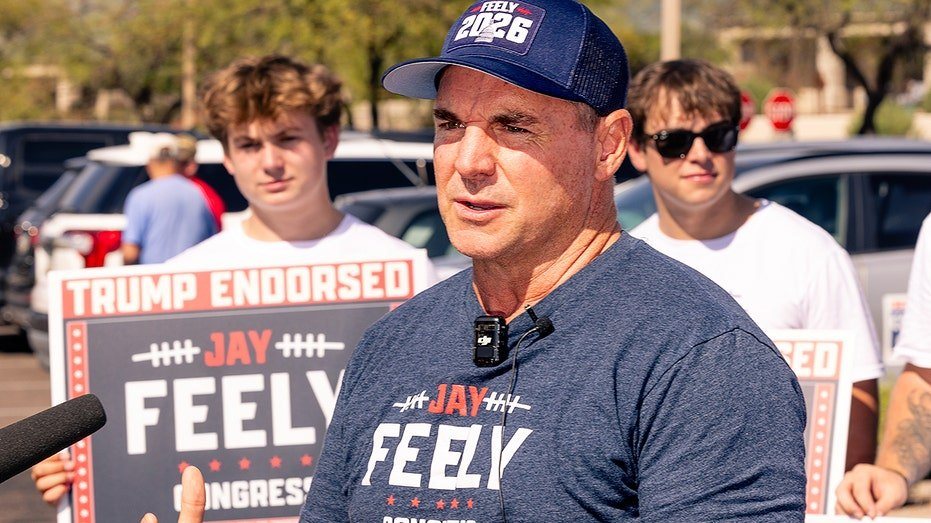
Former National Football League kicker Jay Feely won the Republican primary for Arizona’s 1st Congressional District on Tuesday, giving the GOP a candidate backed by President Donald Trump in a competitive open-seat race that will help determine which party controls the House of Representatives. Feely defeated former state lawmaker Joseph Chaplik and businessman John Trobough in the contest to replace Representative David Schweikert, a Republican who is running for governor but lost his own primary Tuesday night.
Trump endorsed Feely in a video message days before the primary, calling him a “true America First conservative” and urging voters to support him in the July 21 election. The National Republican Congressional Committee also placed Feely in its “MAGA Majority” program, which the committee says is aimed at supporting America First candidates in battleground districts. Feely’s victory in the Phoenix-area district, which includes northeastern Maricopa County and large parts of Scottsdale, Paradise Valley and Fountain Hills, positions him as a key contender in one of the most closely watched House races in the country.
The GOP primary became increasingly personal in its final weeks when Chaplik accused Feely on social media of having “imported Haitians,” a remark Feely described as racist and directed at Haitian men he considers family, according to Axios Phoenix. Feely, who has spent years doing nonprofit relief work in Haiti after a devastating 2010 earthquake there, has defended his work as humanitarian, not political. He told Axios Phoenix that he helped two young Haitian men — a translator he worked with and the translator’s brother — come to the United States, and he considers them members of his family. He has also tried to assist several of their relatives in relocating.
Chaplik shot back on social media, saying the tweet “had NOTHING to do with your two family members and everything to do with your history of bringing large numbers of Haitian migrants to NGOs in an attempt to get amnesty here,” and accused Feely of opposing Trump on Temporary Protected Status for Haiti. The exchange highlighted the sharp divisions within the Republican primary, but Feely ultimately prevailed with Trump’s backing and institutional support from the NRCC.
Feely will advance to a general election in a district that both parties see as competitive heading into November. Republicans are trying to hold Schweikert’s seat, while Democrats look to capitalize on an open race in a district that has remained competitive in recent cycles. The Democratic candidates for Arizona’s 1st Congressional District include former state lawmaker Amish Shah and former television news anchor Marlene Galán-Woods, the two leading Democrats in the race, along with Rick McCartney and Jonathan Treble.
The district’s battleground status makes it a focal point for national party spending and attention. With control of the House at stake, both parties are expected to invest heavily in the race. Feely’s background as a former NFL player and his humanitarian work in Haiti could appeal to a broad range of voters, but his close alignment with Trump may energize the Republican base while also drawing scrutiny from Democrats. The general election campaign is expected to be one of the most expensive and closely watched in the country.
Feely’s victory marks a significant moment for Trump’s influence in Arizona politics, as the former president continues to shape Republican primaries across the nation. The race also underscores the importance of the 1st Congressional District, which has been a swing seat in recent elections. Schweikert, the outgoing incumbent, faced his own primary challenge and lost Tuesday night, adding another layer of uncertainty to the GOP’s efforts to retain the seat.
As the general election approaches, Feely will need to unify the Republican base after a contentious primary while appealing to independent and moderate voters in a district that has shown a willingness to split tickets. Democrats, meanwhile, are likely to highlight Feely’s Trump ties and his stance on immigration and humanitarian aid. The outcome of this race could have national implications, as both parties vie for control of the House in the 2026 midterm elections.