Politics 6 min read By Trevor Kendall
Congress Urged to Pass Wildfire Smoke Legislation as Canadian Fires Choke U.S. Cities
As Canadian wildfire smoke blankets large parts of the United States, lawmakers are pushing for bipartisan bills to allow proactive forest management and shield states from penalties for foreign emissions.
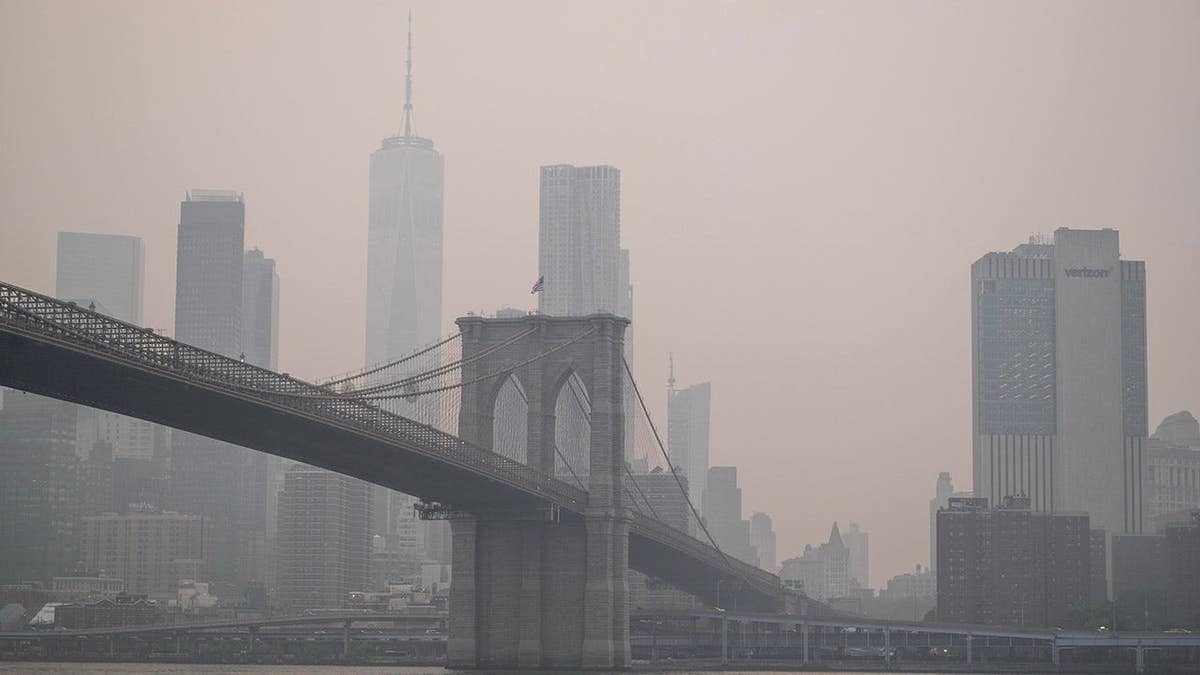
Millions of Americans across the Atlantic seaboard and Midwest woke up this week to hazy skies and air quality alerts, not because of local pollution, but due to smoke from hundreds of wildfires burning in Canada. The hazardous conditions forced seniors, children, and people with respiratory conditions to stay indoors, canceled outdoor plans for families, and disrupted daily life from professional sports games to summer vacations. The recurring crisis has reignited a political debate over forest management and cross-border pollution, with U.S. lawmakers urging Congress to pass legislation that would address the root causes of catastrophic wildfires.
Representative Gabe Evans of Colorado, whose district has experienced the devastating effects of wildfires firsthand, argues that the current regulatory system is failing. In an opinion piece published this week, Evans wrote that U.S. environmental laws allow forests to become dangerously overgrown, with dead trees and dense underbrush accumulating for years while environmental reviews delay any preventive action. Drought conditions and a single lightning strike or careless spark can then ignite an inferno. Evans described this as «the opposite of environmental stewardship» and «neglect dressed up as caution.»
To address the problem, Evans and his colleagues have introduced two bipartisan bills. The Fire Improvement and Reforming Exceptional Events (FIRE) Act would allow states to conduct prescribed burns — widely considered the most effective tool for reducing wildfire fuel — without being penalized under the Clean Air Act for those mitigation efforts. The bill also directs the Environmental Protection Agency to conduct regional analyses when multiple states are affected by the same wildfire event, streamlining federal action and reducing regulatory burdens. Evans emphasized that preventing catastrophic fires is itself an environmental win, as it protects air quality, public health, and natural landscapes.
The second bill, the Foreign Emissions and Nonattainment Clarification for Economic Stability (FENCES) Act, clarifies that states should not be held accountable for emissions originating outside the United States. Under current law, when Canadian wildfire smoke degrades air quality in American communities, states can face costly compliance requirements and federal penalties for pollution they did not create. The FENCES Act would exclude foreign emissions from EPA determinations of whether a state meets air quality standards, protecting states, energy producers, and manufacturers from unnecessary economic sanctions. Evans called it an injustice to penalize American communities for «our neighbors to the north's mess.»
Canadian researchers have noted that wildfire smoke is becoming a recurring feature of Canadian summers, meaning the problem is likely to persist. The smoke that blanketed U.S. cities this week is a stark reminder that poor forest management does not respect political boundaries. Air pollution affects everyone regardless of party affiliation, state lines, or international borders. Evans argued that the best way to improve air quality across the country is to prevent catastrophic fires from happening in the first place, and that the FIRE Act and FENCES Act provide a commonsense path forward.
The bills have already passed the House on a bipartisan basis and now await action in the Senate. Evans urged his colleagues to pass the legislation quickly, warning that every day of delay allows preventable risks to grow. He noted that states know the cost of catastrophic wildfires firsthand: lost homes, businesses, treasured public lands, and tragically, lives. Even after the flames are extinguished, the impacts linger for years through erosion, flooding, degraded wildlife habitat, and diminished water quality. To hold states accountable for pollution originating from another country, he said, is «just salt in the wound.»
The push for these bills comes as former President Donald Trump also weighed in on the crisis, blaming Canada for the wildfire smoke and suggesting that pollution costs should be added to tariffs. However, Evans and other lawmakers are focusing on legislative solutions rather than trade disputes. The FIRE Act and FENCES Act represent a bipartisan effort to give states the tools they need to manage forests proactively, reduce the frequency and severity of wildfires, and protect American communities from the health and economic consequences of cross-border smoke. As Evans concluded, «We didn't start the fire. We're just done punishing American communities for our neighbors to the north's mess.»