Politics 6 min read By Trevor Kendall
Congress urged to act on birthright citizenship after Supreme Court ruling
Rep. Brian Babin argues that a recent Supreme Court decision, particularly Justice Kavanaugh's opinion, shows Congress must clarify birthright citizenship law. His Birthright Citizenship Act would limit automatic citizenship to children with at least one parent who is a citizen, lawful permanent resident, or active-duty service member, aiming to curb illegal immigration and birth tourism.
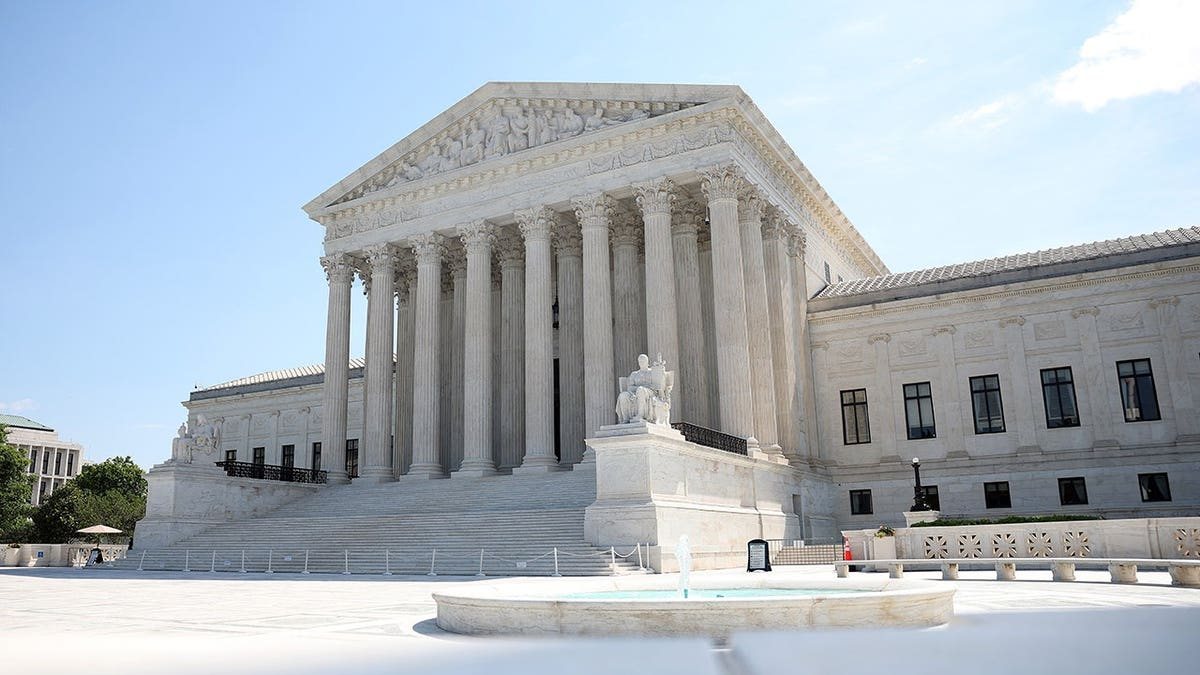
A renewed push to restrict birthright citizenship is gaining momentum on Capitol Hill, following a Supreme Court decision that lawmakers say opens the door for legislative action. Representative Brian Babin, a Texas Republican, is urging his colleagues to pass his Birthright Citizenship Act, arguing that the court has made it clear that Congress, not the executive branch, should define the scope of the 14th Amendment's citizenship clause.
The debate has intensified after President Donald Trump called on the Supreme Court to revisit the issue, and as Texas authorities investigate a hospital accused of marketing «birth packages» to foreign nationals. Babin, who represents Texas' 36th Congressional District, contends that the current interpretation of the 14th Amendment has created incentives for illegal immigration and birth tourism that the framers never intended.
«For too long, our nation has operated under an interpretation of the 14th Amendment that extends automatic citizenship far beyond what its authors intended,» Babin wrote in a recent opinion piece. The citizenship clause was ratified after the Civil War to guarantee that formerly enslaved Americans would be recognized as full citizens, he noted, not to reward those who violate immigration laws.
Justice Brett Kavanaugh's separate opinion in the recent Supreme Court case provided a roadmap for Congress, Babin said. Kavanaugh suggested that the legislative branch, not the president, is the proper institution to address the scope of birthright citizenship through legislation. That opinion, Babin argued, reinforces the need for Congress to act rather than wait for the courts or the executive branch to resolve the matter.
The Birthright Citizenship Act would clarify in federal law that automatic citizenship at birth applies only when at least one parent is a United States citizen or national, a lawful permanent resident residing in the United States, or a lawful immigrant serving on active duty in the United States Armed Forces. Babin described the proposal as a «steady, measured, commonsense proposal rooted in the rule of law.»
Recent events in Texas have highlighted the issue. A hospital in the state came under investigation after advertisements surfaced promoting «Birth Packages in South Texas» for foreign nationals. Separately, investigators uncovered a Houston-based birth tourism operation that allegedly helped facilitate the births of more than 1,000 children for Chinese nationals seeking to obtain U.S. citizenship for their children. Babin called these incidents evidence that the current interpretation of the 14th Amendment has created incentives that Congress has the authority and responsibility to address.
According to the Center for Immigration Studies, roughly one in 10 births in the United States is to an illegal immigrant mother. The organization also estimates that hundreds of thousands of expectant mothers enter the country illegally each year with the expectation of giving birth in the United States. Babin argued that these statistics demonstrate the strain on public resources and the erosion of confidence in the immigration system.
«America's citizenship is among the greatest privileges our nation can bestow,» Babin wrote. «It should not be exploited through illegal immigration or birth tourism.» He emphasized that the American people deserve an immigration system that rewards legal immigration, respects the Constitution, and places the interests of citizens first.
President Trump has made birthright citizenship reform a national priority, and Babin said Congress now has an opportunity and an obligation to act. The Supreme Court has reinforced that lasting policy changes should come through the legislative process, he noted, and his legislation provides the vehicle for that change.
Babin acknowledged that reasonable people can disagree about constitutional interpretation, but he argued that there should be broad agreement that Congress should not abdicate its legislative responsibilities. If lawmakers believe the citizenship laws no longer reflect the nation's interests or the original understanding of the 14th Amendment, he said, then Congress should debate the issue openly and vote.
The Birthright Citizenship Act gives Congress the opportunity to restore integrity to the nation's citizenship laws, eliminate incentives for illegal immigration, and reaffirm that American citizenship is a precious privilege, not an automatic entitlement available to anyone who crosses the borders, Babin concluded. «The time for debate alone has passed,» he wrote. «The time for action is now.»