
News 5 min read By Trevor Kendall
Trump Administration Taunts Critics After Record-Breaking World Cup Transit Success
Transportation Secretary Sean Duffy and the DOT report record ridership and no major incidents during the FIFA World Cup, pushing back against earlier predictions of a transit disaster.
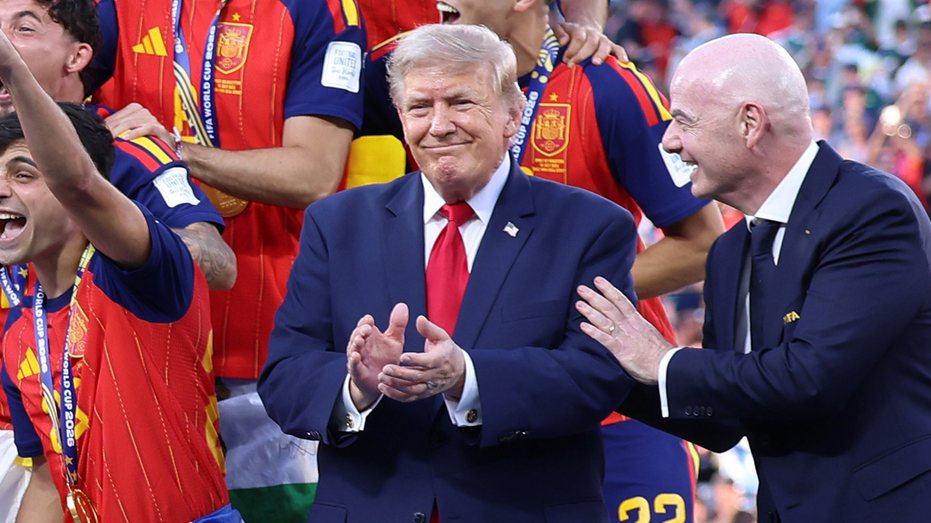
The Trump administration is celebrating a major transportation victory following the FIFA World Cup, with Transportation Secretary Sean Duffy taunting critics who had predicted widespread transit failures during the tournament. Millions of fans traveled to stadiums across the United States, but federal, state, and local networks handled the surge without any significant disruptions, according to the Department of Transportation.
Duffy credited a $100.3 million DOT infrastructure investment in host cities and what he described as the administration’s effective management for the smooth operations. He singled out political opponents who had warned of chaos, telling Fox News Digital: «The Left was praying for an American transit disaster as we hosted the most important international sporting event in modern history. They were wrong, and President Trump was right.»
Among the critics was Senator Ruben Gallego, an Arizona Democrat, who in April accused the Trump administration of endangering fans by «systematically dismantling security agencies, delaying critical security assistance, and initiating a war with Iran.» Gallego argued that the Department of Homeland Security was «woefully unprepared to accomplish its mission.» Senate Minority Leader Chuck Schumer also expressed skepticism, claiming that Trump cared more about appearing on international television than actually hosting a successful event.
The Atlantic published a piece in May titled «Another Way America Will Choke at the World Cup,» predicting that the nation’s «patchwork railway system» would be exposed under the pressure of 11 host cities. Vox, meanwhile, ran an article at the start of the tournament accusing Trump of «actively hindering» the event through his immigration policies. Yet by the final match, Vox acknowledged that «the nation’s widely expected World Cup public transit meltdown has simply not materialized,» noting that U.S. cities had «managed to absorb the influx of fans with relative ease.»
The DOT released detailed ridership figures that underscore the scale of the achievement. In Atlanta, more than 2 million riders used public transit to reach matches, fan fests, and related events, with match-day ridership reaching up to three times the typical average. Seattle saw over 1.1 million combined riders on public transit during its first two matches alone; on July 6, the city’s light rail system set a single-day record of 309,000 riders, far surpassing its previous high of 220,000.
Philadelphia, which also hosted the MLB All-Star Game this year, recorded an average of 27,000 public transit riders per World Cup match, while its PHLASH bus service saw a 500 percent increase in ridership. Kansas City set a one-day record for streetcar riders at 48,260 on June 27. Los Angeles experienced a 598 percent increase in rider taps on World Cup match days compared to a typical Friday. In San Francisco, an average of more than 38,000 fans used public transit to travel to and from matches, exceeding the numbers recorded for Super Bowl LX by nearly 8,000.
Nathaniel Sizemore, a DOT spokesperson, attributed the criticism to what he called «the Left’s TDS (Trump derangement syndrome),» which he said «put them in the absurd position of praying for an American transit disaster.» Duffy emphasized that the success was not accidental, noting that the department’s work spanned multiple agencies. «Whether they flew, took passenger rail, hopped on public transit, or hit the open road, Americans and visitors alike saw the best of our nation over the last month,» he said. «From the FTA’s investment into local public transit to the FAA’s work keeping our skies safe, we were proud to help FIFA fans get to the games safely and on time.»
The administration’s taunts come as the World Cup concluded with Spain defeating Argentina in the final, an event that also drew President Trump into the spotlight. Fox News Digital reached out to Gallego, Schumer, The Atlantic, and Vox for comment but did not receive immediate responses. The DOT’s data and Duffy’s remarks frame the tournament as a clear vindication of the administration’s approach, turning what critics had warned would be a logistical nightmare into a showcase of American infrastructure capacity.