News 6 min read By Morgan Griffin
Trump Administration Subpoenas New York Times Journalists Over Air Force One Leak Probe
The Trump administration has subpoenaed four New York Times journalists to testify before a grand jury in a leak investigation tied to a report about security concerns on the new Air Force One aircraft.
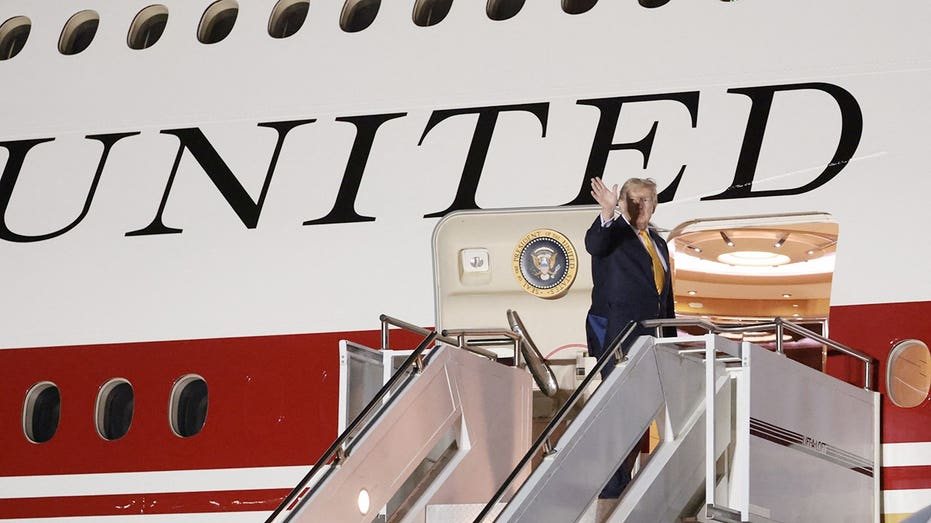
The Trump administration has issued subpoenas to four New York Times journalists, compelling them to testify before a federal grand jury in Manhattan as part of an investigation into leaked national security information. The legal action, announced by the newspaper on Friday, stems from a recent article that detailed security concerns surrounding President Donald Trump's newly retrofitted Air Force One aircraft, a Boeing 747-8 gifted to the United States by Qatar.
The journalists targeted by the subpoenas are Eric Lipton, Julian E. Barnes, Tyler Pager, and Eric Schmitt. According to the Times, federal agents personally delivered some of the subpoenas to the reporters' homes. The journalists are required to appear before the grand jury on Wednesday, raising significant concerns about press freedom and the protection of confidential sources.
David McCraw, the top lawyer for the New York Times, condemned the administration's actions in a strongly worded statement. «The appearance of federal law enforcement agents on the doorstep of news reporters should shock the conscience of any American who believes in the Constitution and the press freedom it protects,» McCraw said. The subpoenas represent a notable escalation in the ongoing tension between the Trump administration and the media over the handling of classified information.
The controversy centers on a Times article published earlier this week that cited anonymous sources to report that the new Air Force One aircraft lacked certain security and countermeasure technologies. The report claimed that the Secret Service recommended a last-minute switch to an older aircraft during Trump's recent trip to Europe. The president had flown the new jet to a NATO summit in Turkey but later departed from Mildenhall Royal Air Force Base in Suffolk, England, on an older Air Force One plane. The Qatari-gifted aircraft also flew to Mildenhall, where Trump transferred to it for the return flight to Joint Base Andrews.
The timing of the switch raised questions, as it occurred shortly after the United States launched airstrikes on Iran following a collapsed ceasefire. Turkey, which shares a border with Iran, was a key stop on the trip, prompting speculation about potential security risks. Trump has denied any security concerns, posting on Truth Social that the stop at Mildenhall was arranged so that service members stationed at the base could view the new aircraft. When asked by reporters whether the plane swap was due to threats involving Iran, Trump replied, «I have a threat all the time. I'm No. 1 on their list.»
The Department of Justice defended the subpoenas, emphasizing that the investigation targets individuals who leak classified information, not the journalists themselves. A DOJ spokesperson stated, «Every administration has addressed the crime of leaking national security information. To the extent that we have to investigate breaches of national security, that's something that we will continue to do.» The spokesperson added, «To be clear, reporters are not the targets, those leaking classified information are. We value and appreciate the important role that the press plays in this country, but DOJ also plays an important role to make sure that the people entrusted with our nation's secrets do what they're supposed to do with that information, which means not sharing classified information.»
The statement acknowledged the inherent tension between press freedom and national security, concluding, «We recognize there may always be natural tension there, but we are not going to ignore the law and stop investigating the people who work in the administration and think it's okay to leak classified information impacting national security.»
The new Air Force One aircraft, a retrofitted Boeing 747-8 valued at approximately $400 million, took its inaugural flight earlier this month. The plane was a gift from Qatar, a key U.S. ally in the Middle East, and its introduction has been a point of pride for the Trump administration. However, the security concerns raised by the Times article have cast a shadow over the aircraft's debut, leading to the current legal battle.
This is not the first time the Trump administration has pursued legal action against journalists in leak investigations. The move has drawn criticism from press freedom advocates, who argue that such subpoenas chill investigative reporting and undermine the public's right to know. The New York Times has vowed to fight the subpoenas, signaling a protracted legal confrontation that could test the boundaries of the First Amendment.
The investigation into the leak of national security information continues, with the grand jury proceedings expected to unfold in the coming weeks. The outcome could have significant implications for the relationship between the executive branch and the media, as well as for the protection of confidential sources in an era of heightened security concerns.