News 5 min read By Morgan Griffin
New York Civil Liberties Union and Legal Defense Fund Call for Statewide Reparations
A report from the NYCLU and LDF argues that New York owes reparations to Black residents due to historical slavery and systemic discrimination, citing a racial wealth gap where Black median wealth is nearly 15 times less than White median wealth.
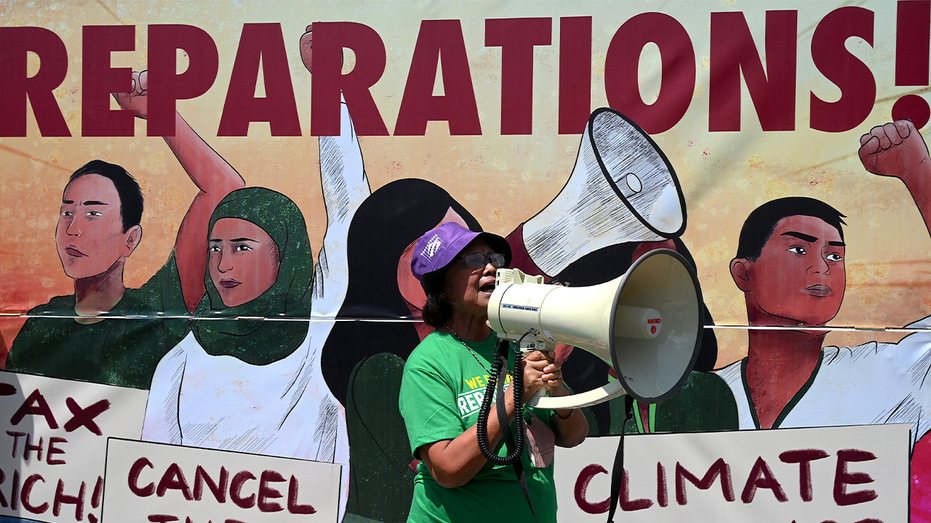
A prominent civil rights coalition is intensifying the push for statewide reparations in New York, arguing that the state's deep involvement in slavery and decades of discriminatory policies have created a persistent racial wealth gap that demands financial and structural remedies. In a joint report released last week, the New York Civil Liberties Union (NYCLU) and the Legal Defense Fund (LDF) detailed the lasting economic harms inflicted on Black communities, calling reparations a debt that remains unpaid.
«Reparations are a debt that is owed. Enslaved Black people built the foundation of New York’s economy, but Black families in our state still face racism that has been codified into our laws and budgets,» said Lanessa Owens-Chaplin, Director of the Racial Justice Center at the NYCLU. «New York State was not a bystander to slavery — it created, enacted, and protected the institution. Reparations must be extended to all Black New Yorkers descended from those enslaved by New York State, and to all Black New Yorkers still living under the systems slavery built.»
The report, titled «The Other New York: The Legacy of Slavery and the Case for Reparations Now,» highlights stark economic disparities. According to the findings, the median wealth of Black New Yorkers stands at $18,870 — nearly 15 times less than the median wealth of White New Yorkers, which is $276,900. The groups noted that New York's racial wealth gap is wider than the national average, underscoring the enduring consequences of historical injustices.
The report points to government-backed practices such as redlining as major drivers of today's inequality. Redlining, which systematically denied mortgage loans and other financial services to residents in predominantly Black neighborhoods, effectively blocked generations from building wealth through homeownership. «Nearly 90 years after redlining and urban renewal, formerly redlined communities remain some of the highest-poverty neighborhoods in New York,» the report states. It also highlights how zoning laws reinforced racial hierarchies, forcing Black residents into industrial areas with higher pollution levels, leading to disproportionately high rates of asthma, cardiovascular disease, premature delivery, and premature death. Schools serving predominantly Black students have been severely underfunded and affected by environmental hazards, crumbling infrastructure, and lead poisoning.
The groups argue that reparations must go beyond symbolic gestures. The report advocates for direct compensation for financial losses, including lost wages and wealth, alongside broad institutional policy changes in criminal justice, environmental policy, and public school funding. «Supporting reparations is about more than compensation; it is about acknowledging harm, restoring dignity, and creating pathways for communities to thrive,» the authors wrote. They added that repairing past harm is essential for building a thriving economy and a resilient multi-racial democracy, asserting that reparations benefit all New Yorkers.
These localized efforts come amid growing legal and political scrutiny of racial redress initiatives nationwide. In Evanston, Illinois — the first U.S. municipality to distribute cash and housing grants as reparations — the program faces a federal lawsuit. The U.S. Department of Justice intervened in that case, arguing that race-based benefit distributions violate the Equal Protection Clause of the Fourteenth Amendment. Meanwhile, in New York, progress on state-level recommendations has stalled. The New York State Community Commission on Reparations Remedies was created under legislation signed by Democratic Governor Kathy Hochul in late 2023. The panel was tasked with examining the state's historical ties to slavery, subsequent Jim Crow practices, and modern economic disparities to formulate recommendations for policy changes and financial remedies. However, the NYCLU criticized state officials after a provision quietly embedded in the state budget pushed the commission’s final report deadline back two years — from its original 2025 date to 2029.
The report's release underscores the ongoing debate over how to address historical injustices and their modern-day consequences. Advocates argue that without concrete action, the wealth gap will persist, while opponents raise legal and constitutional concerns about race-based remedies. The NYCLU did not respond to requests for further comment on the report or the delayed commission timeline.