News 4 min read By Morgan Griffin
Bryson DeChambeau penalized two strokes, considers leaving Open Championship
Bryson DeChambeau was assessed a two-stroke penalty after a rules dispute on the fifth hole of the Open Championship, dropping him to a tie for fifth place. He reportedly considered withdrawing from the tournament.
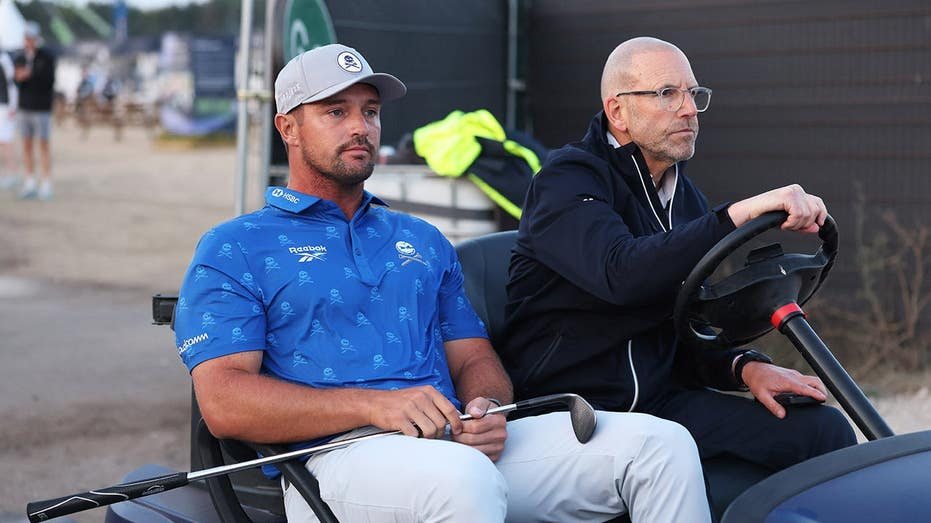
Bryson DeChambeau, the two-time U.S. Open champion, found himself at the center of a heated rules controversy during the second round of the Open Championship at Royal Birkdale. After initially posting a four-under-par 66, DeChambeau was informed by rules officials that he would be assessed a two-stroke penalty for an incident on the fifth hole, turning his score into a 70 and dropping him from a tie for second to a tie for fifth at five under par.
The incident occurred when DeChambeau’s tee shot landed in deep, hip-high fescue rough on the fifth hole. As he prepared to play his second shot, television footage and witness accounts showed him walking through the weeds and stomping on the rough behind him, which appeared to flatten the grass and potentially improve his lie. Rules officials approached him after he completed his round to discuss the matter, leading to an animated and loud exchange near the clubhouse.
During the conversation, DeChambeau vehemently argued his case, mimicking his pre-shot routine and waving his hands to demonstrate that the trampled fescue was not directly in line with his swing. Despite his protests, the officials determined that he had violated Rule 8.1a, which prohibits a player from improving the area of their intended swing by moving, bending, or breaking anything growing or fixed. The two-stroke penalty was applied to his scorecard.
The penalty had immediate consequences for DeChambeau’s standing in the tournament. He went from sharing second place at seven under par to a tie for fifth at five under, three strokes behind the solo leader, Lucas Herbert. Herbert’s second-round 62 tied the lowest score ever recorded in a major championship round, setting a formidable target for the rest of the field.
Following the penalty, DeChambeau headed to the practice range, where his agent informed reporters that the golfer was considering not teeing off for the third round on Saturday. The possibility of a withdrawal added further drama to an already contentious situation, though DeChambeau had not made a final decision at the time of the report. His frustration was palpable, as he had been playing some of his best golf of the season and had rebounded from pre-tournament criticism about his ability to handle links-style courses.
The incident has sparked debate among golf fans and analysts about the consistency of rules enforcement and the pressure players face in major championships. Some observers noted that DeChambeau’s aggressive style of play, which often involves power and unconventional shot-making, can sometimes lead to close calls with the rules. Others pointed out that the penalty, while controversial, appeared to be supported by video evidence showing the grass being flattened.
DeChambeau’s performance in the first two rounds had been a strong response to critics who questioned his suitability for links golf. He opened with a strategic 68 on Thursday, demonstrating patience and creativity around the undulating fairways and firm greens of Royal Birkdale. His second round was on track to be even better until the penalty intervened.
The Open Championship continues through the weekend, with Herbert holding a commanding lead. DeChambeau’s decision on whether to continue will be closely watched, as his presence in the field adds star power and intrigue to the tournament. Regardless of his choice, the penalty will likely remain a talking point for the remainder of the championship and beyond.