Culture 5 min read By Lauren Baxter
«The Sea Speaks His Name» Review: Indonesian Political Thriller Honors Disappeared Activists
Yosep Anggi Noen's new film chronicles 1990s student resistance in Indonesia, offering a powerful tribute to activists who vanished under authoritarian rule.
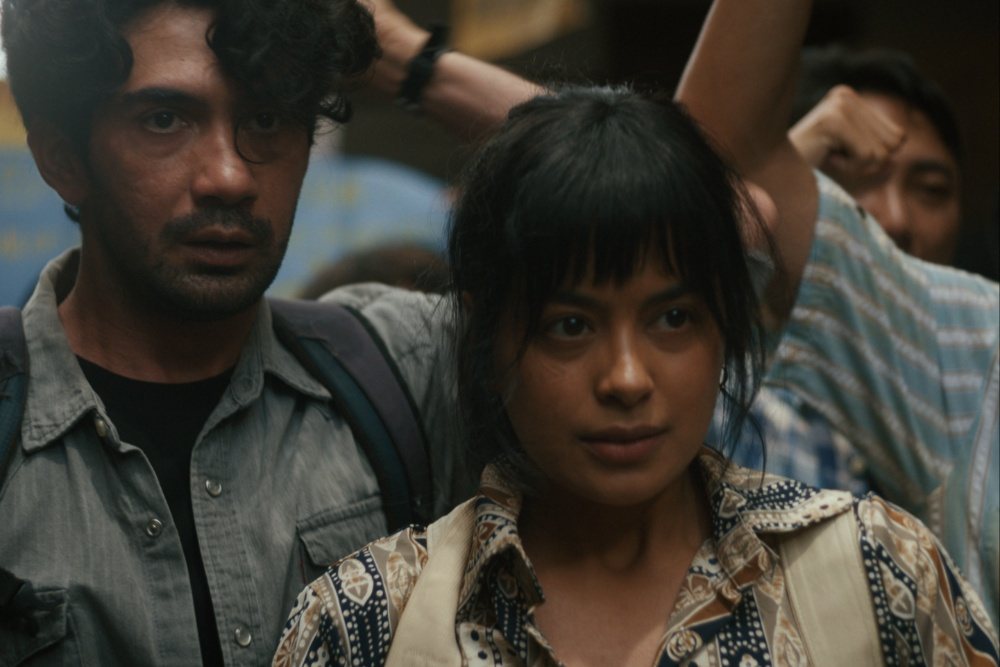
Yosep Anggi Noen's «The Sea Speaks His Name» arrives as a compellingly angry and anguished political thriller that chronicles grassroots student resistance to Indonesia's authoritarian regime in the 1990s. The film serves as an ode to disappeared activists, bringing to the screen a chapter of history that continues to resonate in an era when some mistake social media posting for genuine activism.
Set predominantly during the final years of President Suharto's New Order government, the film follows a group of university students who organize against a regime that has held power for more than three decades. Their movement, built on clandestine meetings, underground pamphlets, and the slow cultivation of trust among a population accustomed to surveillance and reprisal, captures the dangerous, painstaking work of boots-on-the-ground political organizing. Noen's camera lingers on the textures of that world: the cramped safe houses, the coded conversations, the constant awareness that any misstep could lead to arrest, torture, or permanent disappearance.
The film's title refers to the sea as both a literal and figurative resting place for those who vanished. In Indonesia, the ocean has long been a site of both mourning and mystery for families of the disappeared, many of whom never received bodies or explanations. Noen uses this imagery not as easy metaphor but as a way to ground the film's political anger in specific, human loss. The sea speaks because the state will not.
What distinguishes «The Sea Speaks His Name» from conventional political thrillers is its refusal to treat activism as either glamorous or purely tragic. The students at the center of the story are not martyrs in waiting; they are young people who argue, make mistakes, fall in love, and sometimes betray one another under pressure. That complexity gives the film its emotional weight. When the consequences of their actions arrive, they feel earned rather than imposed by narrative convenience.
The timing of the film's release adds another layer of relevance. In an age where digital platforms have made political expression simultaneously easier and more ephemeral, Noen's portrait of 1990s student resistance serves as a reminder of what sustained, physical organizing once required. The film does not dismiss online activism, but it does insist on the difference between posting and risking one's life. That distinction gives «The Sea Speaks His Name» its additional potency.
Noen, who has previously explored Indonesian history and memory in his work, brings a documentarian's eye to the period details while maintaining a thriller's momentum. The film's pacing reflects the rhythm of underground life: long stretches of waiting and planning punctuated by sudden, terrifying bursts of state violence. The result is absorbing rather than merely instructive, a political film that works first as cinema and second as history lesson.
For American audiences accustomed to political thrillers that resolve neatly, «The Sea Speaks His Name» may prove challenging. Its ending offers no easy catharsis, no triumphant reversal. Instead, it leaves viewers with the sea, the names, and the uncomfortable knowledge that for many Indonesian families, the story never ended. The activists who disappeared in the 1990s remain disappeared. The film does not pretend otherwise.
What it does offer is something rarer: a sustained act of cinematic attention. By refusing to look away from the disappeared, Noen's film becomes its own form of activism, one that uses the tools of narrative art to insist that these lives mattered and that the questions they raised remain unanswered. In that sense, «The Sea Speaks His Name» is not just a review of history but a continuation of it, a work that asks viewers to carry the names forward.
61