Culture 4 min read By Lauren Baxter
Radio Free Alice Move From Empty London Gig to Arena-Sized Debut Album
The Melbourne four-piece, who once played to a crowd of two in a London clothing shop, are releasing their debut album 'What's In Between' and embracing big, ambitious alternative rock.
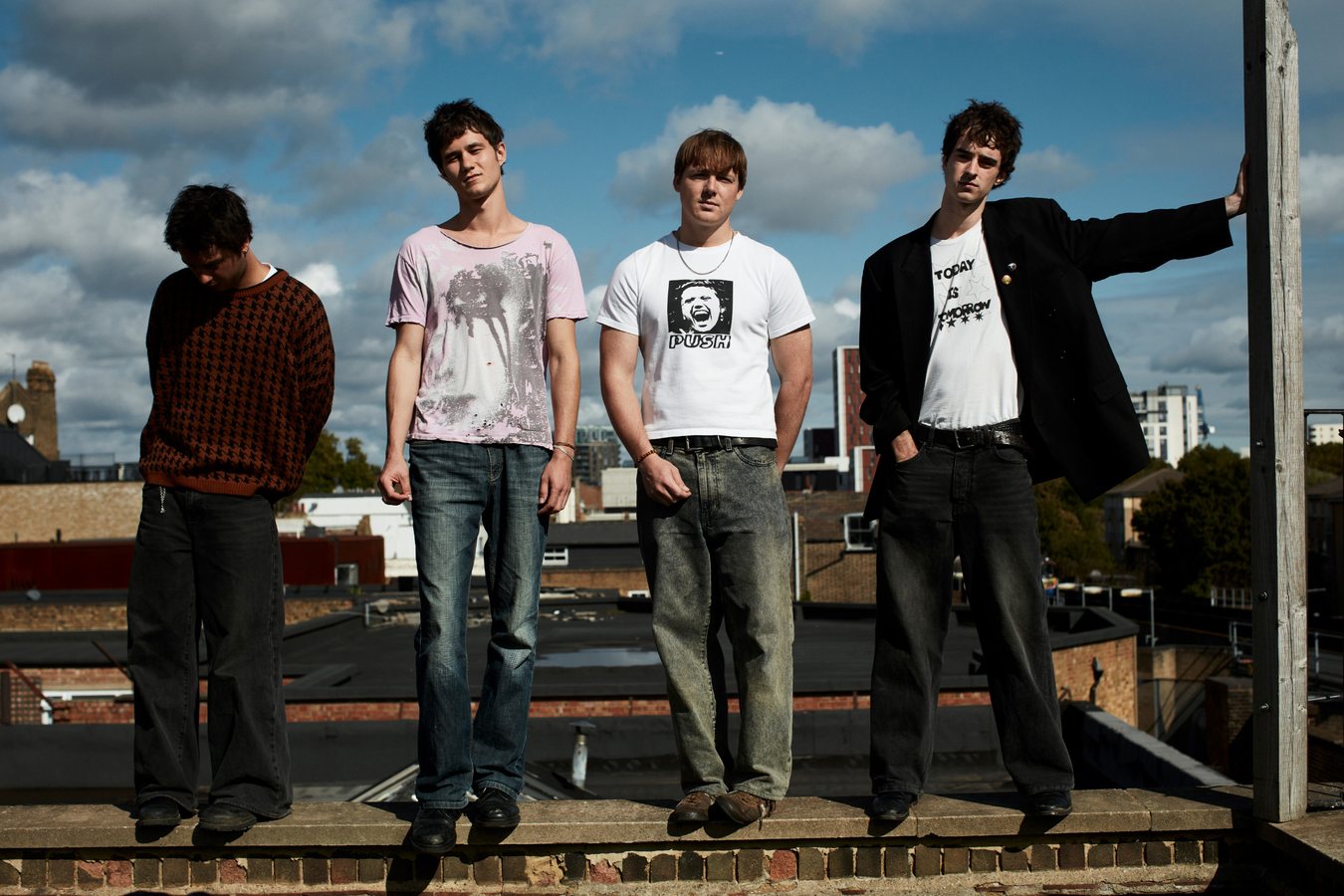
Radio Free Alice are done pretending they don't want to be a big band. The Melbourne four-piece — frontman Noah Learmonth, guitarist Jules Paradiso, drummer Lochie Dowd and bassist-saxophonist Michael Phillips, all 25 — have released their debut album, «What's In Between», a glossier, more widescreen expansion of the slinky indie rock that first drew attention on their second EP, «Polyester».
The contrast with their early days is stark. Learmonth recalls that the band's first London show, in the back room of east London clothing shop Paper Dress Vintage, drew a crowd consisting of their manager and a cousin. The following summer, tickets for their next London date sold out immediately, a pattern that repeated as word spread. At Reading Festival 2026, they played to a jam-packed tent at the Ballroom Stage, a set Learmonth describes with characteristic understatement: «We were really happy. There was a full tent, so that was crazy.»
The album was mostly recorded at producer Peter Katis's studio in Connecticut, a choice that shaped its cinematic sound. Katis has worked with The National and Interpol, and Phillips credits him with helping the band navigate the scale of the record. «We had a lot of conversations and arguments about how big we really did want it to sound,» Phillips says. The band, he adds, has «quite cathartic songwriting tendencies to begin with,» but was also «conscious, in some cases, to limit quite how big and dramatic it was.»
That restraint keeps the record from sounding overblown. The chiming riffs of «Bottleshops» and the taut rhythm section of «Four Leaf Clover» sit alongside narrative-driven lyrics in which Learmonth observes from a distance. On «Rule 31», he reimagines a traumatic incident from his father's childhood; the soaring title track follows a put-upon waitress who fantasises about murdering a customer. The band's influences — New Order, The Jam, The Housemartins, Jarvis Cocker, the Smiths — are worn openly, and the album's ambition has drawn comparisons to The Killers' «Hot Fuss».
What sets Radio Free Alice apart is their refusal to hide that ambition. Learmonth argues that alternative rock is plagued by a self-fulfilling prophecy in which artists pretend not to care about success. «There's a lot of people who don't want to say they wanna be a really big band and then not be a big band and feel awkward about it,» he says. «But then, as a result, no one manifests it, and everyone's just making cassette tapes played in share houses to hipsters, so they're not getting big.»
The band's origins in north Melbourne's avant-garde scene made their pop sensibility an awkward fit. Their sound, Learmonth explains, «was too poppy for the Melbourne arts scene and it wasn't poppy enough for the broader Australian music scene.» Instead, the four bonded over British rock and indie, a shared obsession that has carried them from a near-empty clothing shop to festival tents and a debut built for rooms far larger than the 500 to 1,000-capacity venues they currently play.
7