Culture 3 min read By Lauren Baxter
«Le Faux Soir» Review: Belgian Resistance Comedy Hijacks Nazi Propaganda
A new film review examines «Le Faux Soir», a period piece about a Belgian anarchist poet who joins the Resistance to counterfeit a Nazi-controlled newspaper during World War II.
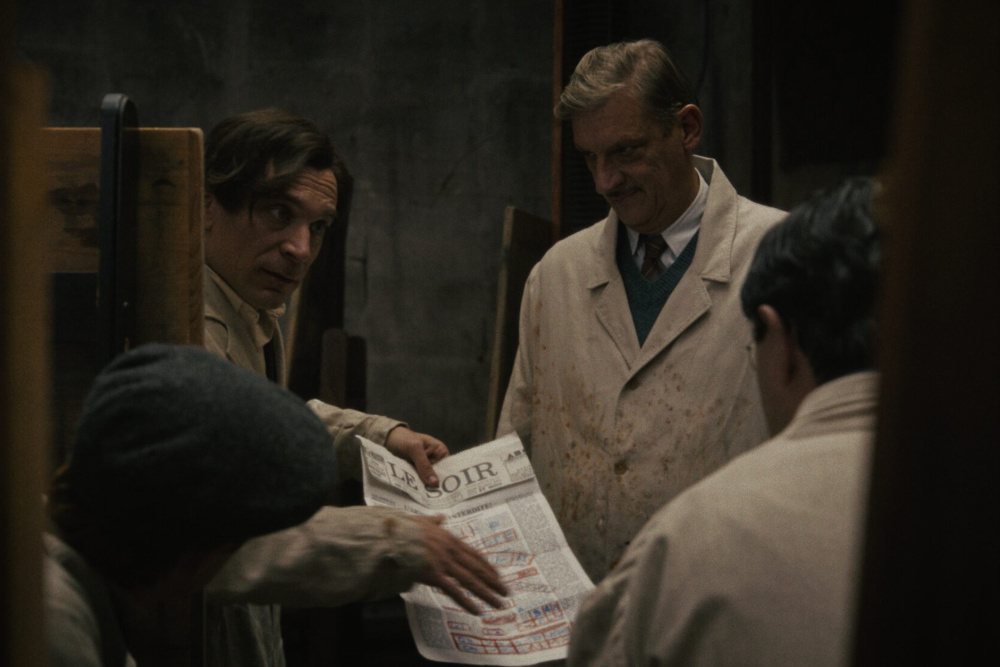
«Le Faux Soir» takes its high-concept premise from a genuine chapter of Second World War history: the hijacking of state media propaganda to spread the truth. The film, reviewed this week, centers on Marc Aubrion, a disgruntled anarchist and poet recruited in 1943 by the Belgian Resistance, which operates its own underground newspaper.
Marc's idea is to break out of the Resistance's isolated readership and reach the broader public by producing a counterfeit edition of a Nazi-controlled daily. The review describes the film as an earnest, slow-paced period piece that mines its tension not from action set pieces but from the moral and logistical challenges of fake news deployed for a just cause.
Arieh Worthalter stars as Marc, bringing a restless, intellectual energy to a character who would rather write poetry than follow orders. The supporting cast fills out the Resistance cell, whose members must balance sabotage, secrecy, and the constant threat of discovery by occupying forces. The film's title, which translates roughly to «The Fake Evening», refers to the counterfeit newspaper itself, a weapon made of ink and paper rather than bullets.
The review notes that the movie's deliberate pacing may test viewers accustomed to faster wartime thrillers, but argues that the slowness serves the story's themes. The tension comes from the painstaking work of mimicking a propaganda outlet convincingly enough to fool both the Nazis and the public, and from the ethical questions raised when the Resistance decides to lie in order to tell a larger truth.
Set in occupied Belgium, the film draws on the real history of Resistance newspapers, which were printed clandestinely and distributed at great personal risk. By focusing on a poet turned forger, «Le Faux Soir» explores how artists and intellectuals found unconventional roles in the fight against fascism. The review praises the production design for capturing the drab textures and muted colors of wartime Europe, though it suggests the film's restraint sometimes works against its momentum.
For audiences interested in the intersection of media, propaganda, and resistance, the film offers a timely meditation on how information can be weaponized — and how the same tools can be turned against their makers. The review concludes that «Le Faux Soir» is a thoughtful if unhurried addition to the canon of World War II cinema, one that prioritizes ideas over spectacle.