Culture 5 min read By Trevor Kendall
James Talarico Blasts 'Government Censorship' After ABC Pulls Jimmy Kimmel Interview Over FCC Concerns
Texas Democratic Senate candidate James Talarico condemned ABC's decision to pull his Jimmy Kimmel interview from broadcast over FCC concerns, calling it 'the most dangerous form of cancel culture.' The interview will instead stream on the 'Jimmy Kimmel Live!' YouTube channel Thursday night. The White House denies any pressure was applied.
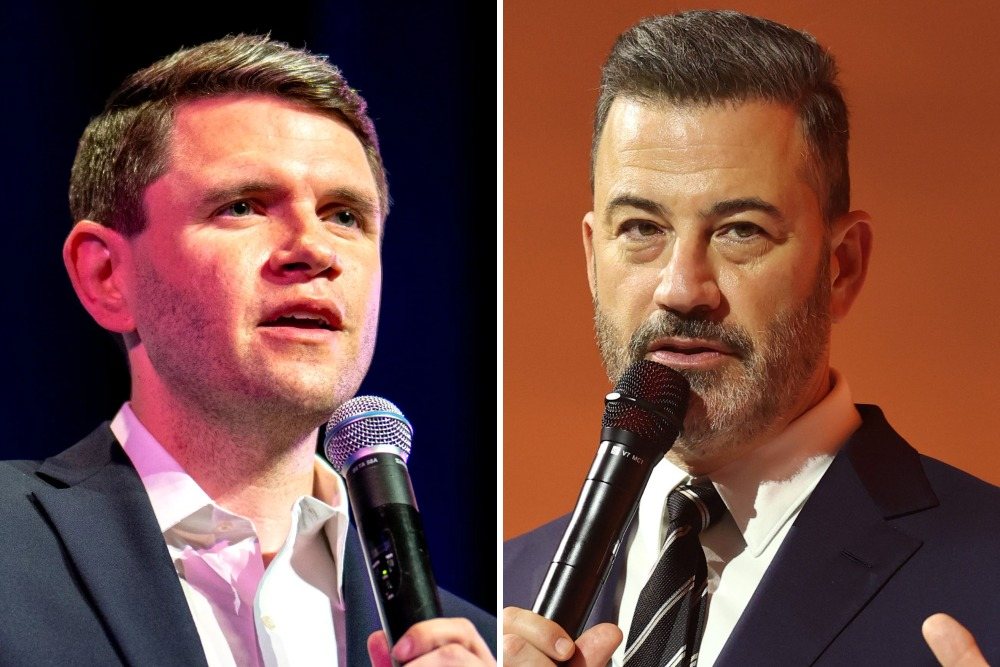
James Talarico, the Democratic candidate running for Senate in Texas, is speaking out after ABC pulled his scheduled interview with Jimmy Kimmel from broadcast over concerns about the Federal Communications Commission. The sit-down will instead be posted to the « Jimmy Kimmel Live! » YouTube channel on Thursday night, bypassing the network's traditional late-night airwaves.
In a statement responding to the decision, Talarico framed the move as a broader threat to public discourse. « Government censorship should be a concern to all of us, regardless of our political party, » he said. The Texas Democrat went further in comments to Deadline, calling the network's decision « the most dangerous form of cancel culture. »
The interview's removal from ABC's schedule marks an unusual intervention in late-night television, a genre that has increasingly become a platform for political figures to reach audiences outside traditional news programming. Kimmel himself said pressure from the FCC prevented Disney, ABC's parent company, from airing the conversation on the network.
The White House is pushing back on that characterization. In the latest twist in the dispute, the Trump administration accused Kimmel and ABC of « play-acting » and spinning what it called a fake tale of federal strong-arming. According to the White House, there was never any pressure put on Kimmel or the network to scuttle the interview.
The competing accounts leave the public with two sharply different narratives: one in which a federal agency's concerns effectively kept a Senate candidate off a major broadcast network, and another in which a late-night host and his corporate employer manufactured a controversy for attention. Neither side has released documentation publicly substantiating its version of events.
For Talarico, the episode arrives at a sensitive moment in his Senate campaign. As a Democratic candidate in Texas, he is seeking statewide office in a Republican-leaning state where national media exposure can shape name recognition and fundraising. An interview on a major broadcast network would typically reach a far larger and more diverse audience than a YouTube upload, though the online platform can still generate significant traffic and viral clips.
The decision to route the interview to YouTube also reflects a broader shift in how political media reaches viewers. Late-night shows have increasingly released extended interviews and unaired segments online, where they can circulate without network time constraints. But the choice to move an entire interview off broadcast — particularly one involving a sitting Senate candidate — is a more dramatic step, and it has drawn attention from media observers and political commentators alike.
The FCC's role in the dispute remains a central point of contention. The agency regulates broadcast television under federal law, and its oversight has historically included content standards and licensing requirements. Whether informal concerns from the commission can influence a network's programming decisions is a question that touches on both regulatory practice and First Amendment principles. Talarico's statement explicitly invoked censorship, arguing that government pressure on broadcasters should concern Americans across the political spectrum.
Kimmel has not backed away from the controversy. By confirming that the interview would still be released on YouTube, he ensured the conversation would reach the public even without ABC's broadcast platform. The move keeps the spotlight on the network's decision while allowing the interview's content to circulate online, where it may generate its own news cycle.
The White House's denial adds another layer to the story, turning what began as a scheduling decision into a partisan dispute over who is telling the truth about federal influence on media. With the interview set to stream Thursday night, both Talarico and Kimmel will have a direct platform to make their case to viewers — and the White House will likely continue to contest their account.
For now, the episode underscores the increasingly blurred lines between entertainment, politics, and broadcast regulation. A Senate candidate's interview, a late-night host's platform, a network's scheduling call, and a federal agency's perceived influence have all converged into a single controversy that neither side appears ready to drop.