Technology 6 min read By Trevor Kendall
Can games like CS2 sharpen attention? Here’s what the EEG study actually found
The viral version says Dota 2 and CS2 “boost the brain.” The real study followed 49 novice gamers for six months and found attention gains — but it did not test those titles directly.
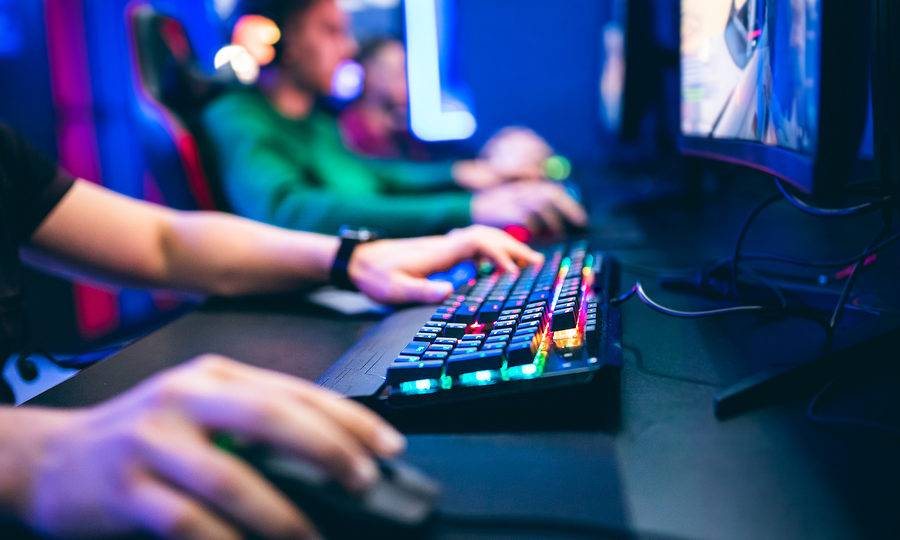
Gaming science has produced a headline tailor-made for group chats: Dota 2 and CS2 make your brain better. The actual 2026 study is both more interesting and less absolute. It found that 49 relatively inexperienced gamers performed better on two visual-attention tests after six months of action-game training, and their resting EEG showed related changes in brain activity.
The research appeared in the International Journal of Psychophysiology. Participants were healthy university students who did not start the project with substantial gaming experience. Over six months, they accumulated 120 hours of action-video-game training.
Before and after that period, researchers tested how well participants could select relevant visual information and spread attention across a wider field. The d2 Test of Attention makes people identify specific targets among very similar distractors while balancing speed and accuracy. An Attention Breadth task looks at how effectively visual attention is distributed spatially.
After the training, the group did better on both. In gaming terms, the skills resemble some of what fast competitive play demands: ignore clutter, notice the signal that matters, keep tabs on peripheral information and change priorities quickly. That resemblance makes the result intuitively appealing, but the researchers did not simply assume that playing well equals being cognitively better — they measured performance in separate attention tasks.
Then came the EEG. The team recorded participants at rest and examined local electrical activity as well as larger-scale network organisation. They reported changes involving alpha activity and functional network patterns after the six-month training period. Some of those EEG features tracked how much individual players improved on the attention measures.
That pairing is the strongest part of the story. The participants did not just score higher; the improvement came alongside measurable changes in resting brain dynamics. It is consistent with the idea that the nervous system adapts to repeated high-speed perceptual demands.
But there is a catch big enough to keep the headline honest: no control group. The study followed one group before and after gaming. It did not include a matched set of students who spent six months doing another activity or simply repeated the tests without gaming training. That means the researchers cannot completely rule out practice effects, familiarity with the tests or other changes over time. The paper itself acknowledges that limitation.
And now for the CS2/Dota 2 part. The new paper does not say that its participants trained specifically on Counter-Strike 2 or Dota 2. It studies the broader category of action video games and describes first-person shooters as a common example. That makes the study relevant to why a fast tactical shooter might load attention heavily, but it is not a CS2 clinical trial and certainly not a license to treat a ranked queue like a prescription.
There are separate studies involving famous esports games. A small 2021 project used Counter-Strike: Global Offensive with young adults who were new to FPS games. After three weeks, researchers reported improvements in some cognitive outcomes, particularly with adaptive training. A 2018 study using League of Legends found short-term changes in visual selective attention and EEG after a session. Those results help explain why researchers keep coming back to competitive games as experimental environments.
Still, the scientific literature is not unanimous about how far the benefits go. One meta-analysis found small-to-moderate gains in attention and spatial cognition associated with action games. Another found no convincing evidence that video-game training produces broad, general improvements in cognitive ability. Being better at filtering a busy screen is not automatically the same as becoming better at every mental task.
That distinction also matters for everyday gaming habits. The study does not tell players how many hours per week are ideal, whether more is always better, or how sleep, stress and sedentary time might offset any attention-related benefits. It investigates one training programme and a limited set of outcomes.
The most defensible takeaway is still a good one for gaming culture: months of demanding action-game practice were associated with stronger visual-attention performance and changes in EEG organisation in a group of novice players. That is meaningful evidence that gameplay can engage trainable cognitive systems.
One meme-ready line, however, has no support here. The experiment did not compare winning and losing, so the claim that “even losses are good for your brain” is not a study finding. A loss may teach a player something strategically; this paper simply did not test that question.
46