Society 4 min read By Trevor Kendall
Smithsonian Director Faces Scrutiny Over Remarks That History Is a «Tool of Social Justice»
A resurfaced video shows National Museum of American History Director Anthea Hartig telling UCLA students that history is a prime tool of social justice, contradicting her testimony that the Smithsonian remains nonpartisan.
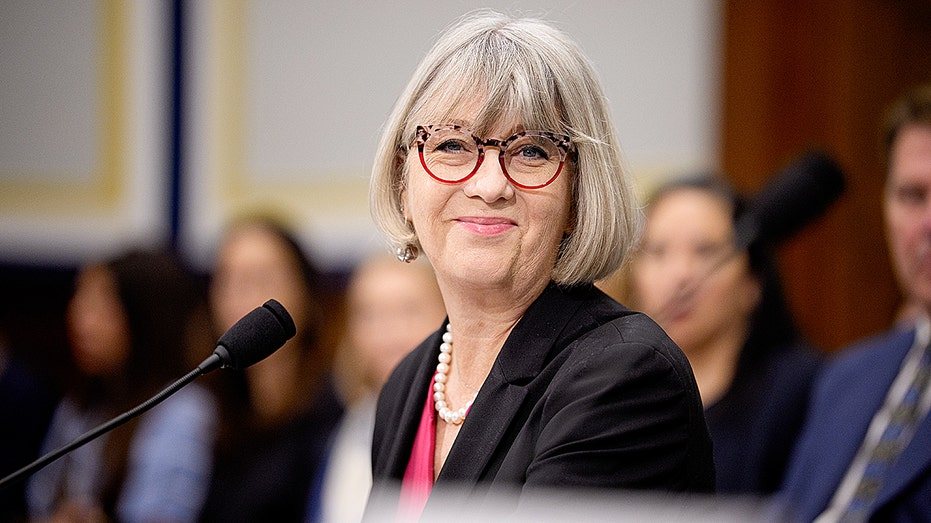
The director of the Smithsonian’s National Museum of American History, Anthea Hartig, is facing renewed scrutiny after a resurfaced video of a February presentation showed her calling history «a prime tool of social justice» and describing the museum’s work as «equity-based, justice forward, community driven and necessarily humble.»
The remarks, delivered to students at the University of California, Los Angeles, contrast with Hartig’s testimony during a series of congressional hearings in July, when she told lawmakers the museum is governed by «Smithsonian standards of scholarship, accuracy, independence and nonpartisanship.» In that testimony, she said the institution «does not take sides in America’s political debates» and instead preserves and documents «the evidence of American life in all of its breadth, so that the public can encounter the past and draw their own conclusions.»
In the UCLA presentation, Hartig said the «United States’ long and violent racial history continues to be present in our reckoning, if you will.» She argued that redress in the form of reparation should go beyond acknowledging wrongdoing, adding that it should «leverage responsibility» and involve «the act of correction» as part of restorative justice. For the museum, she said, that means pursuing «restorative justice through history.»
Hartig opened the talk with a land acknowledgement and a slide showing an American flag that appeared to read «Defund the Police,» identified as a photo from a Black Lives Matter protest in Washington in 2020. Another slide showed a protester holding a sign reading «America loving you is complicated.» She said the museum, founded in 1964 as a Cold War showcase of American achievement, had «clearly moved away from that» and now pursues a «bold new vision» to become «the most accessible, inclusive, relevant, and sustainable public history institution in the country.»
As part of that vision, Hartig said the museum joined a Smithsonian-wide collecting effort around Black Lives Matter to «document and preserve and share objects focused on Black Lives Matter to show the history of the movement starting in 2012.» She shared photographs of protest signs from outside the White House in the summer of 2020, calling them «phenomenal, ephemeral statements.» She also praised Tsuru for Solidarity, a Japanese American advocacy group that works to end immigration detention, as a «truly remarkable group,» highlighting its collaboration with Black Lives Matter.
Hartig also outlined the museum’s «proactive multilingual strategy to support language justice,» saying everyone has the right to communicate in the language in which they feel most comfortable. Since fall 2019, she said, all exhibitions, signage and digital projects have been at least bilingual in English and Spanish, with some available in more languages. She told students the museum was «under attack for speaking complicated truths» and urged them to «raise your voices and speak them together.» She described history as «the key that unlocks the mysteries of humanity, of meaning, of place, of conquest, of love, power, authority and self,» and called museum workers «tellers of stories and seekers of truths, hopefully embracers of nuance, ambassadors of empathy and defenders of inalienable rights.»
The episode has become part of a wider fight over how federally funded museums present American history, a dispute that has already drawn in the White House and Congress. Hartig’s resurfaced remarks underscore the tension between the institution’s stated commitment to nonpartisanship and the equity-focused vision she described in Los Angeles.