Society 6 min read By Mason Emerson
Self-Dressing Clothes With Soft Robotics Could Help Older Adults Live Independently
Researchers at South Korea's KAIST and Stanford University have developed self-dressing clothes with air-powered soft robots that guide garments into place, potentially helping older adults and people with limited mobility dress without assistance.
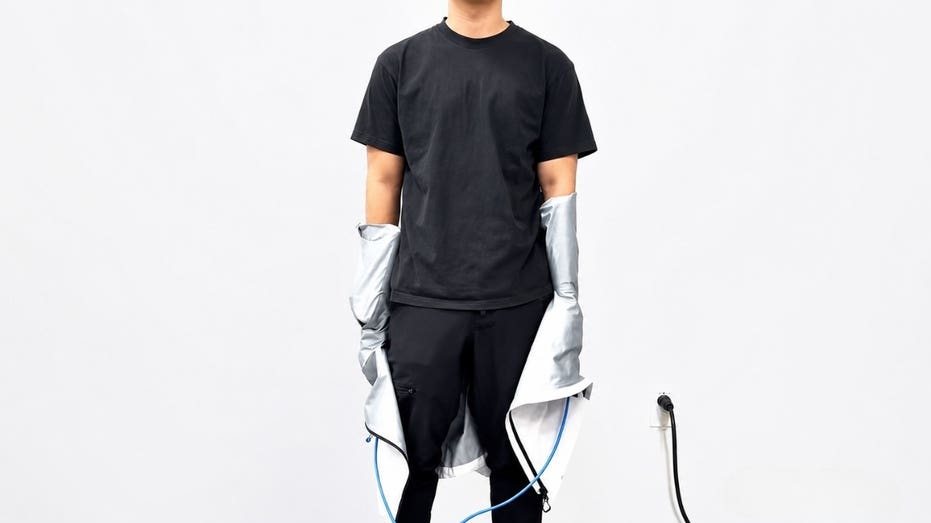
Getting dressed is a routine most people perform without a second thought, but for many older adults and individuals with limited mobility, pulling on a shirt or stepping into a pair of pants can become a daily struggle. A stiff shoulder, arthritis, balance problems, or recovery from surgery can turn this simple task into a significant challenge. Now, researchers from South Korea's KAIST and Stanford University have developed a promising solution: self-dressing garments that use soft, air-powered robots built directly into the fabric. The technology, still in early research stages, aims to help people dress with less assistance and maintain their independence at home for longer periods.
The system, called SWAG (Self-Wearing Adaptive Garment), relies on flexible robotic tubes embedded in the clothing. When activated by air pressure, these soft structures unfold and grow along the body, turning the garment inside out as it advances. The motion resembles ivy climbing a wall, advancing from its tip rather than dragging its entire length. This design allows the garment to follow the wearer's shape while reducing friction between the fabric and skin, making the process smoother and safer.
The need for such technology is significant. Dressing is one of the basic activities of daily living that often determines whether a person can live independently. When mobility or dexterity declines, individuals may require help from a spouse, family member, or professional caregiver for a deeply personal routine. Researchers behind the project note that dressing challenges can reduce autonomy and increase reliance on caregivers. They designed the system for people with limited mobility, including older adults and those recovering from injuries. Stanford researchers have also identified dressing assistance as an important use for future home robots, noting that assistive technology could help older adults remain in their homes as caregiving needs increase.
Many people underestimate the physical demands of getting dressed. Reaching behind the body, lifting arms, shifting weight while handling fabric — these movements can be painful or difficult for someone with arthritis, shoulder problems, or recent hip or knee surgery. Balance adds another layer of concern. Pulling on pants often requires standing briefly on one leg or bending toward the floor, which can be stressful for someone who already feels unsteady. Self-dressing clothes aim to reduce much of that reaching and pulling, but researchers stress that clinical studies are still needed to understand how well the system works for people with real mobility limitations.
The idea for SWAG began when KAIST postdoctoral researcher Nam Gyun Kim was riding his bicycle and it started to rain. As he kept moving, he wondered how helpful it would be if a raincoat could put itself on. That simple thought evolved into a broader concept: instead of making the body do all the pulling, reaching, and twisting, what if the clothing could move into place on its own? From there, Kim and the research team began developing garments that use soft robotics to assist with dressing.
According to the researchers, putting on a full suit takes about 10 seconds. Individual demonstrations showed a jacket moving into place in about 13 seconds, pants in roughly 21 seconds, and a sleeve prototype in about 14 seconds. The team tested sleeves, jackets, and pants, and their results showed that the garments could unfold along the body while keeping contact forces within safety limits. Importantly, the system relies on its physical design rather than a complicated control program, which could help simplify the hardware needed for dressing assistance.
Many existing dressing robots use rigid mechanical arms that must handle loose fabric while carefully avoiding uncomfortable contact with the person. These systems often require the user to hold a fixed pose while the robot completes the task, which can feel awkward inside a bedroom or bathroom. The KAIST and Stanford design takes a different approach by placing the robotic mechanism inside the garment, essentially making the clothing the helper. Soft materials allow the system to bend around the body instead of approaching it with a hard mechanical structure, reducing physical strain and supporting safer contact.
While older adults and people with disabilities represent a major potential use, researchers see other applications as well. Rehabilitation patients who need temporary assistance after an injury or medical procedure could benefit. Industrial workplaces may adopt the idea sooner. Semiconductor employees frequently put on protective cleanroom clothing, and emergency workers need to suit up quickly while carrying other equipment. The researchers believe air-powered garments could help people put on protective clothing without relying heavily on their own mobility. As the technology advances, self-dressing clothes may one day become a practical tool that restores independence and dignity to millions of people.