
Society 4 min read By Morgan Griffin
New Zealand’s ‘Nine Lives’ Cat Became a Conservation Villain
The feral tabby was clever enough to evade trappers for years and destructive enough to derail two releases of one of New Zealand’s rarest ducks.
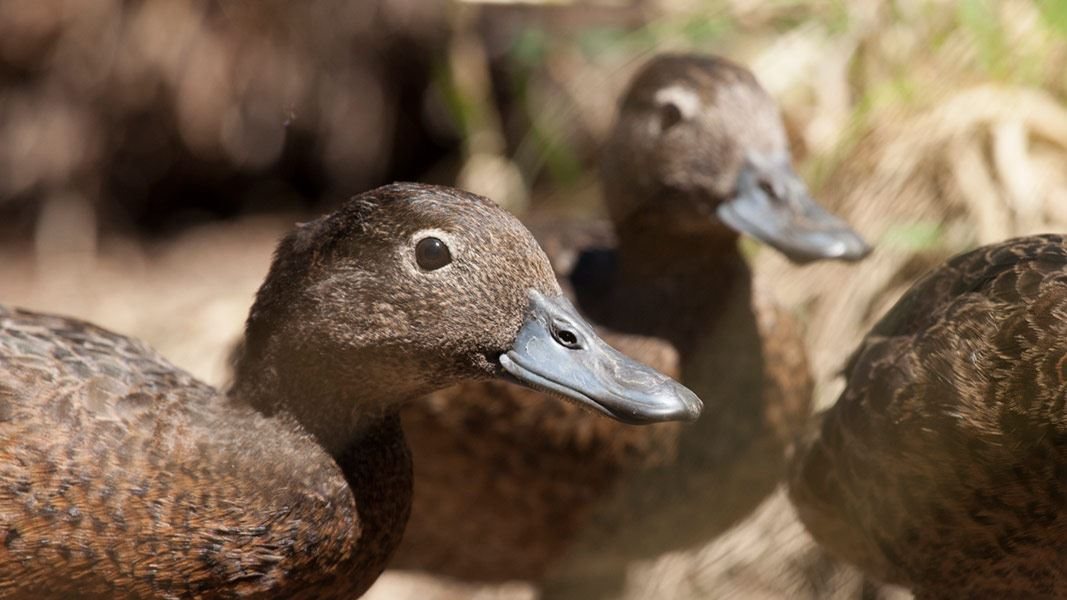
For three years, a grey tabby on New Zealand’s Purerua Peninsula had the kind of nickname normally reserved for a cartoon escape artist: “Nine Lives.” It appeared on cameras, vanished for months, dodged traps and kept returning. The joke stopped being cute for the people trying to save pāteke, because the same cat was blamed for killing dozens of the rare ducks.
Pest Free Purerua first ran into the problem in 2023. The conservation group released 20 captive-reared pāteke, also known as brown teal, believing feral cats in the area were under control. Within a week, the first bird was dead. Cameras then caught a large tabby with recognizable markings. Project staff linked the same cat to another 15 deaths.
The team escalated. More traps, more gear, more night cameras. Other cats were caught. Nine Lives was not. Its schedule was almost anti-schedule: it might show up in the evening, at midnight, at dawn or during the day, then disappear for two or three months. Every new sighting created another short window before the animal vanished again.
Then came the 2024 sequel. Another 20 pāteke were released, and the same cat returned. It was blamed for killing 15 of that group too. The Guardian later estimated that Nine Lives killed dozens of pāteke altogether, about 1% of the population. The exact percentage is an estimate, but it gives the story its uncomfortable scale: one ordinary-looking cat could take a measurable bite out of an entire species.
Pāteke are not just any ducks. New Zealand’s Department of Conservation says they are endemic and the rarest waterfowl on the country’s mainland. The agency estimated 2,000 to 2,500 wild birds in 2022. The species has been climbing from a much worse position, but only because people breed birds for release, restore habitat and control introduced predators.
The final act arrived because Nine Lives suddenly became predictable. In late July 2026, the cat visited a quarry three nights in a row. Trappers put out salmon, fried chicken and rabbit, set cages and waited. On July 30, a camera alert showed a cat inside one of them. The team checked the cage, confirmed the identity and humanely shot the animal.
Even the afterlife has a plot twist. The cat’s body was set to be examined and then taxidermied for use in community education about the effect of feral cats on native wildlife. That decision guaranteed the story would keep circulating, especially because reactions to the killing were split. Some people saw a cat that deserved to live; others saw an introduced predator devastating birds with nowhere else to go.
New Zealand’s government has already stepped deeper into that argument. Feral cats were added to the Predator Free 2050 target list in late 2025. Domestic cats were explicitly left out, a distinction that matters in a country where affection for pets and concern for native wildlife often collide.
Purerua may release more pāteke after Nine Lives. If it does, the story gets one more chapter — not about whether the famous cat can escape again, but whether the ducks can finally stay alive long enough to make the restoration work.
78