Society 6 min read By Trevor Kendall
Former Kohberger Defense Expert Calls for Death Penalty, Alleges Key Evidence Was Missed
A digital forensics expert once hired by Bryan Kohberger’s defense team now wants the death penalty restored, saying investigators missed cellphone evidence in the 2022 Idaho murders. His new claims contradict the expert report he filed in January 2025.
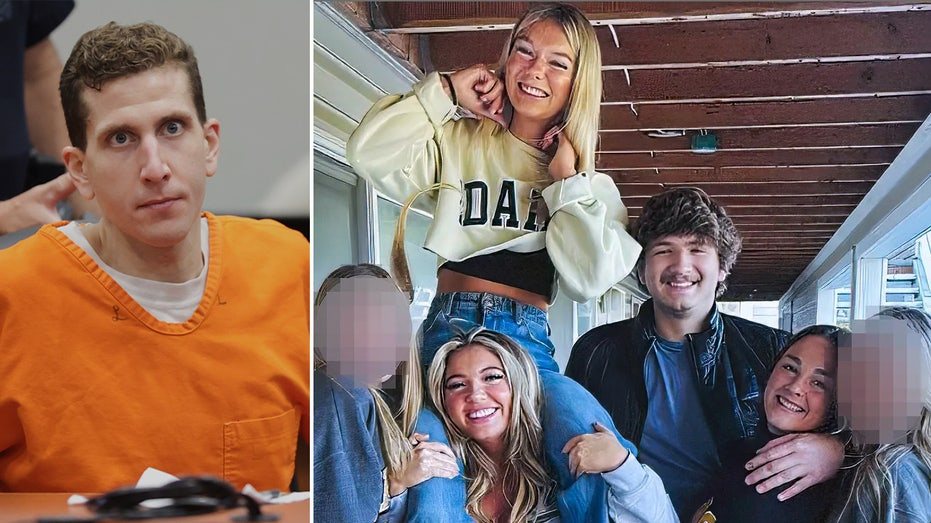
A former digital forensics expert hired by Bryan Kohberger’s defense team is now calling for the death penalty in the Idaho college murders case, saying investigators missed cellphone evidence that would have strengthened the prosecution’s case. Sy Ray, a former Arizona homicide investigator and an expert in geolocation data, said he is convinced Kohberger was the killer and that the 30-year-old former criminology doctoral student had been inside the victims’ home before the attack.
Ray made the comments on an 82-minute podcast hosted by journalist Brian Entin, in an episode that also featured the parents and sister of victim Kaylee Goncalves. He said he supports a new trial and wants the death penalty restored, arguing that the evidence against Kohberger is stronger than what has been made public.
«I 100% believe that the offender, who is Bryan Kohberger — there’s no alternative theory in my head at this point,» Ray said. «I 100% believe he’s been in the house before.»
Kohberger pleaded guilty to the November 2022 murders of four University of Idaho students: Kaylee Goncalves, 21, Madison Mogen, 21, Xana Kernodle, 20, and Ethan Chapin, 20. He was sentenced to four consecutive life terms without parole. Last week, he petitioned the court to withdraw his guilty plea and seek post-conviction relief, a move that could put the case back on track for trial and revive the possibility of capital punishment.
Ray claimed that AT&T-derived latitude and longitude data from Kohberger’s Samsung phone placed the device near or inside the King Road house where the students were killed. He acknowledged that the location estimate had a range of about 25 meters, or roughly 75 feet, and could technically place the phone outside the home or elsewhere on the property, but he said the data points nevertheless showed Kohberger in the immediate area before the murders.
«If you look at those precise measurements, there’s probably five that land directly on what would be the living room of the house,» Ray said. «Like the latitude-longitude is the physical house itself, and if you put the house back on the map, and you map those, the hits are inside the house.»
The new statements appear to contradict the expert report filed under Ray’s name in January 2025. That report said the geolocation data did not provide evidence of an association between Kohberger and any of the victims or their residence. It also said Ray could not locate any period between June 23, 2022, and November 13, 2022 in which Kohberger’s mobile device was in the same specific area as any of the deceased’s devices. «It is my opinion that the geolocation data I have been provided as of the writing this report does not provide any evidence of association between Mr. Kohberger and any of the decedents and/or Mr. Kohberger’s or decedent’s residence,» the report said.
During the podcast, Ray said Mogen appeared to be Kohberger’s primary target, pointing to repeated «collisions» between their phones in the same general areas at the same time. He cited a party in Pullman during the first week of school and an A&W store near the crime scene. He also described a broader «pattern of life» that he said reflected stalking behavior before the murders, adding that the pattern broke on the night of the killings. Ray said he believes the plan targeting Mogen went awry and that Kohberger fled south, where he had never driven before.
That description also conflicts with the January 2025 report, in which Ray wrote: «I am unable to locate any period of time between June 23, 2022 and November 13, 2022 where Mr. Kohberger’s mobile device is in the same specific area as any of the deceased’s mobile devices.»
The discrepancy has drawn scrutiny from experts following the case, including Morgan Wright, chief executive and founder of the National Center for Open and Unsolved Cases and host of «Crime: Reconstructed». Prosecutors previously alleged that Kohberger visited the crime scene a dozen times before the murders and at least once the morning after, but they have not said his phone collided with the victims’ devices in the way Ray described. After Kohberger entered his guilty plea, lead investigators said they did not know who the intended target was.
«The evidence suggested that there was a reason that this particular house was chosen,» then-Moscow Police Cpl. Brett Payne said at a news briefing. «What that reason is, we don’t know. We don’t know who the target was, and we’re not going to speculate on that up here today. But we can tell you that, for whatever reason, Mr. Kohberger chose that residence. Perhaps it’s the location, layout, we do not know.»
Ray did not respond to requests for comment or share further details of his recent claims. Kohberger’s petition to withdraw his guilty plea remains before the court. If the petition succeeds, the case would move toward trial and the death penalty could again be on the table.