Society 5 min read By Mason Emerson
Colorado Police Launch True Crime Podcast to Solve 2016 Parking Lot Murder
The Aurora Police Department has released a new true crime podcast, 'The White Whale – The Chelsea Yasser Story,' in an effort to solve the 2016 caught-on-camera murder of 21-year-old Chelsea Yasser, whose killer remains unidentified despite surveillance footage.
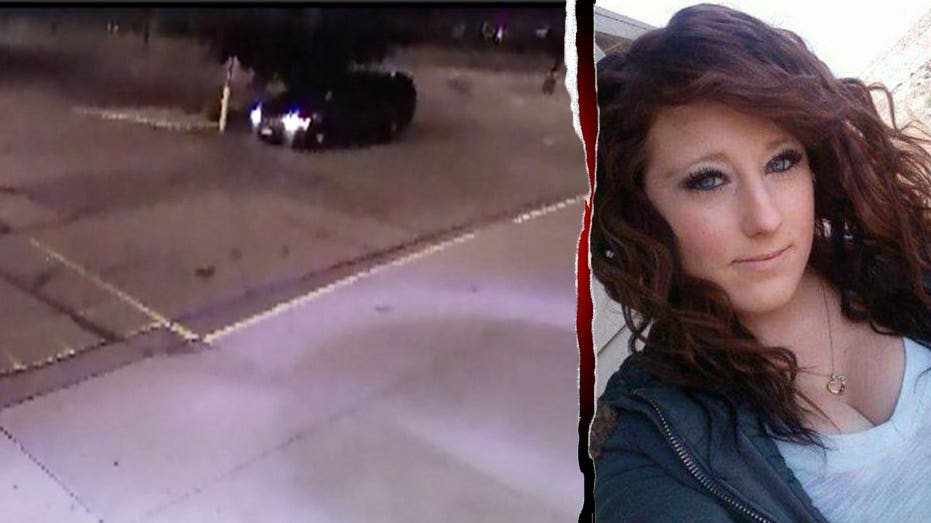
The Aurora Police Department in Colorado is taking an unconventional approach to solve a decade-old cold case by launching its own true crime podcast, hoping fresh public attention will lead to the identification of a killer captured on surveillance video. The five-episode series, titled «The White Whale – The Chelsea Yasser Story,» debuted Monday and focuses on the brutal murder of 21-year-old Chelsea Yasser, who was stabbed to death in a parking lot just weeks after moving to the area from Arizona.
Yasser was killed on May 15, 2016, shortly before 10 p.m. in the parking lot of a Burlington Coat Factory in Aurora. Police responding to a caller’s report found Yasser suffering from multiple stab wounds. She was rushed to a local hospital but was pronounced dead shortly after arrival. Despite the murder being captured on grainy surveillance footage, the case quickly went cold due to the poor quality of the video, which made it impossible to read the license plate of the maroon minivan involved.
According to cold case detective Jason McDonald, the surveillance camera showed the minivan pulling up and Yasser being forced inside. «Chelsea was stabbed to death multiple times inside the minivan,» McDonald told Fox News Digital. «And she was able to get out and stumble over the curb of the business where this occurred, where she succumbed to her injuries.» The detective noted that while the murder itself was recorded, investigators have been unable to identify the driver or the vehicle, describing the situation as «unique» and frustrating.
The case went cold after several months due to a lack of evidence and leads, but the department has now revived its efforts. «We’re 10 years in. We have a few more investigative leads that we’re pursuing, and we’re working with DNA yet again to see what we can come up with,» McDonald said. He explained that the department is «going outside the box» by reaching out to the podcast community to engage a broader audience that might hold crucial information.
Public information officer Joe Moylan emphasized that there is a critical gap in the timeline of the crime. «There’s about a 30-minute window where we just don’t know what occurred. So, it’s a pretty tight timeline,» Moylan said. «We think that there’s somebody out there that knows who this person is.» The podcast aims to fill that gap by revealing more details than ever before about the investigation, including interviews with Yasser’s loved ones to humanize the victim beyond the statistics.
Moylan stressed the importance of remembering Yasser as a person, not just a case number. «We have become such a statistics and numbers-driven society that we often forget that there are real people behind the numbers,» he said. «We don’t want her to be a number. She was a real person. She had a family. She had friends. She had people who cared about her. She deserves justice. Her family deserves some peace, and the person who murdered her needs to be held accountable.»
The podcast reflects a growing trend among law enforcement agencies nationwide, including in New York City and Illinois, which have turned to podcasts and social media to draw attention to unsolved cases. For the Aurora Police Department, this is a novel but promising tool. «It’s new to us,» Moylan said. «It’s still a little bit innovative, but we’ve been working with podcast companies and documentary companies forever on these cases, and just spreading the word and doing what we can to try to get that last piece to the puzzle.»
Detective McDonald views the podcast as an integral part of the investigation itself. «The process of producing the podcast itself is a part of this investigation,» he said. «Like any other work we put into the case, doing the podcast is extremely beneficial because of the potential it has with the huge audience that we’re going to be able to reach.» Both Moylan and McDonald hope the series will generate fresh leads and ultimately result in an arrest, relying on the public to work alongside seasoned detectives. «Anything we can do to further the case, we’re willing to do,» McDonald added. «And I think this podcast is just one of those steps we’re taking to further the case.»