Society 6 min read By Mason Emerson
A Father, a Daughter, and the Flights From Iran
A personal essay explores grief, memory, and the legacy of Iran Air pilot Captain Hamid Reza Alimardani, whose daughter reflects on his life, the 1979 revolution, the Iran-Iraq war, and the loss of fellow pilot Mohsen Rezaian in the 1988 USS Vincennes incident.
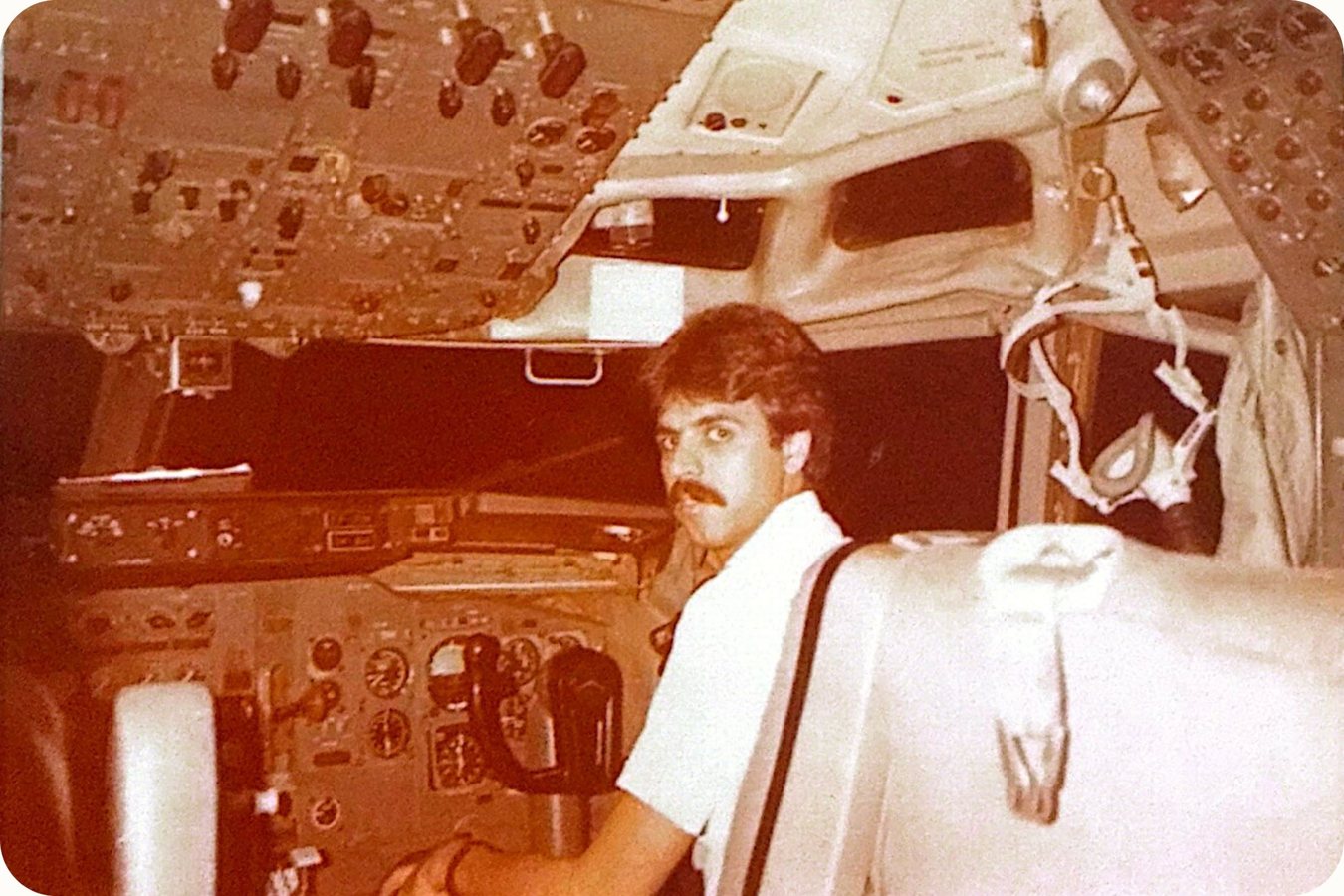
On a June evening at Heathrow Airport in London, a woman boarding a flight to Bogotá found herself drawn to the adjacent gate, where passengers lined up for an EVA Air flight to Taipei. The sight stirred memories of her father, Captain Hamid Reza Alimardani, who had flown that route for years. She recalled the small jolt of pride she felt as a child seeing him walk to the gate in uniform. He died six years ago, and the airport—the office of his entire working life—became a reminder that grief does not end, only shifts direction.
Earlier that day, she had broken down at a boarding gate in Oslo after learning of the death of Marjane Satrapi, the Iranian-born graphic novelist and filmmaker best known for her memoir «Persepolis.» Satrapi died at age 56, and her family described the cause as «she died of sadness.» The phrase struck deep. Satrapi’s work had shaped the author’s understanding of her own Iranian identity, capturing the private grief of a life shaped by revolution and exile and transforming it into something universal. In one frame of «Persepolis,» the protagonist Marji describes goodbyes as «a little like dying.» As a teenager, the author thought it was a clever, sad line. She did not yet know how literal that metaphor would become.
Captain Alimardani did not come from money. He was the first in his family in Tehran to earn a college education, dreaming of medical school in his early 20s. When Iran Air offered him a fully funded path to train as a pilot in the United States, he accepted. In the 1970s, Iran Air was among the finest airlines in the world. Then came the 1979 revolution, which transformed Iran into a theocratic Islamic Republic under Ayatollah Ruhollah Khomeini. Nine months later, the Iran-Iraq war erupted in September 1980, lasting eight years and costing more than a million lives.
My father stayed in the cockpit, flying passenger and cargo routes through a country at war because he was needed and because he had no other trade. The airports he flew in and out of were targets. Iraqi bombers had hit Tehran’s Mehrabad Airport on the first day of the war, and civilian planes risked being mistaken for military targets and fired upon. He rarely spoke of those dangers, as men of his generation often did, but he did share stories that revealed life under the new regime.
In 1983, my mother was heavily pregnant with my older sister. My parents were stopped in the street by a group of pasdars—members of the Islamic Revolutionary Guards Corps—who often questioned young couples on suspicion of being together outside of marriage. My mother was visibly pregnant, yet a pasdar pressed the barrel of his gun to her belly. My father, who had been flying under fire without complaint, lost his temper. «How dare you? She is my wife,» he shouted. «She is carrying my child.» My mother later recalled the fear she felt during air raids, sheltering with my sister while listening for jets overhead. What frightened her most was not her own safety but the knowledge that her husband was up there, flying in the same sky swarming with fighter planes dropping bombs on Tehran.
My father made sure I grew up knowing these things: the stops in the street, the nights sheltering from bombs, and the family and friends swept up in the massacres of political prisoners in the late 1980s. He hated flying for an Iran Air that now belonged to the people who had terrorized and murdered so many Iranians he had loved. Yet he kept flying, because he had no other trade, and because for years he was doing the slow work of getting us out, to either Canada or the United States.
On July 3, 1988, Captain Mohsen Rezaian, a colleague of my father’s, was at the controls of Iran Air Flight 655, traveling from Bandar Abbas, Iran, to Dubai. The American warship USS Vincennes, reportedly mistaking the aircraft for a threat, fired a missile that struck the plane. All 290 people on board died, including Captain Rezaian. He had trained in Florida before the revolution, as my father had, and shared his sense of disillusionment that Iran could no longer offer a safe or prosperous future for their families. He was already emigrating.
The loss of Flight 655 remains a deep wound in Iranian memory, a reminder of the human cost of geopolitical conflict. For the daughter of Captain Alimardani, the airport gates continue to evoke not only personal loss but the broader history of a generation of Iranians who lived through revolution, war, and exile. The flights from Iran carry not just passengers but the weight of stories untold, of fathers who flew through fire, and of daughters left to navigate the departure lounges of grief.