Politics 4 min read By Mason Emerson
House Passes Bill Combining Congressional Stock Ban with Federal Voter ID Requirements
The House of Representatives passed a bill merging a congressional stock trading ban with federal voter ID requirements, with most Democrats opposing the measure despite broad public support for both policies.
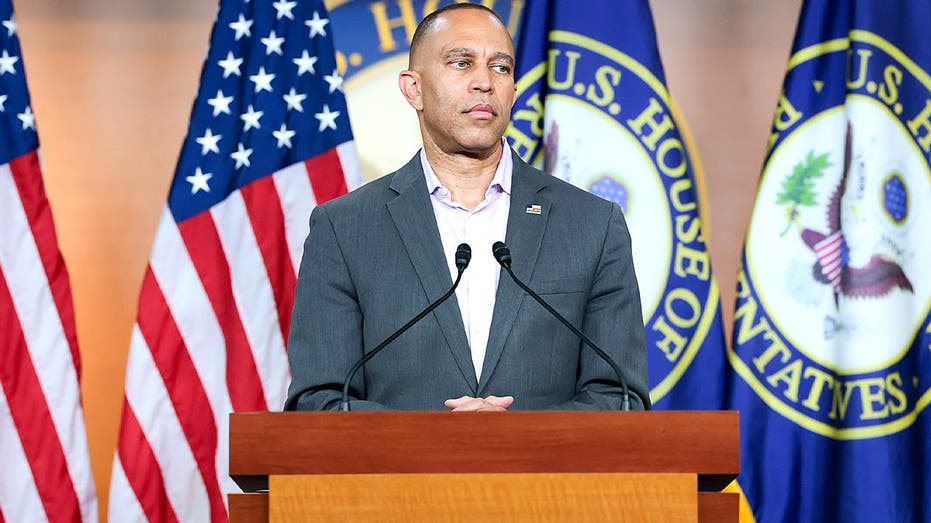
The House of Representatives on Wednesday passed legislation that combines a ban on members of Congress trading stocks with new federal voter identification requirements, a move that divided Democrats and drew sharp criticism from both sides of the aisle. The measure, which passed 231 to 198, saw 198 House Democrats vote against it, with only 13 members of their caucus joining Republicans in support.
The bill merges two politically popular but previously separate policy goals: preventing lawmakers from profiting from insider knowledge through stock trading and requiring voters to show government-issued photo identification at the polls. Public opinion polls have shown overwhelming support for both measures, with a Pew Research Center survey from August 2025 indicating that 83% of Americans favor requiring photo ID to vote.
Representative Zach Nunn, an Iowa Republican and a key supporter of the stock trading ban, defended the decision to combine the two issues. «The overwhelming majority of Americans want this,» Nunn told Fox News Digital. «Only in Washington can you have two wins for 90% of Americans, and Democrats will say that's one win too many.» He argued that the package could be passed quickly and sent to the president before the August recess.
Representative Stephanie Bice, an Oklahoma Republican, emphasized the importance of the stock trading ban in restoring public trust. «The American people deserve to know their elected officials are serving the public, not their own financial interests,» Bice said. «Members of Congress should be held to the highest standards of transparency and accountability, and this legislation is an important step toward restoring trust in Congress.»
However, the bill faced significant opposition from Democrats, who argued that the two issues should not have been linked. Representative Joe Morelle of New York, the top Democrat on the House committee overseeing elections, criticized the combination during floor debate. «I've said repeatedly, House Democrats strongly support a stock trading ban for members of Congress,» Morelle said. «But none of that is before us today. Rather, this bill is a crude combination of two completely unrelated bills.»
Democrats also raised concerns about the voter ID provisions, particularly their application to mail-in voting, which they argued could suppress turnout among certain groups. Left-wing lawmakers criticized the stock trading ban for not requiring members to sell their existing holdings, instead only barring future purchases. The bill also allows lawmakers to retain blind trusts and requires public disclosure before selling stocks.
Some Republicans also expressed reservations. Representative Thomas Massie of Kentucky accused his GOP colleagues of deliberately attaching the voter ID requirement to discourage Democratic support for the stock trading ban. «If we really wanted to ban stock trading for members of Congress, we would offer standalone legislation and could get a large bipartisan majority,» Massie wrote on social media. He argued that the combined bill would have little chance of passing the Senate.
The vote marks a significant moment in the ongoing debate over ethics and election integrity in Congress. While the stock trading ban has broad bipartisan support in principle, the addition of voter ID requirements has complicated efforts to reach consensus. The bill now moves to the Senate, where its prospects remain uncertain amid similar divisions.