Politics 6 min read By Lauren Baxter
DHS to Withhold Billions in Grant Funding From States Refusing New Election Security Measures
The Department of Homeland Security will require states to adopt voter citizenship verification, paper ballots, and post-election audits to qualify for over $1 billion in preparedness grants, sparking legal and political battles.
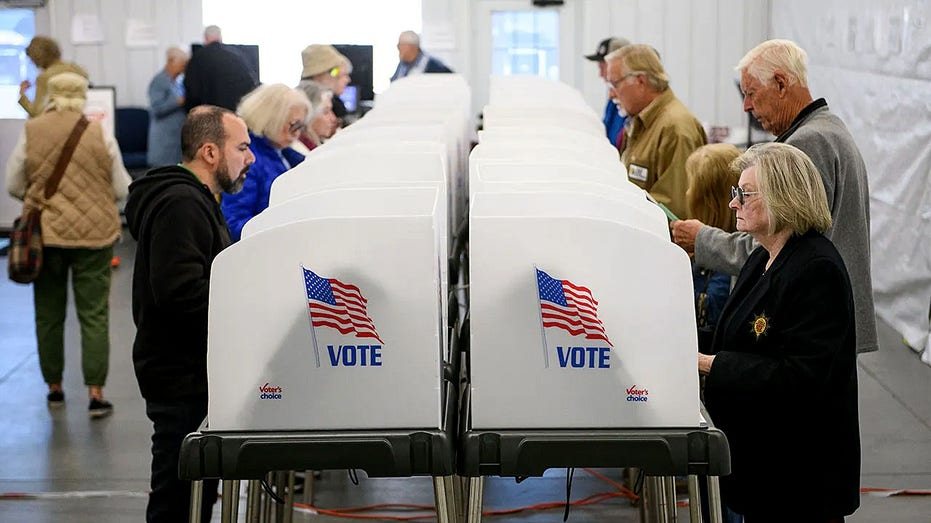
The Department of Homeland Security is preparing to withhold billions of dollars in federal preparedness grant funding from states that refuse to adopt a series of new election security measures, including voter citizenship verification, post-election audits, and the expanded use of paper ballots. The policy, first reported by Fox News, marks a significant escalation in the Trump administration's efforts to tighten election integrity standards across the country.
Under the new requirements, states seeking funding from the Homeland Security Grant Program — administered by the Federal Emergency Management Agency, a DHS sub-agency — must submit plans to transition away from electronic voting systems that rely on QR codes or barcodes. Instead, they must adopt hand-marked paper ballots, which the agency argues provide a verifiable paper trail to quickly assess any alleged irregularities. The program makes more than $1 billion in taxpayer funding available to participating states.
In addition to the paper ballot requirement, states must conduct a manual audit of at least 5% of all ballots cast after each federal election. DHS contends that such random manual reviews will confirm whether voting-machine tabulations match the paper ballots and identify any potential manipulation. States must also match the number of voters who participated in an election with the number of ballots cast and, within 120 days of receiving a grant award, use the Systematic Alien Verification for Entitlements database — known as SAVE — to verify the citizenship of every listed voter in the state.
The SAVE system, which gained attention amid incidents involving undocumented immigrants involved in fatal crashes, has been criticized by some Democratic governors who argue it is insufficiently maintained. DHS has denied those assertions. The new rules come as President Donald Trump and many Republicans have sharply criticized states that resist federal audits of their voter rolls, as well as the slow vote tabulation processes in states like California.
A DHS spokesperson told Fox News Digital that threats to election systems continue to evolve and that Secretary Markwayne Mullin has made critical infrastructure protection a top priority. The spokesperson suggested that elections fall within that critical infrastructure and remain susceptible to foreign interference, insider threats, and cyberattacks. «Under President Trump’s leadership, we are taking decisive action to protect election systems from threats like foreign interference, insider threats and cyberattacks,» the spokesperson said. «These new requirements for homeland security grant recipients will preserve election integrity and ensure that Americans can trust the results.»
The policy shift follows a major legal setback for the Trump administration in its broader push to force election security measures. An Obama-appointed federal judge in Pittsburgh ruled against the Justice Department after it sued more than 25 states seeking voter records that included Social Security numbers. Judge Cathy Bissoon determined that the federal government lacks the authority to demand such «highly sensitive» state information. The case arose after Pennsylvania Secretary of the Commonwealth Al Schmidt, a Philadelphia Republican appointed by Democratic Governor Josh Shapiro, refused a demand to turn over data last fall. Schmidt offered a redacted version of the state voter file without the sensitive data, telling the DOJ that such «broad data» collection represented a «concerning attempt to expand the federal government’s role in our country’s election process,» according to The Philadelphia Inquirer.
The new DHS grant conditions may face similar legal challenges. Legal experts note that the federal government's ability to tie grant funding to policy compliance has been tested in other contexts, but the specific requirements around voter citizenship verification and post-election audits could provoke lawsuits from states that argue the measures overstep federal authority or burden state election administration. Several Democratic-led states have already signaled resistance, with some officials calling the requirements an infringement on states' rights to manage their own elections.
The policy also reignites debate over the balance between election security and voter access. Proponents argue that the measures are necessary to prevent fraud and restore public confidence in election outcomes, while critics contend that they could disenfranchise eligible voters, particularly naturalized citizens and minority communities, and impose costly administrative burdens on states. The SAVE database, in particular, has drawn scrutiny for potential inaccuracies that could lead to legitimate voters being wrongly flagged as non-citizens.
As the 2026 midterm elections approach, the DHS requirements are likely to become a central flashpoint in the ongoing partisan struggle over election administration. The outcome of any legal challenges could set important precedents for the scope of federal power over state election systems. For now, states must decide whether to comply with the new conditions or forgo access to hundreds of millions of dollars in homeland security funding that supports everything from emergency response to counterterrorism efforts.